If ever a federal budget came to us floating on the wings of hope, it is this latest one.
In its last fiscal year, the government has given us a budget that wants to eat its cake and have it too. Current expenditures have been restrained to an almost unrealistic extent, while development expenditures have seen their largest hike thus far.
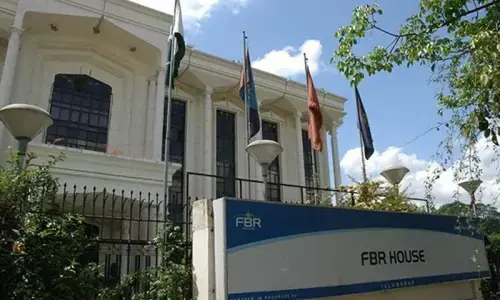
On the revenue side, almost the entire burden of incremental revenues has been placed on the shoulders of domestic business enterprises, while the presentation of the budget emphasised the relief measures for industry. FBR revenues are being hiked by 14pc, whereas they have struggled to meet far humbler targets in the preceding years. Other revenue heads see modest increases.
Likewise, the current expenditure target for next year sees a modest hike of 2pc from last year’s target, whereas development expenditure sees a hike of 25pc.
If current expenditure can stay within the prescribed limits, and the FBR can live up to expectations, this budget might yet pan out. But that is a very big if.
The finance minister went to some lengths to tout the achievements of his government, and he chose to compare today’s performance with fiscal year 2012-2013, the year before his government took office.
Amongst the boasts he laid before the parliament was one about “far-reaching structural reforms”, especially in the tax machinery, making it “more equitable and efficient”. This budget will put that boast to the supreme test.
Even in the area of subsidies, where targets set for last year were overshot by almost 50pc for the tariff differential subsidy, this year they intend to keep that head at the same target as last year, and cut K-Electric’s tariff differential payment by 50pc. This means either passing through large tariff increases during the year to consumers, or working to bring about a miraculous recovery in collections.
The budget wants to expand programmes to give away goodies under vague plans like ‘Electricity for All’, at the same time pushing through large infrastructure projects including CPEC (which sees an allocation of Rs180bn in the development programme), while avoiding any revenue measures that could upset the masses or broaden the tax base.
The latter priority has largely dropped by the wayside, and many of the measures to penalise non-filers of income tax returns have turned into glorified revenue schemes.
It will be interesting to see how this government walks the tightrope it has set for itself in the year ahead. It is not known for its subtlety in dealings with the opposition, nor for taking an innovative approach to vexing policy problems that plague state finances. Yet the targets of this budget will test their balance to the hilt. A safe bet would be to expect many ad hoc course corrections along the way.
Published in Dawn, May 27th, 2017