0
0

ISLAMABAD: A proposal to amend nomination forms for electoral candidates appears to have, once again, put parliament and the Election Commission of Pakistan (ECP) at odds with each other.
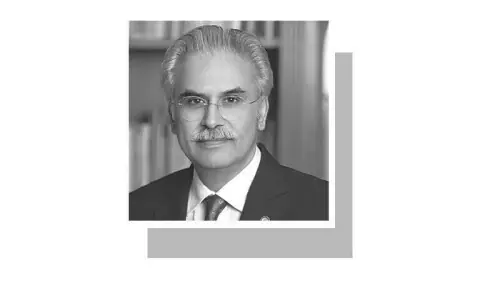
Talking to reporters following a meeting of a sub-committee of the parliamentary panel on electoral reforms on Wednesday, Law Minister Zahid Hamid said that the committee had approved a proposal for similar nomination papers for candidates of the Senate and the National and provincial assemblies.
He said it appeared that the ECP had certain reservations over the committee’s decisions pertaining to nomination papers, adding that a final decision on it would be taken by the main committee.
Confiscation of nomination fee of candidates who fail to get more than 25pc of votes polled also proposed
A senior official of the ECP, however, said matters pertaining to nomination papers were a part of the rules, which were to be framed by the commission and not parliament.
He pointed out that in March 2013, the Supreme Court had declared new nomination forms constitutional and had announced that the 2013 general elections would be held on the basis of those forms.
The then chief justice Iftikhar Muhammad Chaudhry had observed that it was the right of the voters to know certain details about the person representing them.
He said the apex court had rejected the law ministry’s view that the ECP could not amend the nomination forms on its own, and stressed that the judgement still held.
He pointed out that under Article 222 of the Constitution, “Subject to the Constitution, [Majlis-e-Shoora (Parliament)] may by law, provide for — allocation of seats in the National Assembly...but no such law shall have the effect of taking away or abridging any of the powers of the Commissioner or an election commissioner under this part.”
He added that under Article 218 (3) of the Constitution it was the duty of the ECP to organise the election and to make arrangements to ensure that the election was conducted honestly, in accordance with the law, and to see that corrupt practices were guarded against. “It is for us to see what those corrupt practices are,” he remarked.
He said a review should be sought against the Supreme Court’s judgement before taking such a decision. He also hinted that the ECP may move the Court if the decision was imposed on it.
The sub-committee also approved an increase to the maximum term office holders of various political parties could serve — six years, from the presently prescribed limit of four years.
This would require an amendment to Section 11(1) of the Political Parties Order 2002, which reads: “the party leader and other office-bearers of every political party at the federal, provincial and local levels, wherever applicable, shall be elected periodically in accordance with party’s constitution through secret ballot based on a democratic and transparent system, provided that a period, not exceeding four years, shall intervene between any two election”.
The amendment would mean that many political parties would be able to contest two consecutive general elections after each intra-party poll. The law binds political parties to submit details of intra-party elections with the ECP, and any failure in this respect could disqualify them from obtaining an election symbol.
The ECP official said that the sub-committee had also proposed confiscation of the nomination fee of candidates who failed to secure more than 25 per cent of the votes polled in their constituency.
According to Section 43 of The Representation of People Act 1976, any candidate who failed to get one-eighth (12.5 per cent) of the total votes cast in a constituency from where they contested the polls, would have to forego their security deposit.
Though the security deposit is not a large amount, but in Pakistani politics, anyone whose security deposit is forfeited is considered to have suffered a humiliating defeat. An amendment to the law would mean more forfeitures of this kind in the next general elections.
Published in Dawn, May 25th, 2017