0
0

KARACHI: The image of Muslims in Europe has changed from positive to negative in the last 100 years; it is the result of the shift from colonial times to the post-Cold War era and the Soviet Union’s collapse.
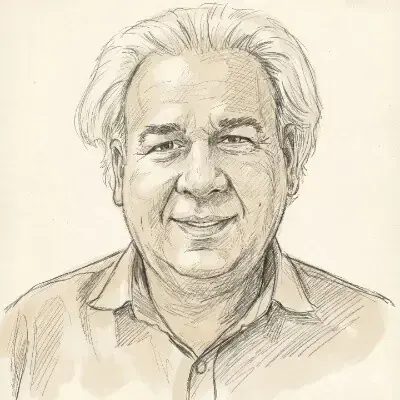
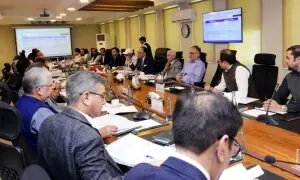
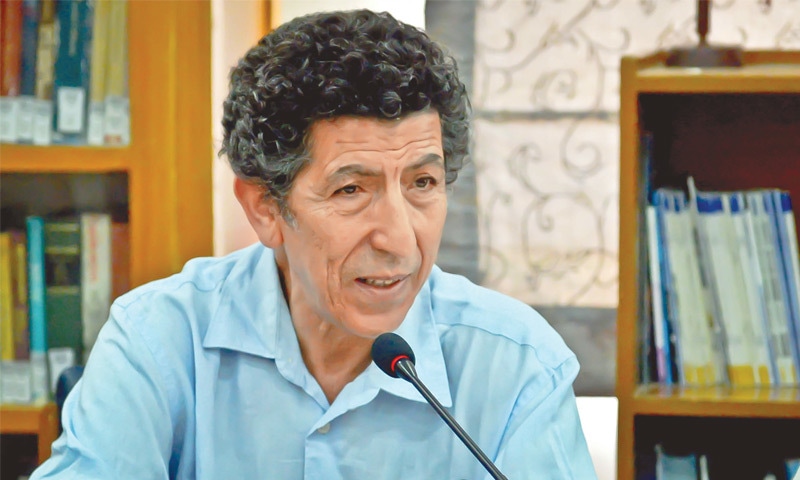
This was the gist of the arguments given by French scholar and journalist Slimane Zeghidour in his short presentation on the topic ‘The image of Muslims in Europe: A century of positive and negative stereotypes’ at the Area Study Centre for Europe, University of Karachi, on Thursday.
Mr Zeghidour started his presentation by talking about the perception of Muslims in European societies. He said it is “negative” in at least half of them. One of the reasons is the confusion in Europe and North America about Arabs and Muslims. Those in the West don’t know that there are many Christians among Arabs, and the majority of Muslims [in the world] are not Arabs.
Mr Zeghidour said the image is negative also because the Europeans don’t understand Muslim attitudes, their rhetoric, and they ignore the history of Muslim civilisation. But 100 years ago, this image was romantic and positive because most of the Muslim world was colonised by European empires (North Africa by the French Empire, Indo-Pakistan and the Middle East by the British Empire etc). In the beginning of the 20th century, in that context, the British Empire was the most important one because it had more than 100 million Muslims under its rule — the Ottoman Empire had only 12m.
In order to understand how the image changed from positive to negative, elaborated Mr Zeghidour, three periods have to be taken into account. The first is the colonial period. In the 1940s, Muslim countries began to gain independence, such as Pakistan, followed by Algeria, Tunisia and Morocco etc.
The second period is of the Cold War between the West and the Communist bloc. In this phase, the West needed the Islamic countries as its allies against the Soviet Union.
The third period comes after the collapse of the Soviet Union. This was the time when the West did not need Muslim countries as its allies because the situation had changed. We also see during these times Muslim countries facing internal challenges, sometimes resulting in civil war. At the same time, we see in the West a rise in small but very active groups of Islamophobes with hate rhetoric against Muslim countries. We have, for example, in America extreme right parties saying there is no compatibility between Islam and the West. Similar rhetoric is used by some Muslims against Western societies (Christians, Jews), but a majority of Muslims are moderate and rational, he said.
At that juncture, to tell his audience how positive the image of Muslims in the West was, Mr Zeghidour showed some images, the first of which was of a 1920s Hollywood star of Italian origin Rudolph Valentino who often played the role of an Arab sheikh in films. (One of the films was The Son of the Sheik.) There was a picture of Elvis Presley in an Arab top as well. Some of the images showed the Japanese (not Muslims) as American enemies. In Germany, there was propaganda against Jews. After the revolution in Iran, the Muslims’ image changed as now ‘extremist’ leaders began to appear on the front page of magazines. The slideshow ended with a picture of an Arab Spring protester on Time magazine.
Answering the question as to why couldn’t the Muslim community integrate into Western societies like the Jews did by proving themselves to be successful in the business sector, Mr Zeghidour said Jews were indigenous Europeans, so it was easy for them to integrate. Secondly, Muslims don’t understand the structure of European society. “It’s not a Christian society, it’s a secular society.”
Replying to a question about some European countries refusing to accept refugees coming from the Muslim world, he said there are countries that don’t do it citing racist reasons. But the European Union has imposed a fine on them in case they don’t take refugees. The bigger question, he said, was why the Arab or Muslim countries don’t accept those refugees.
The presentation was organised in collaboration with Alliance Francaise.
Published in Dawn, April 21st, 2017