COAS tells US NSA: 'Pakistan rejects allegations of employing proxies on its soil'


 37
37


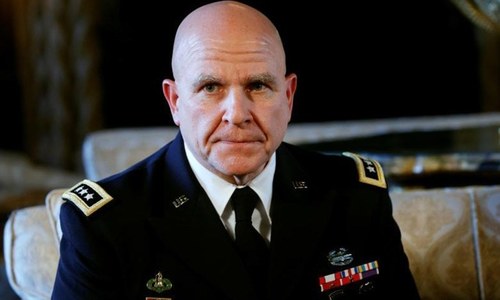
A day after United States (US) National Security Adviser Gen H.R. McMaster urged Pakistan to indiscriminately fight all terror groups, the army's media wing issued a statement on a meeting between McMaster and Army chief Gen Qamar Javed Bajwa.
Before his meetings in Pakistan, McMaster had visited Afghanistan, where he hinted at the US taking a tougher line on Islamabad.
In an interview with Afghan news agency TOLO, McMaster said: "As all of us have hoped for many, many years, we have hoped that Pakistani leaders will understand that it is in their interest to go after these [militant] groups less selectively than they have in the past and the best way to pursue their interest in Afghanistan and elsewhere is through diplomacy not through the use of proxies that engage in violence."
Director General (DG) Inter-Services Public Relations (ISPR) Maj Gen Asif Ghafoor on Tuesday tweeted a video of McMaster's subsequent meeting with Gen Bajwa, saying: "Pakistan itself is a victim of state-sponsored terrorism. It strongly rejects allegations of employing proxies from its soil."
The DG ISPR said that during the meeting between Gen Bajwa and NSA McMaster, "It was highlighted that [the] distinguished feature of Pakistan's counter-terrorism effort is focused against terrorists of all hues and colours."
Maj Gen Ghafoor added that the US NSA had acknowledged the Army's efforts towards elimination of terrorists and their infrastructure and had assured "US support to bring peace and stability in the region and globe."
A day earlier, McMaster had held meetings with top civilian and military officials, during which he was apprised of Pakistan's counter-terrorism efforts and initiatives, which have resulted in a marked improvement in the overall security situation.