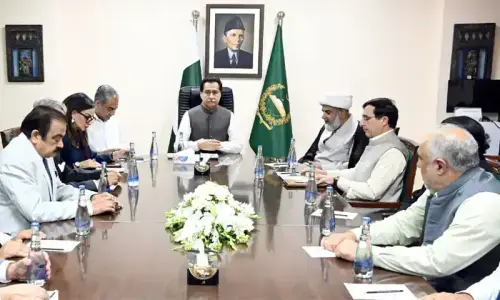
ISLAMABAD: The Pakistan Telecommunication Authority (PTA) told a Senate committee on Wednesday that it lacked the human and financial resources to monitor and control objectionable content online.
Instead, PTA Chairman Dr Ismail Shah stressed the need for developing better relations with social media platforms such as Facebook, Twitter and YouTube to ensure better monitoring and control of blasphemous content.
Briefing the Senate Standing Committee on Information Technology about initiatives taken to check blasphemous content on social media, the chairman said there was no way to block 100pc of objectionable content on the internet, suggesting the localisation of content for Pakistan along the lines of Youtube.pk as an alternative.
ANP Senator Shahi Syed, who chairs the committee, directed PTA to increase their manpower, if necessary, to monitor content on the internet, particularly on social media.
Ismail Shah stresses need to develop rapport with platforms such as Facebook, Twitter
He said the committee realised the importance of freedom of expression, but at the same time cautioned internet users to refrain from misusing that freedom.
Mr Syed said committee members supported government initiatives to ask the executives of Facebook and Twitter to help root out people who posted blasphemous material on social media sites from anywhere in the world. Members also urged the media to spread awareness of the positive use of internet among citizens.
“Information technology is the most rapidly evolving industry. Pakistan needs to progress as other countries are increasingly relying on IT for economic growth,” Dr Shah said.
Drawing a comparison with other countries, the PTA chairman informed members that in most other countries, blasphemy was not a major concern.
“In Malaysia, the government prefers that Internet users shold be free to view content online. In Saudi Arabia, online blasphemy is not a major concern either,” the PTA chief said.
However, he maintained that these countries had developed a good liaison with social media platforms to manage content, if required.
He said Pakistan was 15th country on the list of countries who had sent requests to block access to content on Facebook, adding that these requests were expected to rise in the future.
PTI Senator Shibli Faraz asked whether the recently passed cybercrime law was sufficient to check content on the internet, to which State Minister for IT Anusha Rehman responded that a stringent law was needed to monitor blasphemous and other objectionable content.
She argued that the internet was bound by Pakistani culture, traditions, religion and the Constitution, adding that the government would not allow it to be “hijacked” by NGOs in the name of freedom of expression.
“The law against cyber crimes which was passed does not constitute even 40pc of the draft the ministry had prepared,” the minister told the Senate committee.
Published in Dawn, April 6th, 2017