Dupattas, scarves and hijabs

KARACHI: A woman pulls out a couple of shirt pieces from her plastic shopping bag and hands them to a shopkeeper in Dupatta Gali. It takes just a few seconds for him to hold and match each of them with the many folded dupattas in a shelf. Happy, the woman then pays for the dupattas before heading off.
Dupatta Gali, situated off Tariq Road, has remained famous for its dupattas, scarves, hijabs, stoles and shawls from as far as one can remember but Iqbal Ahmed, the owner of one shop here, says that it all began around 40 years back. He himself opened the shop here in 1970. “When I was a young man,” he adds.
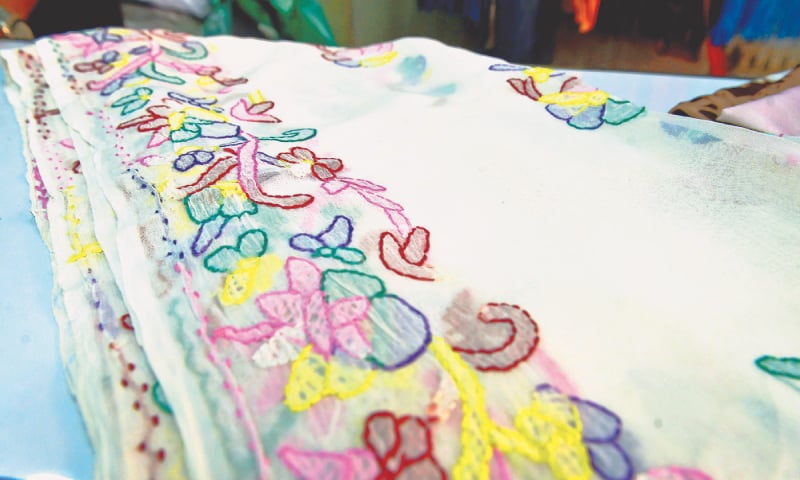
“Business has always been good as the ladies come here looking for dupattas to match their shirts or suits. Everyone is able to find exactly what they had in mind or were looking for,” he says. Behind him are some pretty silk dupattas with glittering golden design. “They are block-print dupattas,” he says on noticing a customer’s interest in them.
Asked if the glitter on the dupattas would eventually fade, he shakes his head and explains that the block printing is done on white dupattas and they are dyed after that, not before. “The boiling hot water with dye does away with any surplus glitter and the design is permanent,” he says.

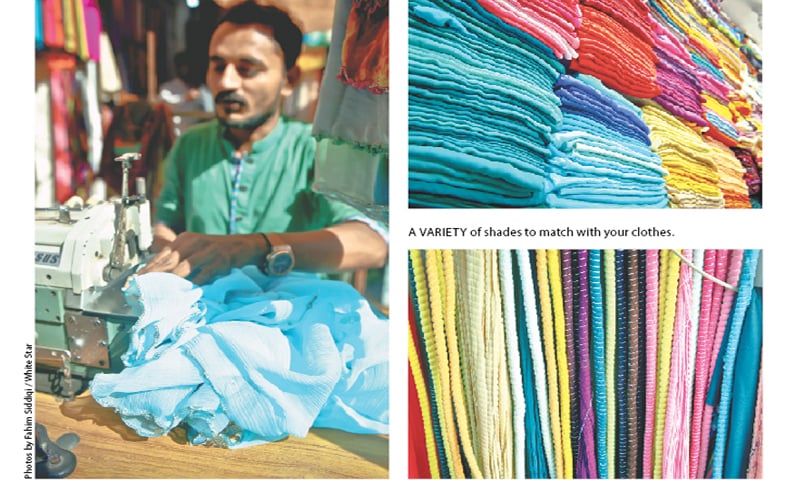
At another shop the variety of dupattas on offer would make your head spin. There is so much choice that you are suddenly confused as to what you actually wanted in the first place. Uzair Haroon, the young shop owner, says that he has been running his shop since the age of 12. “I would come to the shop straight from school. There are over 300 varieties of dupattas or scarves in my shop,” he says.
There is the tied chunna dupatta, which gives a crinkled effect when the string it was tied with is removed, there is the printed chunna dupatta, dupatta with tassels, cotton, lawn, silk, crush silk, linen, polyester, chiffon, Banarasi, embroidered Multani, printed, plain dupattas, stoles, digitally printed stoles, shawls, scarves, ajrak and chadors to be worn around the neck or as a hijab, etc leaving you with a tough choice.
But they all are reasonably priced. Scarves are priced between Rs200 and Rs450. Stoles are priced from Rs350 to Rs400, the embroidered Multani dupattas, depending on their material and style of embroidery, including shadow work, chawal tanka, chikankari, moti tanka and katcha kaam, may start from Rs350 to go up to Rs650.
“You know, the big boutiques and shops in those huge malls come to buy scarves and dupattas from us. Then these very dupattas bought from us for a few hundred rupees are resold for thousands,” laughs Uzair.
All the shops also have a man waiting with an industrial sewing machine ready with a picot foot on standby. “Well, the pretty dupatta would not look as pretty with the sides or borders not sewn up. Who would want the threads coming out of their dupatta sides?” asks Abdul Ahad, a man busy doing some fancy ball picot work on a blue silk dupatta.
There are many picot styles that the machines and the men running them can do including piping picot for Rs100, plain picot for Rs10, Japanese picot for Rs30, flowery picot for Rs200, lace picot also for Rs200 and cut work picot for Rs150.
Published in Dawn, March 19th, 2017