0
0

The current rising tide of protectionism to restrict international flows of capital, goods and manpower, particularly in the United States, is facing fierce opposition from critics. This is happening in those developed economies which have freer trade and are more integrated into the global economy.
Protectionism tends to disrupt the global market but the new American administration sees it as imperative to restructure its domestic economy.
On the other hand, free trade has lost much of its lustre because of the growing popular perception worldwide that it does not necessarily mean fair trade.
Usually developing countries complain against the adverse terms in international trade. This standpoint now has been now owned by US President Donald Trump, making him reject US regional trade treaties.
Historical records show that protectionism and free trade have been coupled, in various ways and proportions, to develop domestic and international businesses, markets and economies across the world with mixed outcomes.
Pakistan’s efforts to integrate the national economy with the global market have been frustrated by chronic fiscal, trade and balance of payments deficits as it has opted for a not-so-well thought out policy of protectionism or liberalisation and deregulation that resulted in heavy dependence on foreign debt, capital and financial inflows. Its path of growth was also hampered by macro-economic instability.
The policymakers’’ focus on subsidised export-oriented industrialisation, with imported capital goods and other industrial inputs — in the absence of an effective import-substitution policy — has kept the external sector under constant pressure.
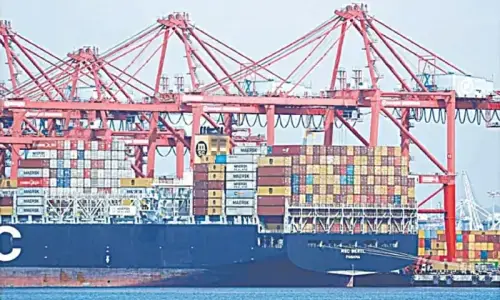
In the past three years, the country’s exports have dropped from some $25bn to $20bn — for lack of enough value-addition and diversification — and have widened the trade deficit as imports continue to grow at a fast pace.
Initially, like all newly created nation states, Pakistan went for import-substitution and self-sufficiency where it had a domestic advantage. Being an agricultural country, the natural choice was to set up cotton ginning, textile and sugar mills and a leather industry.
Historical records show that protectionism and free trade have been coupled, in various ways and proportions, to develop domestic and international businesses, markets and economies across the world with mixed outcomes
The infant industry argument was advanced to protect manufacturing from inflows of foreign goods and services. Tax incentives, cheap credit and subsidised foreign exchange were provided to spur manufacturing with significant success. And high tariff walls were raised and imports were selectively banned to foster import substitution and protect local manufacturing from competition from foreign goods.
When these government subsidies peaked owing to rent-seeking and patronages, they hampered the productivity and efficiency required to develop a competitive global economy. In some segments, monopolies, cartels and oligopolies were allowed to develop and prosper without much hindrance. This kept new comers out of the market and restricted the country’s economic growth.
Even now regulatory bodies are essentially a toothless lot. With free trade and competition restricted in domestic market, government support became imperative for exporters to access the the international market.
It must be conceded though that the industry did receive a huge setback from a sharp devaluation of the rupee in the early 1970s (financial charges shot up), loss of the East Pakistan market and nationalisation which, coupled with the ‘ liberalisation and deregulation’ of the following decades, resulted in de-industrialisation.
Even leading business houses diversified their investment into trading in commodities, real estate and capital markets. The practice continues to this day which, coupled with diversifying and multiple businesses under one umbrela, may help industry and trade to shake off the crutches and stand on their own feet; with only an occasional and temporary government support to sectors hit by external shocks.
Protectionism must not be extended to mismanaged and inefficient enterprises. Corporate deaths should be taken as a natural phenomenon.
The shifting policy focus now on the domestic market in many countries has given rise to protectionism while free trade, which prospered during the high tide of globalisation, is being restricted.
But protectionism loses its utility when it results in rent-seeking, monopolies, cartels and oligopolies. Similarly free trade loses its lustre if the impression that it does not deliver a fair game, gains ground.
So there is a need to bring about a structural change in both the domestic as well as the international market to build a more equitable exchange of goods and services for which the community of nations should work with greater harmony and active cooperation.
Globalisation is taking a new course, more or less similar to what China is trying to do. China is fiercely nationalist and its domestic economy works largely under a protectionist regime. Its approach is determined by domestic needs rather than external policy influences.
Yet its huge foreign trade, including imports, contributes significantly to the world’s economic growth. Its investments abroad help other countries to reduce infrastructural gaps needed to push up economic growth.
It is time that national states help each other build self-sustaining economies. This would not mean self-sufficiency in all respects which currently provides the space for international cooperation.
Published in Dawn, Business & Finance weekly, February 13th, 2017