IN the 1870s, Sir Alexander Cunningham, who founded the Archaeological Survey of India, published some findings excavated at Harappa. Among them was a curious object, a one inch by one inch piece of smooth inscribed clay, buried in the ruins. The piece was not polished and seemed to show the figure of a bull. Cunningham initially thought that the seal was a foreign object.
In the years to follow, however, a vast number of such seals were found; some were believed to be attached to grain stores, showing what was in them; others were engraved with fabric inscription patterns. All of them are believed to belong to the Indus Valley Civilisation, whose beginnings are dated to 8,000 years ago by some.
In recent days, two controversies have brought the Indus Valley seals, forgotten and neglected for sometime by all but archaeologists, back into the public discourse. First, the entrenchment of Hindutva in India, and its sometimes fanciful and politically expeditious reconstruction of Indian history, has redefined the role of the seals. Adherents of Hindutva are eager to claim the seals as precursors of Vedic/Sanskrit, allowing them to situate themselves, and not the Dravidan/Tamil peoples, as true Indians.
The politics of Hindutva are not the only brand of politics implicated by the Indus seals.
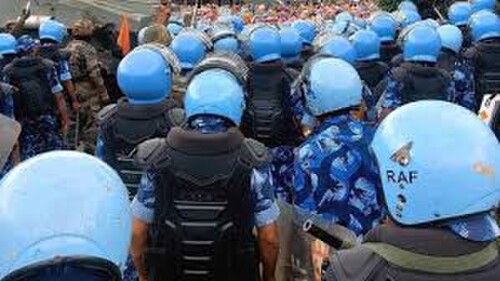
One recent iteration of this squabble took place a few weeks ago, when Tamil nationalists clashed with police over the ban on the sport of jallikattu. Hindutva supporters have argued that one of the seals shows a man and a bull and establishes bullfighting (which was banned by the Indian Supreme Court in 2014) as a Hindu sport. For their part, rioting Tamil nationalists argue that it shows several men and a bull and establishes the sport as Tamil. To bolster their claim, they point to the supposed depiction of the sport in rock paintings in the region that date back 3,000 years.
The intellectual debate, which expectedly is influenced by the politics surrounding the Indus seals, focuses on whether the script on them constitutes a lost and as yet undeciphered language. With the advent of computers, complex statistical techniques and algorithms are being used to search for patterns in the pictorial depictions on the seals.
Two researchers, Nisha Yadav at the Tata Institute in India and Rajesh Rao at the University of Washington, have run different models that look for just these patterns. In 2009, Rao published his findings, which revealed that the arrangements of the symbols is not incidental but intentional, suggesting that the symbols may constitute a script, one of the last lost languages.
Rao then moved on to map the position of certain symbols on the seals to create a predictive model. Yadav used a similar technique, which she likens to the suggested searches within search engines like Google. The results revealed that certain symbols recurred in the same places, suggesting the existence of a particular syntax. They also found that the script varied based on the location where it was found, with seals found in the Mesopotamian region differing from those found in the subcontinent. This, they suggested, might imply that the same script (like alphabet) was being used to write a different language.
Other researchers, notably non-Indian, have been reticent to accept the claims that the inscriptions on the Indus seals constitute an actual language, implying that it may well be the current Indian political climate rather than data that is pushing Rao and Yadav’s findings.
As Melanie Locklear points out in an exhaustive article on the subject, comparative historian Steve Farmer, computational theorist Richard Sproat and philologist Michael Witzel have all argued that the script does not constitute a language at all. As early as 2004, before Indian historians were scrambling to establish that the seals made up a language, the trio had even taken the unusual step of offering a reward of $10,000 to anyone who would find a lengthy inscription beyond the two or three grouped symbols. They never had to pay up. Locklear’s article quotes Farmer as holding to that position “to view the Indus symbols as part of an ‘undeciphered script’ isn’t a view anyone outside the highly politicised world of India believes”.
The politics of Hindutva are not the only brand of politics implicated by the seals. With a good number of the around 3,500 seals found in Pakistan, the frayed relationship between the two countries has played a role in the estimation of the seals and of whether they constitute a script. It is notable that the published volumes depicting the seals are separated into two, not owing to what they say or any characteristic that is peculiar to them, but rather based on whether they were found in Pakistan or India. There is great irony in this, the hatreds of the present determining the flavour and meaning of a very remote past.
Wishful historians, or even just those curious about the character of the country that is now Pakistan, cannot help but hope that Pakistan too would spearhead inquiry into the meaning of the seals. With the story of Pakistan as rife with squabbles and contestation as the battle over jallikattu and the Indus scripts next door, this wish is unlikely to be granted anytime soon. As for the Indus Valley Civilisation, it went into decline around 1,900 BC. Likely starved by the disappearance of the monsoon for almost two centuries, the population moved elsewhere, diseases proliferated, natural catastrophes eliminated. The people gave up, abandoned the cities and their seals — and what they had sought to say was lost forever.
The writer is an attorney teaching constitutional law and political philosophy.
Published in Dawn, February 8th, 2017