ISLAMABAD: A rare joint sitting of the two committees of the National Assembly unanimously adopted a resolution seeking immediate suspension of work on two disputed projects by India and constitution of an arbitration court to resolve the ongoing water dispute between the two countries.
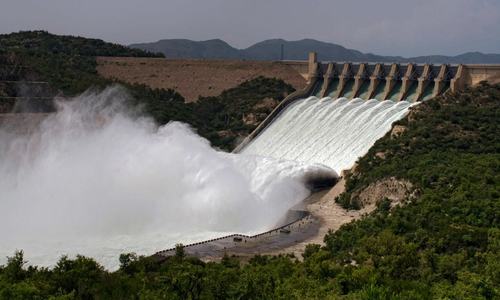
The resolution adopted by the committee on foreign affairs, water and power, called upon the World Bank to constitute a court of arbitration to adjudicate on issues raised by Pakistan against India’s ongoing construction of Kishanganga and Ratle hydro projects.
Under the Indus Waters Treaty (IWT), it is the responsibility of the World Bank to play its role without further delay.
Editorial: Water wars
Until the World Bank constitutes the court of arbitration, it must persuade India to put an immediate halt to ongoing construction of the Ratle dam till the issue is resolved, read the joint resolution adopted unanimously by both the government and opposition members of the committees.
Two NA committees urge World Bank to form court of arbitration
The construction of dams on the western rivers by India has brought the two countries at loggerheads and Pakistan has engaged the World Bank, a facilitator of the IWT, to stop India from going ahead with the construction so that the treaty could be followed smoothly in future.
The committees were briefed on the agenda — Indian threat on the Indus Waters Treaty and to chart out a course of action for Pakistan. The meeting was co-chaired by Awais Ahmad Khan Leghari and Muhammad Arshad Khan Leghari, MNAs and chairmen of the committees.
Ahmer Bilal Soofi, a special invitee and expert on international treaties, informed the committees that India couldn’t scrap the IWT unilaterally. “Scrapping of the treaty unilaterally will be a violation.”
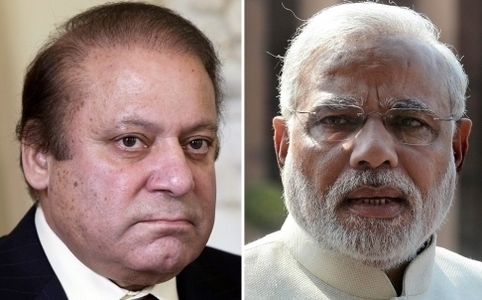
Indian Prime Minister Narendra Modi’s announcement of scrapping the IWT would also pose a serious threat to peace in the region, he added.
To scrape the treaty, Mr Soofi said there would be a need for negotiating another treaty. It was also a part of the international treaty to maintain a minimum level of water in rivers, he said.
Briefing the committees, Foreign Secretary Aizaz Chaudhry said all options were available with Pakistan in case India violated the IWT. He accused the Indian premier of playing politics over the issue.
“We will not let India violate the treaty,” Mr Chaudhry said, adding that Pakistan had already engaged the World Bank to look into the issue as guarantor. “We have already requested the World Bank to appoint chairman of the arbitration court”, he said.
The secretary said Islamabad would defend its right at any cost. New Delhi, he added, was using delaying tactics while “we want to resolve the issue at the earliest”.
Pakistan has serious reservations over an Indian move to construct 45 to 60 dams on the western rivers, the foreign secretary said.
Water and Power Secretary Younus Dagha said Pakistan was challenging the construction of Kishanganga and Ratle projects in the court of international arbitration. However, he added, India had not as yet started work on Ratle project.
Mr Dagha said Pakistan would construct Basha dam with indigenous resources. In the fiscal year 2017-18 PSDP funds would be allocated for construction of the dam.
A former foreign minister and leader of the Tehrik-i-Insaf, Shah Mehmood Qureshi, had said the water dispute with India had reached such alarming proportions that it could even dwarf the Kashmir issue. “We are ready to support the government on this matter,” he said. He suggested the government evolve a clear roadmap, assuring the ruling party of the PTI’s support.
On the other hand, Mehmood Khan Achakzai said Pakistan had committed a mistake in handing over the control of three rivers to India. As a result of this, he said, Pakistan was now on the defensive. He ruled out any cooperation with India on any issue.
In reply to a question, he advised members to restrict themselves to the agenda and refrain from discussing internal disputes over water as the present discussion was about IWT.
Published in Dawn January 21st, 2017