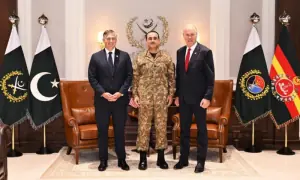
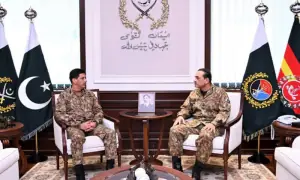
ALTHOUGH the outgoing army chief’s counterterrorism efforts in the tribal areas have been widely cited as his biggest success, many have also lauded his involvement in bringing a semblance of peace to Karachi. On a recent farewell visit to Corps V, Karachi, Gen Raheel Sharif told his men that the results of the ongoing law-enforcement operation in the Sindh capital must not be reversed with the change of command in the army. The president also echoed these concerns on Wednesday. Indeed, most residents of Karachi will concur that ever since the Rangers-led operation began in September 2013, the levels of violence in the metropolis have come down. The number of terrorism-related incidents, extortion bids, kidnappings and political murders all appear to have dropped as compared to the days before the operation. Police officials say 3,000 criminals have been apprehended, while business activity has also picked up.
However, Karachi still has many miles to go before it can be declared a safe city. For example, despite the reduction in violence overall, street crime remains endemic — a fact that has been acknowledged in the highest echelons of government. People are held up during traffic jams and in markets and other public places by armed men who do not hesitate to pull the trigger should their victim resist the mugging attempt. Without a sustained campaign against street crime, the gains of the operation will remain limited. Also, while incidents of sectarian terrorism may be down, militant cells are clearly still active in the city, as the killings during Muharram have demonstrated. The operation then has not been without criticism, especially when there have been reports of staged encounters and the torture of suspects in custody.
To truly consolidate the gains of the three-year-old operation, the authorities — specifically the provincial government, the elected mayor, the police force and the military — must look at the bigger picture. While a militarised approach to policing — by having the Rangers spearhead the operation — may have brought temporary respite, in the long term, peace in Karachi can only be established through a depoliticised, professional local police force recruited on merit, and that knows the city and its problems. Also, law-enforcement efforts must be complemented by good governance, something the city has been lacking for decades. Arguably, Karachi’s vast ungoverned spaces and growing informality provide oxygen to a plethora of rackets, including criminal and militant enterprises. Along with a strong police force, it is critical that the elected local government — led by the city mayor — has genuine powers to govern all aspects of civic life. The provincial cabinet and bureaucracy cannot be expected to assess the conditions and needs of Karachi’s sprawling neighbourhoods; this is the job of the representatives elected from these areas. Good governance and law and order have a symbiotic relationship and cannot work in isolation.
Published in Dawn, November 25th, 2016