British-Iranian woman accused of Iran sedition jailed for 5 years

LONDON: A British-Iranian woman accused of taking part in anti-regime protests in 2009 has been sentenced to five years in prison, her husband said Friday, but added that the specific charges had not been revealed.
Nazanin Zaghari-Ratcliffe, who works for the Thomson Reuters Foundation and was arrested on April 3, called her husband Richard on Tuesday to inform him of her sentence, he said in a statement.
“Nazanin has been sentenced for five years' imprisonment. The charges justifying this sentence remain secret,” Richard Ratcliffe said.
He said the sentence was handed down on Tuesday, the day after Britain and Iran announced they were appointing new ambassadors to each other's countries as part of an easing of strained diplomatic ties following the Iran nuclear accord last year.
Britain's Foreign Office said it was “deeply concerned” by the reports and offered to help bring the couple's daughter back to Britain.
Thomson Reuters Foundation CEO Monique Villa said she was “outraged” by the sentence and stressed that her organisation had no involvement in Iran.
“This is a very serious condemnation that comes without any charges or evidence being made public, I am convinced of her innocence,” she wrote.
The foundation is a charity organisation coordinating training programmes for journalists around the world.
Ratcliffe said that in her phone-call from prison Zaghari-Ratcliffe had told him: “I can't bear to be in this place any longer.
“It has been horrendous. I do not want to wake up each morning and remember where I am. I want to stay in my dreams,” he quoted her as saying.
“It remains extraordinary that Nazanin's interrogators clarify the sentence but not the crime -- because there is none,” he said, adding that the case was “shrouded in shadows and internal politics”.
“Nazanin's detention and charges have always felt like she and Gabriella are being held as a political bargaining chip for internal and international politics,” he said, referring to their daughter.
Britain's foreign ministry said Prime Minister Theresa May and Foreign Secretary Boris Johnson had both raised the case with their counterparts in Iran.
“We continue to press the Iranians for consular access and for due process to be followed,” it said.
Iran does not recognise dual citizenship.
Daughter stranded in Iran
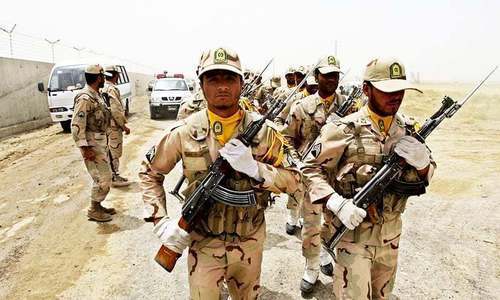
Iran's elite Revolutionary Guards earlier accused Zaghari-Ratcliffe of having taken part in the “sedition movement” of widespread protests that followed the 2009 re-election of former hardline president Mahmoud Ahmadinejad.
According to a Guards statement in June, Zaghari-Ratcliffe was “identified and arrested after massive intelligence operations” as one of “the heads of foreign-linked hostile networks”.
At a rally outside the Iranian embassy in London in June, Ratcliffe told AFP his wife was arrested as she prepared to return to Britain with Gabriella after visiting family in Iran.
Gabriella was born in Britain and has a British passport, which was confiscated by the Iranian authorities, leaving her stranded with her grandparents in Iran, he said.
Iran and Britain on Monday appointed new ambassadors for the first time since a mob ransacked the British embassy in Tehran in 2011, as part of a series of measures to boost relations after last year's nuclear deal.
British Airways also this month became the first British airline in four years to fly directly to Iran following the lifting of some sanctions after the deal between Iran and Britain, China, France, Germany, Russia and the United States.
Iran maintains a deep historical distrust of Britain, dating back to the early 20th century when London meddled frequently in Iranian politics in order to secure cheap access to oil for the Anglo-Iranian Oil Company, which later became BP.
Britain played a key role in prodding the Central Intelligence Agency into carrying out a coup in 1953, toppling the hugely popular prime minister Mohammad Mosaddegh who had called for Iran's oil to be nationalised.