0
0

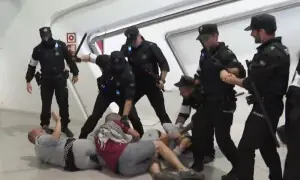
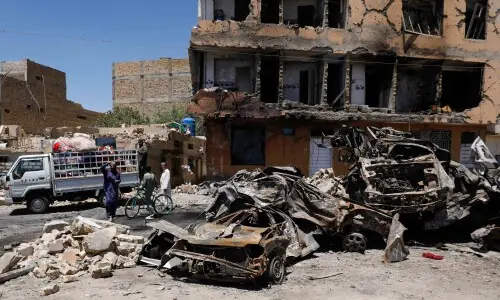
SRINAGAR: More than 40 days of clashes between protesters and security personnel have overwhelmed the main hospital in India-held Kashmir, where some patients with severe injuries said they had been beaten in their homes by troops.
House-to-house searches continued on Friday, authorities said, for suspected ringleaders of street protests set off by the killing on July 8 of a popular field commander of a militant group.
At least 65 people have been killed and 6,000 injured in the ensuing clashes, many of them wounded by shotgun rounds fired by security forces enforcing a curfew across the disputed Himalayan region.
Indian army apologises for death in custody of college lecturer
Pictures taken by a photographer at Srinagar’s main SMHS Hospital on Thursday showed men with wounds across their backs and buttocks they said had been caused by beatings.
Another showed a crying boy, his head swathed in bandages, being comforted by his family members, who said he had been wounded by shotgun pellets.
The Indian army has apologised for the death in custody of Shabir Ahmad Mangoo, a 30-year-old college lecturer.
The commander of India’s Northern Army denounced the beatings and ordered an inquiry. “These actions are absolutely not sanctioned. These actions are absolutely not tolerated,” Lieutenant General D.S. Hooda told a news conference in Srinagar on Friday.
India’s security laws grant wide discretion to the armed forces in “disturbed” areas such as Kashmir. Human rights activists say those responsible for excessive violence are rarely brought to justice.
Physical, mental stress
The doctors said they were exhausted, with one saying they had performed more eye operations in the past month than they had over the last three years.
“We are in physical and mental stress,” said Nisarul Hassan, a senior consultant at the SMHS Hospital.
Dozens of volunteers received the injured at the hospital as ambulances brought them in from rural areas.
Paramedics and ambulance drivers said government forces attacked them on the way. The curfew restricts movement, severely disrupting daily life.
Another doctor said patients had been brought in with abdominal injuries from rifle bullets. “Our operating theatres are working non-stop,” the doctor said.
Troops have resorted to firing rifles and shotguns to quell stone-throwing protests.
India’s Central Reserve Police Force, which deploys a large contingent of paramilitaries in the disputed region, told a regional court that more than 100 people had been partly or completely blinded by shotgun pellets.
Published in Dawn, August 20th, 2016