THE IMF estimates that closing the gender gap in Pakistan can boost GDP by 30pc. Pakistan ranks the second last (144th position) in Global Gender Gap Index 2015.
The gap is highest in the economic participation and opportunity category (rank 143), followed by educational attainment (rank 135) and health and survival (rank 125).
Thus, reforms should be wide ranging and must consider all these aspects in order to raise the current low ratio of female labour force participation.
The government must also pursue proactive measures for increased representation of women in senior decision-making positions
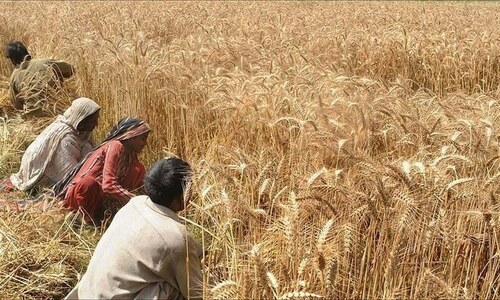
Occupation-wise, they are concentrated in agricultural skilled workers, elementary (unskilled) occupations, and professionals (related to education and health services). Female workers’ wages are 39pc lower than those of men in the country. In order to reduce such a wide gap and occupational segregation, there is a need for legislation dealing with non-discrimination in employment related matters and requiring equal pay for equal work as well as work of equal value.
Raising the female wage employment from current abysmal levels, there is a need for expanding and strengthening gender sensitive policies for female wage employment. Maternity leave duration needs to be increased from current 12-14 weeks, to ensure compliance with ILO Convention 183. There must be a provision for partially paid parental leave. The maternity, paternity and parental leave must be publicly financed (through general tax revenues) or through Workers Welfare Fund (WWF).
Currently, law requires payment of maternity leave by the employer (except for low paid workers registered with social security institutions), which explains low demand for women workers by the employers. Law must also provide flexible work arrangements (including reduced work time, telecommuting) for workers with family responsibilities.
Women labour force participation can also be raised by enlarging care options by provision of day-care centres at enterprise and after-school programmes. The government must allocate adequate budget for providing comprehensive, affordable and high quality day care services thereby freeing up women’s time and leading to higher female labour force participation rate (FLFPR).
A related aspect is the provision of paid nursing breaks for women workers with children. Although the Women Empowerment Package in Punjab requires establishment of day-care centres in private sector, the employer must be required to provide paid nursing breaks to women with children under a specific age.
The ILO and OECD research has shown that work-family reconciliation policies (including availability of part time work for women, paid parental leave, child care subsidies, etc) can have a significant positive impact on female labour force participation.
The government must also pursue proactive measures for increased representation of women in senior decision-making positions. Proactive measures in human resource and employment policies, gender requirements in selection and recruitment, and incentive mechanisms for retention can help enhance women’s representation in the public and private sectors.
Women representation in senior management positions must be increased through affirmative action measures, for example, by introducing quotas for women on corporate boards, as seen more in the European Union. Similar initiative is under process by the Punjab government by requiring representation of 33pc women in all boards of statutory organisations, public sector companies and committees as well as special purpose task force and committees.
Institutional developments, where gender-neutral laws are promulgated and women are encouraged to harmonise work and family as well as excel in their careers, are necessary for increasing women workforce participation. Without these reforms, fixing quotas for women and job creation programmes would not bring about the desired result.
Published in Dawn, Business & Finance weekly, March 14th, 2016