9
9

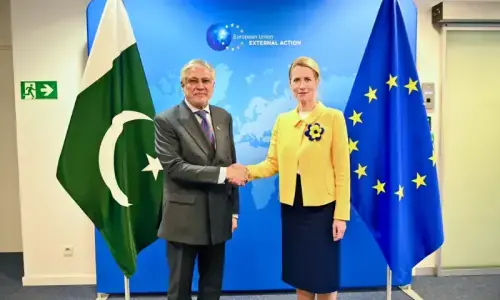
ISLAMABAD: The European Union (EU) has said that Pakistan’s fight against terrorism has created new human rights challenges that need to be addressed urgently.
In the first compliance report of the GSP Plus status for Pakistan, the EU has said that respecting, protecting and promoting human rights can be an effective tool amid efforts to curb militant extremism.
The GSP Plus status allows lenient exports to the EU. In Pakistan’s case, the biggest beneficiary of this facility has been the textile sector.
The report says that all 14 beneficiary countries demonstrated progress, strengthening their respective domestic institutions responsible for implementation of the 27 key international conventions.
The most significant of these for Pakistan was the ‘International Covenant on Civil and Political Rights (ICCPR)’. The EU says courts in Pakistan are susceptible to pressure or intimidation from powerful individuals.
“Pakistan maintains the death penalty for a large number of crimes, some of which do not fall into the category of ‘most serious crimes’ according to the ICCPR,” it states. The report noted that more than 6,000 people were currently on death row in Pakistan, attributing the high number to a moratorium on death penalty since 2008. The moratorium was lifted in December 2014.
“The government argues that capital punishment is necessary to fight terrorism, and by early December 2015, over 300 persons had been executed,” says the report. “The overwhelming majority was convicted for common, albeit serious, crimes.”
The report observes that under the 21st Amendment, military courts have been given powers to try civilians involved in terrorism-related offenses. It says, however, that a vague definition of ‘terrorism-related offenses’ is problematic and that the criteria for transferring cases have not been made public.
It also notes that misuse of the blasphemy law continued largely unabated in 2015.
Referring to the media, it says that while media play an active role by stimulating debate and putting pressure on the government, threats of violence and killings of journalists are frequent. Pakistan ranks between 150 and 160 on the World Press Freedom Index, with 14 journalists and media workers reported to have been killed in 2014.
“According to Reporters Without Borders, Pakistan remains one of the most dangerous countries in the world for a journalist,” says the EU report. “It has been repeatedly confirmed that criticism of the military establishment is not tolerated.”
Published in Dawn, January 30th, 2016