8
8

BEIJING: President Mamnoon Hussain, speaking at the second annual World Internet Conference in Wuzhen, China, on Wednesday, said Pakistan is pursuing a vision of accelerated digitisation in order to transform itself into a knowledge-based economy, Radio Pakistan reported.
Our focus remains on development of Information and Communications Technology (ICT) infrastructure, he said, with special emphasis on serving marginalised segments of society and bridging the digital divide.
Mamnoon said the government realises the potential of ICT for socio-economic growth, and considered it a key enabler to achieve self-sufficiency, transparency, good governance and empowerment of the people.
The information revolution has fundamentally altered perceptions of reality, time and space, Mamnoon said, adding that Information Technology is rapidly reshaping identities, geo-politics and the security dynamics of the 21st century, as well as other paradigms.
The conference was held in the southeastern city of Wuzhen in Zhejiang province, where Chinese President Xi Jinping once was provincial party secretary. It was organised by the Cyberspace Administration of China, the Cabinet agency that enforces internet controls.
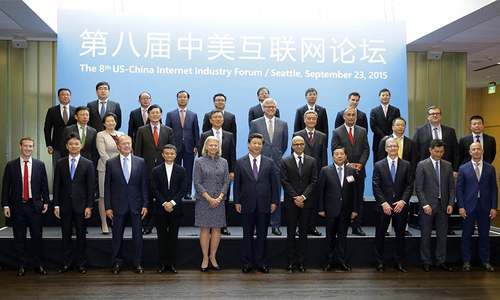
Organisers said some 2,000 people were due to attend, including representatives of Apple Inc, Microsoft Corp, Lenovo Group and Baidu Inc and officials from Russia and Kazakhstan.
'Cyberspace shouldn't be a battlefield'
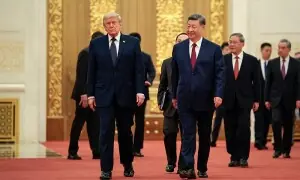
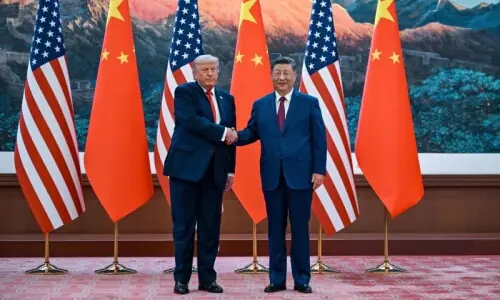
Chinese President Xi Jinping, addressing the conference, called for governments to cooperate in regulating Internet use and fighting crime and terrorism online, stepping up efforts to promote controls that activists complain stifle free expression.
Xi's government operates extensive Internet monitoring and censorship and has tightened controls since he came to power in 2013.
The Chinese president called for creating a global "governance system" to reflect the "wishes and interests of all countries".
He said that would help fight online crime and terrorism and promote "healthy development" of the Internet.
Xi's comments reflect the growing assertiveness of China's ruling Communist Party in promoting its own vision for how to regulate global finance, technology, news media and other matters.
"Cyberspace shouldn't be a battlefield," Xi said. "There should be no double standards in safeguarding network security."
On Wednesday, Xi also called on other governments to respect "network sovereignty", a reference to efforts by leaders of China, Russia, Iran and some other nations to enforce controls over once-borderless cyberspace.
At last year's Wuzhen conference, organisers tried unsuccessfully to persuade global Internet companies to endorse a call for the world community to "respect Internet sovereignty" and "spread positive energy".
'All out assault on Internet freedoms'
On the eve of the conference, the human rights group Amnesty International appealed to technology companies to resist Chinese initiatives that might curb freedom of expression or worsen human rights abuses.
"Under the guise of sovereignty and security, the Chinese authorities are trying to rewrite the rules of the Internet so censorship and surveillance become the norm everywhere," said the group's East Asia research director, Roseann Rife, in a statement. "This is an all-out assault on Internet freedoms."
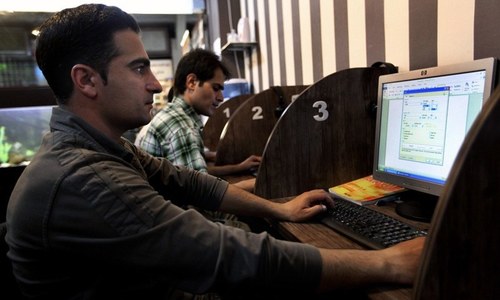
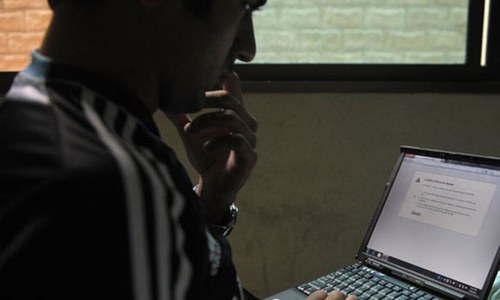
The Communist Party promotes Internet use for business and education but tries to block material deemed obscene or subversive. It tries to prevent users in China from seeing foreign websites run by human rights groups and news outlets, the Google search engine and social media such as Facebook.
Early this year, Chinese academics and entrepreneurs complained Beijing had tightened filtering to unusually high levels, preventing them from seeing materials abroad needed for work.
Security experts say China is the biggest source of hacking attacks aimed at governments and companies. Last year, United States (US) prosecutors charged five Chinese military officers with stealing secrets from American companies.
In September, Xi and US President Barack Obama agreed to refrain from conducting or supporting online theft of trade secrets or competitive business information.