SRINAGAR: Authorities tightened security dramatically in parts of Indian held Kashmir on Friday to prevent protests ahead of a visit by Indian Prime Minister Narendra Modi.
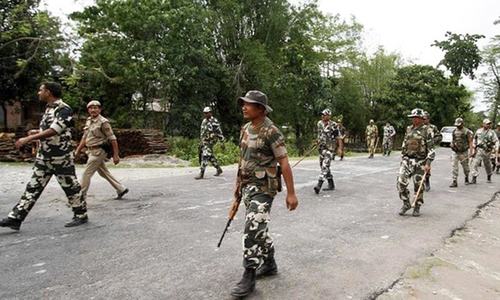
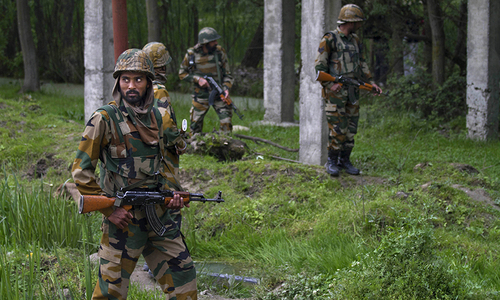
Indian forces erected steel barricades and laid razor wire on roads and ordered residents to stay indoors in old parts of Srinagar, the largest city in the region. The city's main mosque was cordoned off and Friday prayers were barred.
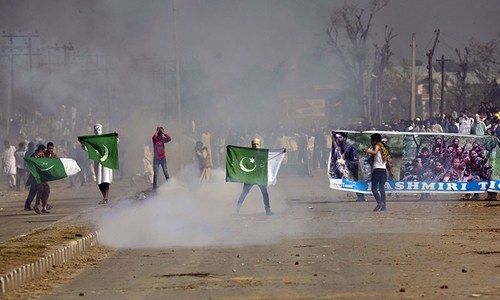
Separatist leaders had called for a protest on Friday at the mosque to honour tens of thousands of Muslims they say were killed in riots with Hindus in 1947. As of evening there were no reports of clashes or protests.
Separatists have also planned a rally on Saturday near the site of a public meeting by Modi in Srinagar.
Police have detained separatist leaders and hundreds of their supporters to prevent the protest against Indian control over the disputed region.
Many shops were closed in Srinagar and traffic was disrupted as police checked vehicles entering the city.
Authorities canceled university and college exams scheduled for Friday and Saturday. Preventive arrests and curfews are fairly common in the Indian-controlled portion of Kashmir, particularly ahead of important events that authorities fear could be targeted by rebels or used by activists to stage protests against Indian rule.
Elsewhere in India, a growing number of writers, artists, scientists and historians have said they are alarmed by a rising climate of religious intolerance and violence.
Many have criticised Modi and his Hindu nationalist Bhartiya Janata Party for not speaking out against religious attacks, saying their silence has encouraged Hindu hard-liners to justify the attacks and assert Hindu superiority.
In Kashmir, Modi is to inaugurate a power project and offer a financial aid package a year after the region was devastated by massive floods.
Muslim-majority Kashmir is divided between Hindu-dominated India and Muslim-majority Pakistan, which both claim the entire territory.
A number of rebel groups have operated in Kashmir since an insurgency erupted in 1989. More than 68,000 people have been killed in the fighting and the ensuing crackdown by Indian forces.
Residents of the Indian-held portion strongly favour independence or a merger with Pakistan.
Their deep opposition to Indian rule is often expressed through street demonstrations since Indian troops largely suppressed the armed uprising.