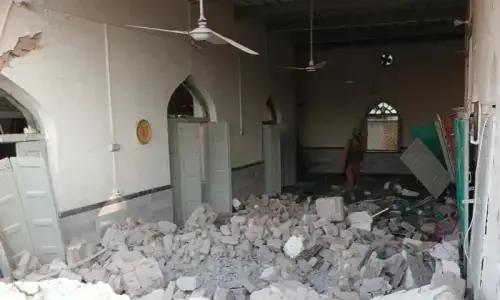
The shocking aerial bombing of a hospital run by Médecins Sans Frontières in Kunduz, Afghanistan, by US forces has bloodily underlined several problems with the American military approach in the region and the waging of counter-insurgencies generally.
To begin with, the horror of what was inflicted on the MSF-run hospital has been compounded by the reluctance of American officials to immediately and clearly acknowledge that, no matter what the circumstances, it is simply unacceptable for its forces to bomb a hospital.
Know more: US planes bomb Kunduz hospital; 19 killed
Worse yet, there have been shameful indirect suggestions that the bombing while regrettable may have been justified in the heat of the battle because Afghan Taliban fighters had either sought cover inside the hospital premises or were continuing to attack US and Afghan forces from inside the hospital.
Kunduz, it should be emphasised, had already fallen last week to the Afghan Taliban in a spectacular collapse — it stretches credibility to argue that events in and around the MSF hospital on Saturday were somehow pivotal to the retaking of Kunduz or the defeat of the Taliban.
However, the American refusal to condemn the incident and try and shield its military from strident criticism is a regrettably familiar reaction. Be it the night raids inside Afghanistan that former president Hamid Karzai so fiercely opposed or drone strikes in Fata that the US government pretended never killed civilians or even extraordinary events like the Salala incident in Mohmand Agency in 2011, apologies are usually late or never delivered when locals are killed.
The reaction tends to be very different when Americans, such as the kidnapped Warren Weinstein, are accidentally killed by US military operations.
True, the US military does try and avoid or minimise civilian casualties, unlike the militants and insurgents, who often deliberately target civilians. But there is also a clearly different and very necessary burden on any state that is fighting an insurgency — to win, the state must be seen to hold itself to higher standards of behaviour and discipline than the insurgents and militants.
The whole point to the US military operations in Kunduz — nine months after combat operations were to have officially ended — was to try and help the Afghan state reassert its legitimate control of the city. That aim has surely been seriously undermined by the hospital bombing.
Inadequate as the initial US response has been, there are lessons that others can draw from the experience. Clearly, no matter how bad the news, it is important that it be made public rather than buried. Information aids accountability and can help improve tactics. Contrast the widespread coverage of the Kunduz disaster with the virtual media blackout of the Pakistani military operations in Fata, especially Operation Zarb-i-Azb in North Waziristan Agency. The state claims of sustained progress and non-existent civilian casualties should be weighed against the reality that the operation still continues 15 months on.
Published in Dawn, October 6th , 2015
On a mobile phone? Get the Dawn Mobile App: Apple Store | Google Play