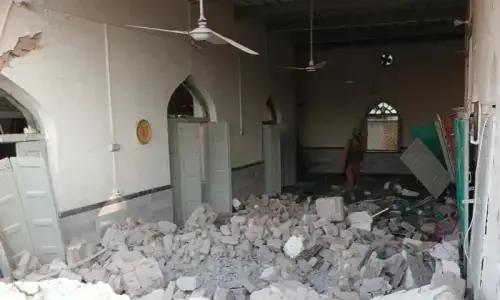
THE stampede in Mina last week at the culmination of Haj has sent shockwaves across the Muslim world, mainly due to the number of casualties in the incident.
As per official Saudi figures, over 750 pilgrims died in the tragedy which occurred at the site of the ‘Jamarat’ just outside Makkah, while over 900 have been reported injured.
Given the high human toll, the Saudi authorities must take an unbiased, transparent look at Haj management — pilgrims have died in numerous similar incidents over the past few decades — in order to spot the flaws and prevent the recurrence of such calamities.
Also read: Death toll of Pakistani pilgrims in Mina rises to 40
While there has been a construction boom in both Makkah and Madinah over the past few years, it is debatable if this development has kept in mind the safety requirements that such a large number of pilgrims — over two million hajis now reportedly visit the holy places every year — demand.
Secondly, the Saudi Grand Mufti has cleared the royal family of all responsibility for the tragedy, saying that “fate and destiny are inevitable”.
Considering that Saudi Arabia is an absolute monarchy and everything is overseen by the royal family, the cleric’s remarks seem premature.
Moreover, the Saudi health minister’s comments blaming pilgrims soon after the tragedy were hasty and insensitive — how could the official make such a sweeping statement so soon after the disaster?
Within the Muslim world, the harshest criticism of Saudi Arabia’s Haj management efforts is coming from Iran; this is mainly because the Islamic Republic lost the biggest number of pilgrims in the stampede — around 130 individuals.
Be that as it may, Tehran should refrain from point-scoring in this regard. What is needed is a thorough investigation to look into all aspects of the tragedy.
For example, some eyewitness accounts claim major roads around the Jamarat were blocked in the run-up to the stampede, which swelled the size of the crowd, while others claim there was a lack of adequate police presence.
All these angles must be investigated. Since it is true that many pilgrims do lack discipline, it should be incumbent upon Muslim states to make safety training a compulsory part of Haj classes, along with religious rituals.
The Saudis should involve experts from other parts of the Muslim world to help make Haj safer, while limits should be considered for the number of times people can go for Haj once they have performed their obligatory pilgrimage.
Published in Dawn September 29th, 2015
On a mobile phone? Get the Dawn Mobile App: Apple Store | Google Play