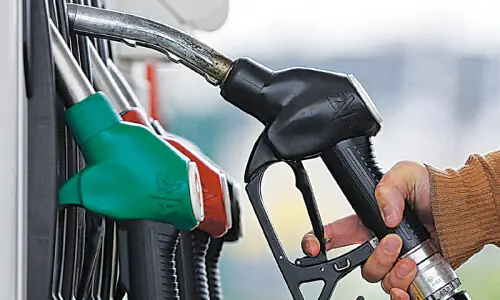
KATHMANDU: Nepal on Sunday imposed nationwide restrictions on vehicle use due to growing fears of a fuel shortage after protesters seeking changes to a new constitution blocked a major border trade route.
Drivers are allowed on the road only on alternate days, depending on whether their licence plates end in odd or even numbers, as a result of the blockade on the India-Nepal border since Thursday night.
"The government has decided to limit the number of vehicles moving across the country due to the fuel shortage," home ministry spokesman Laxmi Prasad Dhakal told AFP.
"We are facing a huge problem because of the blockade in the south and are trying to use the fuel we have effectively," he said.
The blocked checkpoint in the town of Birgunj, 90 kilometres south of the capital, serves as the key hub for oil and food imports into landlocked Nepal.
The movement of cargo through other border checkpoints has also declined, officials have said.
The protesters, who belong to the Madhesi community, are angry about plans to divide the Himalayan nation into seven federal provinces under the charter adopted on September 20.
More than 40 people have died in weeks of clashes between police and protesters from the Madhesi and Tharu communities, ethnic minorities who say the new internal borders leave them under-represented in the national parliament.
Commuters have formed long lines at petrol stations in Kathmandu on fears of a shortage.
The government has also asked international airlines to bring their own fuel to refuel their planes because of concerns of an impending shortage on the ground, Kathmandu airport spokesman Purna Prasad Chudal told AFP. He did not elaborate on how this could be done.
The new constitution is the final stage in a peace process that began when Maoist rebels laid down arms in 2006 after a decade-long insurgency. They won parliamentary elections two years later and abolished the monarchy.
But the adoption of the charter, Nepal's first to be drawn up by elected representatives, has been marred by weeks of violent protests in the southern plains, home to half the country's population.
Former Maoist prime minister Baburam Bhattarai on Saturday resigned from his party and parliament in support of the protesters.
The violence has also sparked concern in India, which has traditionally exerted significant political influence in Nepal.
Work on the new constitution began in 2008 after the Maoists won parliamentary elections and abolished the monarchy. But power-sharing squabbles between parties stymied progress.
Lawmakers finally reached agreement in June this year, spurred by a 7.8-magnitude earthquake two months earlier that killed nearly 8,900 people and destroyed more than half a million homes.
Also read: Monsoon troubles Nepal quake survivors three months on