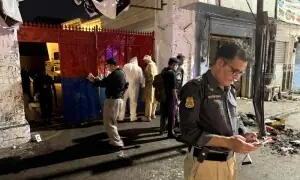
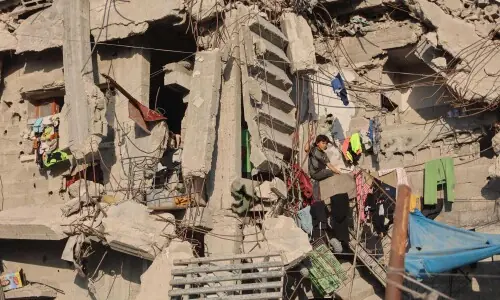
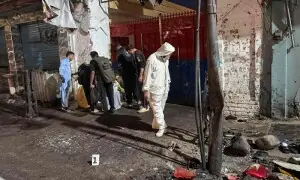
KABUL: Afghanistan's intelligence agency claims Pakistan was involved in last week's attacks on Kabul that killed more than 50 people and wounded hundreds.
Hassib Sediqi, the spokesman for the National Directorate of Security, said Wednesday that Afghan authorities have confirmed “Pakistani military interference” in the attacks last Friday.
Sediqi says “special circles of the Pakistani military were behind all those attacks.” He claims the Pakistanis were working through the Haqqani network, one of the most brutal militant groups in Afghanistan.
There was no immediate reaction from Islamabad, which has in the past denied such accusations from Afghanistan. Islamabad wields considerable influence over the Taliban, which have waged a 14-year war against Kabul.
Read: Ashraf Ghani slams Pakistan over recent Kabul attacks.
The development comes soon after Afghanistan President Ashraf Ghani and Chief Executive Abdullah Abdullah in statements a day apart accused Pakistan of implicit support to Taliban, who have recently been engaged in brutal offensives in Afghanistan, which has been struggling to combat terrorism ever since the withdrawal of Nato forces.
Also read: Abdullah Abdullah accuses Pakistan of helping Afghanistan's enemies.
Pakistan recently brokered a first round of peace talks between the Aghan government and the insurgent group, which took place in Murree. But negotiations fell into jeopardy after the announced death of Taliban chief Mullah Omar.
According to Islamabad, a second round of peace talks has been postponed on the Taliban's insistence after confirmation of Mullah Omar's death sent the militant group into a leadership crisis, with reports of internal conflicts on the issue of Omar's successor.
Take a look: Peace talks in jeopardy: Afghan Taliban postpone second round of talks.
Meanwhile, the Taliban on Wednesday said the spike in attacks in Kabul was designed to prove the Taliban's new leader was firmly in charge, the group said, but Mullah Akhtar Mohammad Mansour's position remains precarious as clerics and top militants meet secretly to decide whether to back him.
Divisions are deep over Mansour's appointment as head of the hardline Islamist movement fighting since its ouster in 2001 to overthrow Afghanistan's Western-backed government and re-establish strict Islamic rule.
A Taliban spokesman confirmed two of three big suicide bombs last week within 24 hours were in response to rumours the insurgents had been weakened by disputes following confirmation of the death of founder Mullah Mohammad Omar.
Know more: Taliban leadership struggle fuels wave of attacks in Afghanistan.