PESHAWAR: A recent spike in attacks in Kabul was designed to prove the Afghan Taliban's new leader was firmly in charge, the group said, but Mullah Akhtar Mansoor's position remains precarious as clerics and top militants meet secretly to decide whether to back him.
Divisions are deep over Mansoor's appointment as head of the hardline Islamist movement fighting since its ouster in 2001 to overthrow Afghanistan's Western-backed government and re-establish strict Islamic rule.
A Taliban spokesman confirmed two of three big suicide bombs last week within 24 hours were in response to rumours that the insurgents had been weakened by disputes following confirmation of the death of founder Mullah Omar.
“Some of these attacks were already planned, but the aim at this stage was to convey a message to those saying the Taliban had been split into factions,” said Zabihullah Mujahid.
“We wanted to convey a message that the Emirate of Afghanistan is still intact and is capable of carrying out attacks on highly guarded installations,” added Mujahid
Whether the violence in the capital indicates a long-term escalation of the insurgency and an abandonment of fledgling peace talks begun last month may become clearer once Taliban leaders and religious scholars resolve the leadership row.
According to several Taliban sources, a group of around 1,000 religious scholars has been meeting senior figures in the movement opposed to Mansoor. He was named leader by the Taliban's shura council.
They are also due to meet Mansoor himself, although direct contact has not been possible because of security concerns, according to people close to him.
Both sides dig in
Mansoor's appointment last month after the Taliban were forced to confirm the death of Mullah Omar has shaken the movement, which has launched an increasingly successful insurgency since NATO troops ended combat operations last year.
The fact that Omar had apparently been dead for two years before the announcement and that Mansoor, his longtime deputy, was appointed leader by a body based in Pakistan rather than Afghanistan, has deepened resentment.
Mansoor's legitimacy has been challenged by Omar's family, as well as by longtime rivals and the former top official at the Taliban's Qatar office, who resigned last week.
While both sides say they will accept the clerics' decision, neither appears inclined to give ground, heightening the risk of a prolonged standoff.
“The majority of people are with us. We aren't going to form a faction but we are the representatives of the Islamic Emirate,” said Mullah Manan Niazi, spokesman for an anti-Mansoor faction.
“If Mansoor and his few men refuse to accept the decision of religious scholars, then we call whatever they do in Afghanistan un-Islamic and against the Islamic Sharia,” he added.
Niazi said Mullah Omar's 26-year-old son Yaqoob had the support of the group to take over the leadership.
For their part, Mansoor's followers appear unwilling to budge, saying that whatever the decision of the scholars, he would not give up the title of “emir”.
“He has been appointed emir by the shura, so there is no way he will step down on demands of these people,” Mujahid said.
Touting support
Widely considered a pragmatist, Mansoor recently approved the creation of an international Taliban office in Qatar to act as a point of contact with the rest of the world and a potential avenue for peace talks with the Afghan government.
But in one of his first public acts after being named leader, Mansoor issued an audio statement pledging to continue the insurgency, which costs thousands of lives every year, and dismissed the idea of peace talks as “enemy propaganda”.
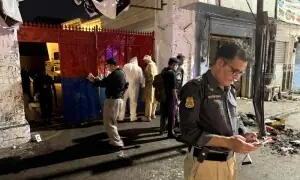
More than 50 people were killed and hundreds wounded in the Kabul attacks, which have derailed the tentative peace process and driven a wedge between Afghanistan and neighbouring Pakistan, where many Taliban leaders are based.
With Taliban field commanders suspicious of any sign the armed struggle could be abandoned, and with competition from the self-styled Islamic State growing, Mansoor must show his fighting credentials.