0
0

ISLAMABAD, Oct 6: The establishment of Saarc Human Resource Development Centre (SHRDC) in Pakistan is a step in the right direction to undertake research, impart training and disseminate information about HRD-related issues in the region.
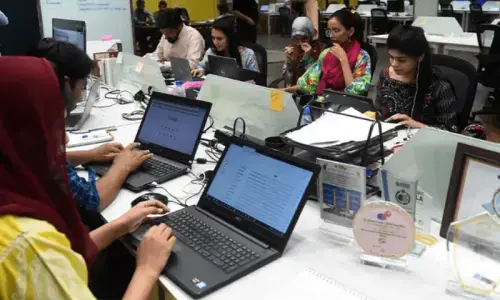
This was stated by Bangladeshi High Commissioner F.A. Shamim Ahmed, while speaking at the inaugural session of a training programme on ‘Gender and Development’, organized by the SHRDC here on Monday.
Highlighting the main objectives of the training programme, the high commissioner said it would strengthen the abilities of participants to carry out critical analysis regarding conceptualization of gender issues.
It will help in evaluation of gender policies from various angles, enabling the participants to understand the process of mainstreaming gender analysis for developing and launching practical programmes, he added.
The high commissioner said, in South Asia, nearly 60 per cent of adult females were illiterate as compared to 30 per cent in case of males. This shows the large gap between the ratio of male and female literacy, he added.
He said South Asian women constituted about 21 per cent of the world female population, while 44 per cent of the world’s literate women lived in South Asia. Three out of every five South Asian women are illiterate, including three-fourth of Pakistani women and nearly four-fifth of Nepalese women, he added.
Mr Ahmed said girls in India, Nepal, Bangladesh, Pakistan and Bhutan received less than 1.2 years of schooling.
He informed the participant that discrimination against women began at birth. Female foeticide and infanticide, neglected health, and gender-biased feeding practices combined with heavy work burdens, are manifestations of son preference and the patriarchal system of society which prevailed across the region, he added.
“Participation of women in South Asian economy is only a fraction as compared to men.
Only six per cent of region’s judges are women, nine per cent of civil services posts are held by women, and less than one per cent of all female civil servants are in decision-making positions.”
In view of these gloomy pictures, he said, women worked from dawn to dusk, but their economic contribution was scarcely acknowledged at national level. Their access to health, education and other facilities is also less than of men, he added.
Emphasizing on joint efforts by civil society, governments, private sector and forums like Saarc, the high commissioner stated that hard work was required in the area of gender and development in general and women development in particular.
He suggested that there should be equality in law, access to capacity building, economic opportunities and governance.