44
44


IT is perhaps a testament to the hopes and dreams of many in the region that an overnight stopover in Pakistan, squeezed between visits to Dhaka and Kabul, by a senior Indian bureaucrat can still generate so much interest.
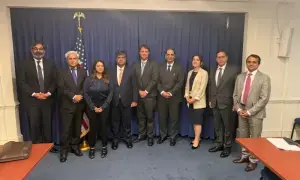
Indian Foreign Secretary S. Jaishankar’s visit to Islamabad may have been billed by the Indian government as part of a so-called Saarc yatra, but it was always going to be bilateral issues that dominated the agenda in Islamabad.
The real question — given that few anticipated any kind of breakthrough on Tuesday — was what kind of tone the foreign secretaries would set in their interaction. Now, the answer is known: a cautious, bureaucratic tone meant to avoid controversies and which gave neither cause for much hope nor great sorrow.
In the jargon of the times, Mr Jaishankar and his Pakistani counterpart, Aizaz Chaudhry, played up modest convergences and downplayed significant divergences.
On display, then, was an old, gentle game: India mentioned Mumbai, Pakistan referred to the Samjhota Express; Pakistan mentioned alleged Indian involvement in Balochistan and Fata, India pointed to alleged Pakistan-based anti-India militancy. Both sides brought up violence along the LoC and Working Boundary.
As host, Pakistan mooted the softest of CBMs (people-to-people contact, religious tourism, media and sporting ties, etc) while, as the guest, India graciously promised to dwell on the suggestions. As is the norm, the more meaningful communications — getting down to brass tacks, as it were — would have taken place behind closed doors and in confidence.
Know more: Samjhota Express, LoC violations discussed: Aizaz Chaudhry
For the Pakistani side, the main interest was likely to try and determine how the government of Prime Minister Narendra Modi is planning to address the bilateral relationship in the immediate future.
Is the approach to remain wrapped up in the broader Saarc context, a sign that Mr Modi is content to let ties remain frozen, or is the Saarc emphasis really to provide domestic political cover while Mr Modi engages Pakistan and seeks some genuine progress on the major issues?
For New Delhi, the main interest was likely to determine whether the military-dominated, but civilian-fronted Pakistani policy on India is willing to address its concerns about regional terrorism and India-centric militants tolerated by Pakistan.
What is discussed behind closed doors though will eventually be reflected in the public positions. If the resumption of full-spectrum talks is the goal, then this hesitant dance dubbed as ‘talks for talks’ is well worth the effort.
In truth, on some issues there is really little of substance left to negotiate — Sir Creek and Siachen in particular. And much depends on political will. So how the talks are structured may in fact determine what the outcomes are.
Mr Modi has already shown his petulant side by cancelling foreign secretary-level talks last year and the state here has shown its intransigence over the Mumbai attacks-related trials. Political leadership is what’s needed, but will it materialise?
Published in Dawn March 5th , 2015
On a mobile phone? Get the Dawn Mobile App: Apple Store | Google Play