0
0


It is neither the king of fruits nor the queen, but it still wears a crown: pomegranates could easily be described as a royal fruit. The large red, almost round fruit with a crown on its head attracts the beholder to pick one up. When the shell is opened, one finds it hard to resist the blood red, ruby-like seeds within. Toss the seeds in your mouth and the sweet and tangy juice trickle down your palate.
But of course, that is just one way of savouring pomegranates’ rich flavour. From fresh salads to juice, from exotic cuisine to concentrates, pomegranates have a royal place in everything you can consume.
The pomegranate is a nutrient dense food, rich in phytochemical compounds, besides high levels of flavonoids and polyphenols — potent antioxidants offering protection against heart disease and cancer. A glass of pomegranate juice has more antioxidants than green tea, blueberries and cranberries. A compound found only in pomegranates called punicalagin is shown to benefit the heart and blood vessels. Punicalagin is the major component responsible for pomegranate’s antioxidant and health benefits.
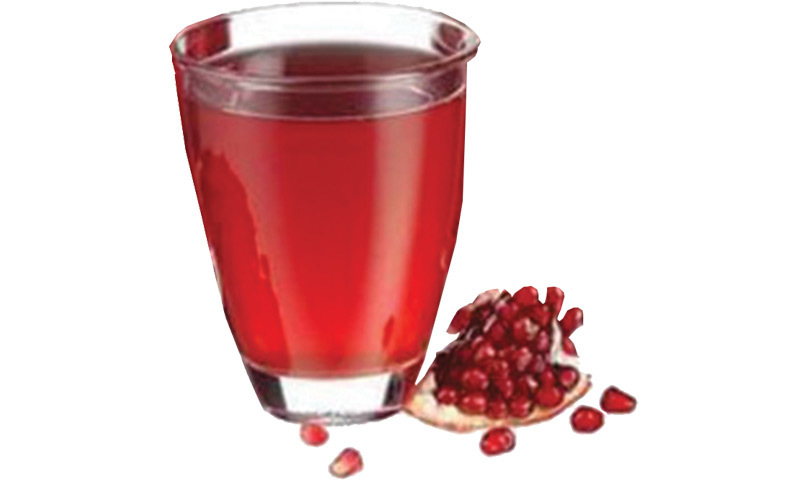
Since pomegranate is mostly a bit on the sour side, it is usually sweetened for beverage purposes. Pomegranate juice is widely made into grenadine for use in mixed drinks. At home, the juice can be easily extracted by reaming the halved fruits on an ordinary orange-juice squeezer. Pomegranate juice can be used in soups, jellies, sorbets, sauces as well as to flavour cakes and baked apples.
Delicious and loaded with goodness, the pomegranate is a ‘superfood’ that goes straight to your heart
Pomegranates are also used in the preparation of traditional Persian recipes such as fesenjan, made from pomegranate juice and ground walnuts; rice pilaf and delicious ash-i-anar soup. Pomegranate concentrate is a popular item used in the Middle Eastern and Mediterranean recipes. The juice is concentrated and stronger, and when added in cooking, gives unique flavour and intense sweet taste.
 |
Pomegranate seeds are used as spice known as anardana (Persian: anar + dana, pomegranate + seed) in Indian and Pakistani cuisine, but also as a substitute for pomegranate syrup in Persian cuisine. These seeds are separated from the flesh, dried in the sun for 10–15 days, and used as an acidic agent for chutney and curry preparation. Ground anardana is also used, which results in a deeper flavouring in dishes and prevents the seeds from getting stuck in teeth which is a wee bit annoying.
Separating its juicy delicate arils may seem like a lot of work but getting at those delicious nutrient rich seed may be well worth it. The task is simplified by using a bowl of cold water: cut the crown off the fruit, removing with it some of the pale-yellow pith; take care not to pierce the seeds within.
Lightly score the skin in quarters from top to bottom. Immerse the scored fruit in a large bowl of cool water and soak for five minutes. Holding the fruit under water, break the sections apart with your fingers, separating the seeds from the membrane. The seeds will sink to the bottom of the bowl. Discard the skin and membranes; drain the seeds and dry on paper towels.
The pomegranate fruit is judged ripe when it develops a distinctive colour and imparts metallic sound when tapped by the finger. While buying, choose pomegranates that have smooth skin, free from any bruises, cuts or mould. You can store the fruits in cool dark place at room temperature for five to eight days or keep them in the refrigerator for a couple of weeks. In general, they possess a long shelf life.
The juice sacs may be frozen intact or the extracted juice may be concentrated and frozen, for future use.
Published in Dawn, Sunday Magazine, December 28th, 2014