6
6

KARACHI: Former military ruler, retired general Pervez Musharraf, criticised the West on Thursday for not recognising the Taliban, saying this eventually led to the catastrophic events of Sept 11, 2001, and changed the very fabric of the post-9/11 world.
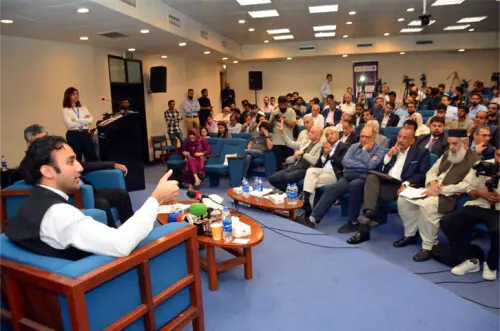
“We were the only ones who recognised the Taliban and this was the reason we faced constant criticism from the West, but in the end it was our decision that proved prudent,” said Mr Musharraf while addressing the Youth Parliament, a local non-government organisation, at a hotel.
He said despite fierce opposition by the world to Pakistan’s decision recognising the Taliban, who ruled Afghanistan for five years since 1996, Pakistan refused to backtrack.
He said President Bill Clinton visited Pakistan in 2000 to admonish “my government’s continued recognition to the Taliban, but I had an explanation to make”.
“I stressed the need to recognise the Taliban by all who open their missions in Afghanistan, a prerequisite to our concerted efforts to make them acceptable,” said the former military ruler.
“Taliban’s government would certainly have taken steps if it was surrounded by missions from around the world, but the rest of the world left them alone and such a strategy led to 9/11.”
Mr Musharraf snubbed the clichéd statement that Pakistan created the Taliban and said as a matter of fact the most feared group was a product of the conditions in Afghanistan.
He said the Taliban emerged because the Mujahideen, who fought against the Soviet invasion, failed to consolidate their power.
He said after defeating the Soviet Union, the US left the landlocked country without rehabilitating the Afghan Mujahideen, unwittingly helping Al Qaeda to come into being.
He said because of US-led allied forces pushing the militants against the wall and a government not representative of the country’s ethnic diversity, the Taliban re-emerged in 2003.
He discussed the migration of millions of Afghan refugees and increase in religious militancy in Pakistan’s northwest.
Claiming that only the armed forces had improved Pakistan’s economy during past military regimes, he defended his decision to establish the controversial National Security Council in 2004 and its abolition with the 18th Amendment in the constitution the ‘check and balance’ on the president and the prime minister had gone.
The former president said there was no need for the constitution of National Security Council, but he only wanted to put in place checks and balances. He added that mechanism of checks and balances evaporated after the 18th Amendment.
The former president claimed that only military governments had focused on economy. “I feel immensely proud when I declare that no one else but the armed forces have worked for improving the economy,” Pervez Musharraf said.
“Pakistan should try to improve its economy on its own. We do not need anyone’s help. We first have to improve our economy. Nothing will work if the economy doesn’t improve.”
He stressed the significance of peace in South Asia, adding that terrorism was visible while extremism was an invisible threat.
Published in Dawn, December 5th, 2014