3
3
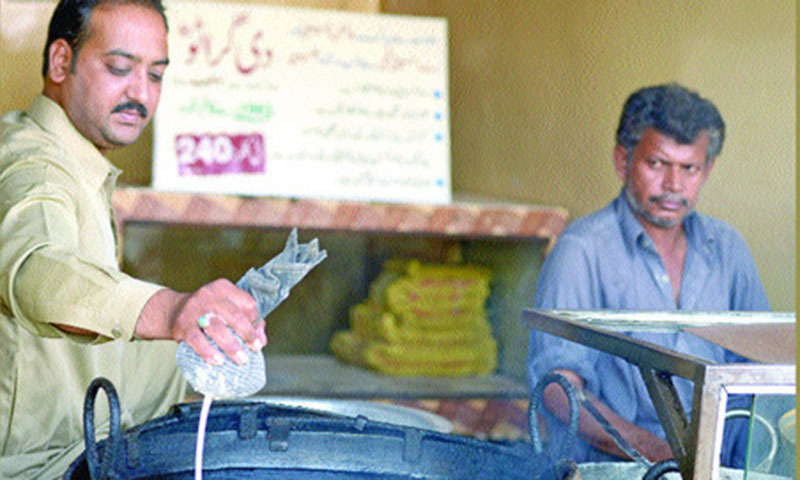

Hot jalebi, freshly fried to a crisp golden brown and dripping with sugary syrup. That’s the secret that has kept the famous de Gratto jalebiwallah on Murree Road in business for nearly 33 years now.
While the twin cities offer a number of options for continental and local cuisine, traditional foods and their specialist outlets in Rawalpindi’s downtown area have a unique place in the culinary history of the area and continue to attract food lovers to this day.
Jalebis, which are sometimes referred to as the poor man’s dessert, are sold at many places all over the city.
Some stores specialise in Doodh Jalebi, a Winter treat available in Pindi all year round. Others sell crispy or gooey chunks of bright red jalebi that are a staple for many dinner spreads during the month of Ramazan.
But at de Gratto, the massive loops and curls of fine flour, soaked in sugary syrup are always freshly made. By his own admission, Mohammad Umair, the storeowner, has no place to keep the sweet treats for very long. Even so, he is usually sold out by the time he closes shop.
Perched in his corner, Umair squeezes batter out of an improvised icing bag. The whiteish batter crackles as it hits the hot oil in the massive vat.
With deft motions of his wrist, Umair creates rings and loops with the batter, all the while chatting with his colleagues or exchanging pleasantries with customers.
When the treats are golden brown, he fishes them out of the vat and dips them straight into a cold, sugary goo that gives the Gratto jalebi its signature juicy texture.
Umair’s father migrated to Rawalpindi nearly 40 years ago from a village near Multan. He opened up the shop that was to become the stuff of culinary legend in the garrison city.
“My father experimented with the recipe for quite some time until he perfected this,” he says as he gestures to a massive freshly fried ring of sickly sweetness.
Nearly twice the size of an average adult’s palm, the Gratto jalebis are also famous because there are no artificial flavours or colouring in them.
The simple recipe of fine flour, yeast, oil and sugar has kept customers hooked. Even with construction on the metro bus project holding up traffic for miles around, de Gratto’s customers always manage to make their way over.
The name has become so famous that now there is a Gratto Jalebi seller in nearly every town. Even though a confectioner of the same name enjoys similar repute in Lahore, Umair is adamant that they are the real deal.
“Everyone else is a faker. We have no branches. My father never wanted to expand his business so we work here to this day,” he says.
According to Umair, the shop – which opens in the evening just before sundown and stays open well past midnight – sells around 200 kilogrammes of jalebi a day. That is a lot of early onset diabetes waiting to happen.
But even before he opens shop, Umair says that customers line up on the sidewalk outside the outlet.
The shop’s premises are also surprisingly clean, albeit not up to the hygiene standards of most elite Islamabad residents. A man is employed specifically to keep the shelves where jalebis are stored, clean.
Who would’ve thought that the owner of a small jalebi store on Murree Road could be an environmentalist at heart?
“I don’t use polythene bags. If you want some of our crispy jalebis, you will have to carry them in paper bags. Plastic kills the taste and makes them soggy,” he says, visibly more concerned with the quality of his product than the advantages to the environment.
Naeem Ahmed Qureshi, a resident of Chaklala Scheme-III, told Dawn that he’s often burnt his tongue on hot jalebi from Gratto.
Farhan Hamid, a 25-year-old university student who lives in Bahria Town, says that his family loved to eat Jalebis and his father specially comes all the way to Gratto to get them every weekend.
Even former district nazim Raja Tariq Kiani endorses the Gratto’s version of the poor man’s dessert. “I’ve been coming here for 30 years now and I don’t eat jalebi from anywhere else.”
Published in Dawn, September 22nd , 2014