UNTIL a few years ago, the mere mention of K-Electric (then the Karachi Electric Supply Company) would prompt an outburst of unprintable words from consumers and investors alike due to its poor service delivery, mounting losses and a denial of dividends.
But all of that seems to be changing. In financial year 2012, the company finally turned the corner, earning a net profit of Rs2.6m — the first time it emerged from the red in 17 years.
In FY14, for which the results were declared this month, K-Electric Ltd (KEL) gave a pleasant surprise to shareholders by announcing a cash dividend of Re0.53 per share for minority shareholders (subject to the approval of other shareholders). In doing so, the company has set aside the accumulated loss of Rs75bn that still sits on its balance sheet.
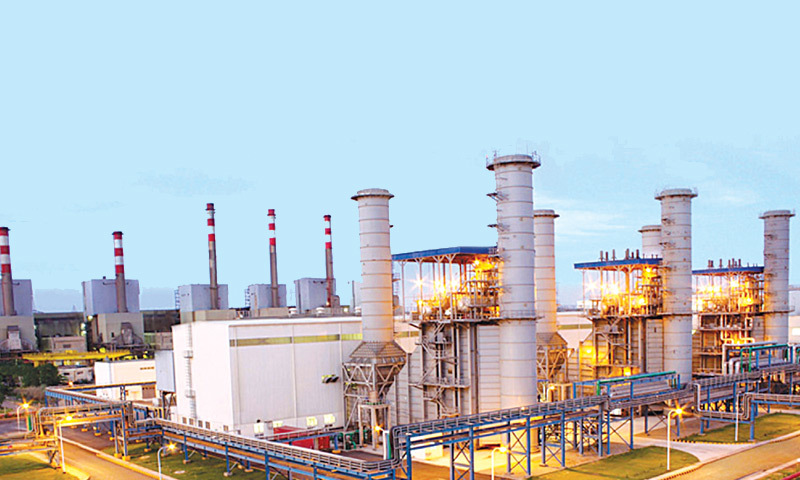
The KESC has had a chequered history. As the only vertically integrated power utility in the country, it manages the generation, transmission and distribution of electricity. The company was incorporated in 1913 and stood out as the first company to be listed on the stock exchanges in 1949. In 1952, it was nationalised.
K-Electric is planning to invest $350m to improve its transmission and distribution network
The company continued to drag its feet even under Army management between 1999 and 2005, and then, finally on November 29, 2005, it was privatised. Ownership of 73pc equity passed into the hands of Al-Jomaih and NIG on payment of $293m, or Rs20bn. Currently, Abraaj and Al Jomaih/NIG together hold 69.2 pc shares in the company through KES Power. In April 2008, Abraaj was approached by existing shareholders to acquire controlling stake in KES Power, with a transfer of management.
Then on June 30, 2014, an announcement by Abraaj stated: “The Abraaj Group has mandated Citi to evaluate strategic options with respect to its indirect stake in K-Electric”. Other shareholders in the company are the government, which holds 24.4pc shares, followed by IFC and ADB with 3.8pc and 2.6pc stakes respectively.
Taurus Securities analyst Hassaan Bin Ghafoor noted in a report last week that “As per the management, one of its foreign shareholders, IFC, had recently divested its investment in KEL from 2.5pc to 1.3pc, and it is expected to dilute its entire shareholding in the near term. The ADB is also considering redeeming its entire holding of 2.5pc in KEL in the short- to medium-term”. Other analysts say this would increase the free float of the company, which currently stands at 6.42pc.
For FY14, K-Electric posted a profit-after-tax of Rs12.9bn, an increase of 89pc over Rs6.61bn last year. M Awais Ashraf, an analyst at Shajar Capital, commented that the higher earnings were “driven by saving in transmission and distribution (T&D) losses and improved fleet efficiency”. The company is planning to invest $350m to improve its transmission and distribution network.
“On the coal conversion front, the management is still waiting for Nepra’s decision to fix the coal tariff,” Ashraf said.
Following a recent analyst briefing by K-Electric, Syed Atif Zafar, who follows the electricity sector for JS Global, observed: “The management has flagged expected efficiency gains from the conversion of 50MW open-cycle engine plants to combined cycle; expected reduction in T&D losses by 2-2.5pc for FY15; possibility of another Rs20-25bn Sukuk issue to replace existing expensive financing; and the possibility of continuation of its 650MW power purchase agreement with Wapda”.
Ghafoor asserted that “After witnessing encouraging results of the previous Sukuk issue of Rs6bn, the company is planning to replace foreign debt of Rs12bn from IFC/ADB, as well as the residual Rs8bn from local sources with another low-cost Sukuk issue of Rs20bn, which will slightly compress financial charges going forward”.
According to Ali Sufyan, an analyst at Standard Capital Securities, the key challenges facing the company include “T&D losses, which, on average stand at a high 45pc in non-governmental/low income areas, and the dues receivable from the government (circular debt), which stands tall at Rs100bn”.
Ghafoor added that “The company is still bleeding due to non-payment of dues by KWSB and CDGK, and the recovery from the two entities stood at 67pc. However, the recovery ratio of non-public sector entities improved to 93pc largely due to improvement in recovery from commercial and domestic consumers”.
The company’s outstanding shares stand at 27.6m, with paid-up capital of Rs27.6bn, which the market considers to be too high, given that among the six independent power producers (IPPs), the Hub Power Company is the closest with capital of Rs1.15bn.
“Although the company has shown no intention of withdrawing/buying back a chunk of its shares, many consider it to be a possibility,” said one analyst. Amongst the six IPPs, K-Electric has the highest generation capacity of 2,341MW, with Kot Addu Power of 1,600MW in second place.
“We expect the consumer base of K-Electric to expand as its current users are around 2.5m in a city of 20m people,” says Sufyan. Providing a breakdown, he says the utility has 1,818,000 residential, 606,000 commercial and 60,600 industrial consumers.
Trading at Rs8.20 per share, the K-Electric stock is believed to be expensive. “The possible exit of the holding company remains a key trigger for the stock in the future,” Taurus’ Ghafoor believes. The company’s market capitalisation works out at Rs227bn, against total assets of Rs306bn at end-June.
Published in Dawn, Economic & Business, Sep 15th, 2014