A CLUTCH of little girls burst through the narrow opening between a flowered tent wall, their laughter ringing in the school compound. Their bobbing ponytails, pink outfits and bright smiles betray the universal glee students feel when the school is closed for vacations. They are not on vacation here, nor is this their school. But for the moment, it is their home and their playground. It will be no more, come September and the end of the summer vacation.
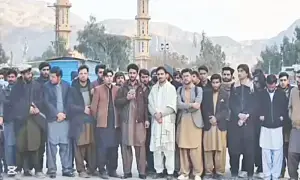
For the past two months, about 39 Christian families have lived in Saint John Basco, a girls school close to the Bannu cantonment. Nearly three generations of these families had lived in North Waziristan Agency, before they were displaced from Mirali and Miramshah in June. Even though they were not the only ones to find refuge in schools closed for the summer vacation, the shelter available in schools was a lifeline for the Christian community considering few had the support system available to the largely Pashtun population displaced from NWA.
The displaced Pashtuns moved to districts like Bannu, Karak, Lakki Marwat and D.I. Khan where they had families or found shelter with relatives, rented houses or were taken in by Pashtun host communities. For the Christians of NWA, mostly low-paid government workers, renting expensive houses wasn’t an option. Nor did they want to inconvenience their community in the districts surrounding NWA, poor families living in small houses in cramped conditions.
As for the Bakakhel camp in FR Bannu, the Christian families had the same reservations as the Pashtun population that refused to go to the camp for reasons of honour. The Christians, assimilated in the local population over the years, have adopted their language, culture and their honour-bound outlook on life.
“They don’t want their women to live among strangers,” says Hanuk Masih, principal of St John Bosco. Bed sheets strung from the clothes line serve as soft walls between families living in classrooms. Men in white vests, their bodies glistening with sweat, lounge around in string cots, while women are at work in their private spaces, going about their chores, keeping up a semblance of family life and protection they have lost.
Nor could the Christian community of NWA leave for Punjab where they had originally come from, decades ago. They want to be around to go back and claim their jobs in NWA when it is time for them to return. However, the label that has turned the displaced from NWA into pariahs all over Pakistan has stuck to the minorities as well, perhaps more viciously because being Christians and Hindus make their loyalties to the state suspect.
“If we go to Punjab, the police treat us as terrorists because we are from NWA,” says a member of the Christian community who doesn’t want to be named. “They become suspicious because we speak both Pashto and Punjabi.”
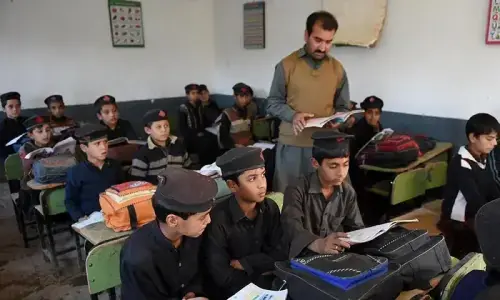
It is not known if and when the Christians, among the one million people said to have been displaced by the military operation, will be able to go back to NWA. What is known though is that they will have to be displaced once again — this time from schools where they and others had found shelter. The education authorities have asked the displaced people living in 1,400 schools in Bannu, Karak and Lakki Marwat, cities close to NWA, to vacate the schools before August 10. The schools will reopen on September 1 after the summer vacation.
Faced with evictions, the Pashtun population and minorities living in schools have been running around for shelter. But they are up against tremendous odds. The houses in the cities have been taken up by displaced persons at exorbitant rents, something beyond the means of those living in schools.
“We will have to go find shelter under the bridges in the city or live out in the street,” says Ashfaq Rashid Masih, who lives in St John Bosco. “In the camp, we will have security but we can’t worship because there is no church, sing our hymns or play music during services.” He and others at the school want the authorities to provide them tents and space close to their worship places in the city. And take steps for their security.
While the displaced Christians have received support from their community, the army and the provincial government, their dual addresses — current residents of NWA and permanent residents of Punjab — make them ineligible for financial support the federal government provides to the displaced. The policy also affects others who have dual addresses, including displaced Pashtuns from NWA who are residents of cities like Bannu, Karak, Peshawar and Karachi.
“We have been forced to sell our rations to make money for our medical bills, fuel and other needs,” says Ashfaq Rashid Masih. To make matters worse, the Christians who worked as clerks, medical support staff and teachers while in NWA, haven’t received their salaries for three months now.
“Where will go without money to restart our lives now?” says Ashfaq Rashid Masih. “Here in the city, everything is within reach. We can travel out and get supplies. In the camp out in the wilderness, where will we buy ice in this terrible heat?”
Published in Dawn, August 8th, 2014