After a decade in which reserve managers built ever greater stockpiles to shield themselves against external shocks, global reserve growth stalled last year as the Federal Reserve’s plans to taper stimulus prompted a flight from emerging markets.
But a year on from the ‘taper tantrum’, global reserves are growing at the fastest pace since early 2012, according to a Citigroup analysis of eight countries that publish figures on a daily or weekly basis. With low volatility fuelling an exuberant carry trade in emerging markets assets, some authorities are taking the opportunity to rebuild their defences in preparation for an eventual rise in US interest rates.
In the first quarter of the year, China was the dominant force — adding $130bn to its vast stockpile as it engineered a devaluation in the renminbi. Although its reserve growth has slowed, its holdings totalled almost $4tn by the end of June.
However, it is no longer all about China. India’s central bank, which was forced to run down its reserves during last year’s sell-off, has bought some $50bn in spot and forward markets since the start of March as Narendra Modi’s election prompted an influx of foreign investment. Analysts at JPMorgan note this has boosted reserves by 20pc in a mere four months — the fastest growth in India’s history.
Turkey and Indonesia are also restocking their arsenals and Russia, which sold dollars to defend the rouble as tensions mounted in Ukraine, has begun to do the same.
Other countries might not feel the same urgency to prepare for the next bout of market turbulence. But South Korea, whose authorities frequently warn of an overvalued currency, has both added to reserves and built up long positions in foreign currency forwards against the won — a form of intervention that does not show up in headline reserves data.
Richard Cochinos, strategist at Citi, says reserve growth accelerated from the start of April — just as investors began to switch their portfolios into carry trades, especially in emerging Asia.
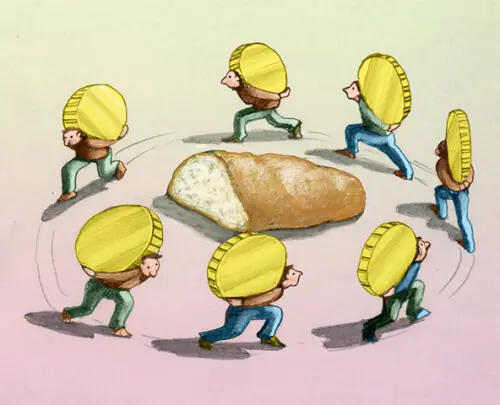
“You can see very clearly that the key driver has been the capital inflows,” agrees David Hauner, strategist at Bank of America Merrill Lynch. With US and European policymakers in no hurry to raise interest rates, investors continue to pile into carry trades; emerging markets central banks recycle the inflows into US Treasuries — and because this depresses US rates, it reinforces the carry trade’s attraction.
“It’s a temporary phenomenon, but you need something to shake up this merry-go-round,” Mr Hauner says. “Either the US data will become so strong that the market makes up its own mind . . . or the Fed changes its tone.”
But until this shift takes place, activist reserve managers could have a pervasive influence on the foreign exchange market. When central banks are adding to reserves, they have more scope to diversify out of dollars. And because many countries now feel obliged to maintain reserves at a much higher level than was thought necessary in the past, reserve managers are increasingly seeking higher returns than those offered by the traditional staple of US Treasuries.
It is difficult to establish what central banks are buying, because China and many Asian central banks do not report the currency composition of reserves. But most analysts think their activity is one of the reasons the euro has remained stubbornly strong, even after easing by the European Central Bank and falls in eurozone equity markets. It could also help to explain why the yen and the Australian and Canadian dollars — which have won popularity as alternative reserve currencies — have been stronger than expected this year.
Mr Cochinos says data on Citigroup client flows suggest hedge funds and institutional investors have been selling the euro since January — so the euro’s resilience implies there must be another type of client in the market with enough weight to offset them. Mr Hauner says BAML’s client flows show recent official buying of the euro and Australian dollar.
However, this dynamic is likely to last only as long as the carry trade thrives. Several emerging markets currencies slipped yesterday as traders detected hawkish hints in Janet Yellen’s testimony to Congress — a sign of how sharply sentiment could turn whenever the Fed’s chairwoman does signal policy tightening.
“In the coming months, emerging markets currencies are likely to be caught up between the cross currents of better US data, Fed tapering and higher expected US rates,” says Bhanu Baweja, a strategist at UBS. When the shock comes many countries will have a stronger safety net.
Published in Dawn, Economic & Business, July 21st, 2014