0
0
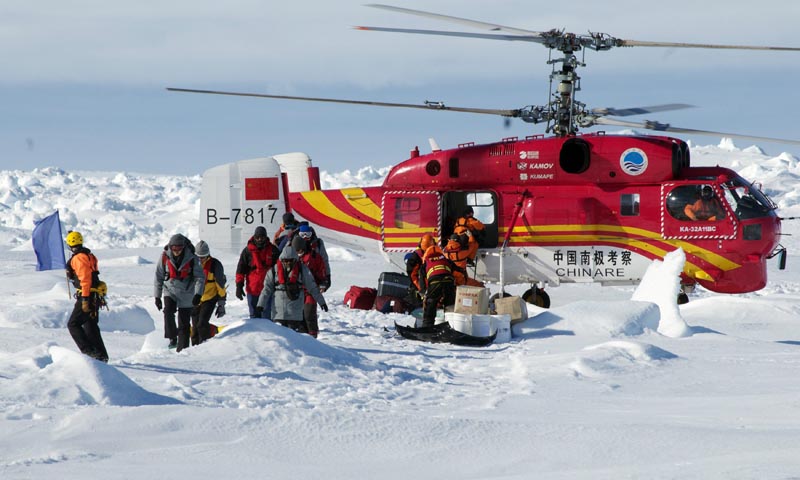

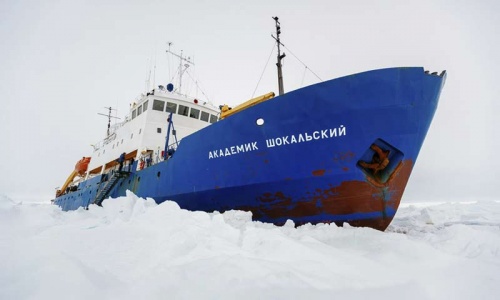
SYDNEY: Australian authorities expressed relief Friday after 52 passengers were safely rescued by helicopter from a Russian ship stranded in Antarctic ice, saying the dramatic mission had been difficult and complex.
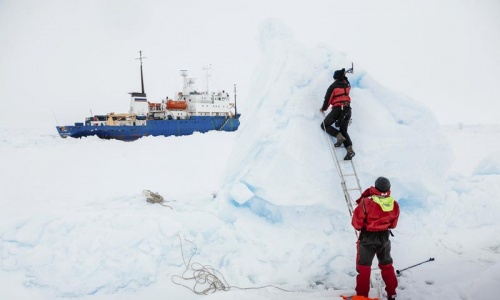
Officials tasked with freeing the scientific expedition on the Akademik Shokalskiy, which has been stuck since December 24, succeeded in flying them out Thursday in an on-off rescue operation.
A helicopter from a Chinese icebreaker landed on a makeshift landing pad next to the marooned ship and ferried the scientists, tourists and journalists to an Australian government supply vessel, the Aurora Australis.
“This one was quite difficult to do, and we wouldn't want it to be much more remote than this on a regular basis,” said John Young, general manager of the Australian Maritime Safety Authority's emergency response division.
Thick ice had frustrated attempts to free the ship using three icebreakers, while rain, snow and wind had delayed helicopter flights to the vessel ice-bound 100 nautical miles east of the French base Dumont d'Urville.
“All Antarctic operations are difficult just because of the nature of the place and in this particular case the movement of the ice and the changing of the weather introduced their own complications,” Young said.
“The protracted nature of operations in Antarctica and the difficulty of getting good weather windows, and getting the right ice conditions, really make life very difficult.
“And in this particular case, the simple fact of having to move 52 people who are not really trained for that environment added complexity, and it's one of the reasons that we are relieved that they are now on their way to Casey (station) and the ships are left with their professional crews alone.”Those on the stranded ship are now onboard the Aurora Australis, the Australian Antarctic Division's supply ship, and heading slowly to Casey station.
They were transferred using the Chinese icebreaker Xue Long's helicopter from the Russian ship to an ice floe near the Aurora Australis over four flights across about 14 nautical miles on Thursday.
The Aurora Australis was Friday travelling at a quarter knot in heavy ice and not expected to reach open water until late evening. The vessel will not reach Australia until mid January.
AMSA said the price of the rescue mission was not yet clear, but the costs would broadly fall to the ships involved.
Young said AMSA would attempt to hold a briefing with all those involved in the rescue, but that any inquiry into the conduct of the Akademik Shokalskiy would have to be addressed by Russian authorities.
“Lessons learned from those processes may be fed into the International Maritime Organisation, and the guidelines and rules it creates for polar operations which is quite an active subject... at the moment,” Young said.
AMSA said the Chinese ship was now free to attempt to leave the ice while the Shokalskiy would also attempt to free herself when circumstances permitted.
Neither ship has requested special assistance.