Farm house or country mansion?
THE main rationale behind the Supreme Court’s recent order regarding farm house plots in Islamabad is that some owners have not conformed to the original purpose of these plots and instead converted them into palatial country mansions where activities that are far from agricultural take place, e.g., lavish weddings and parties.
The question is: was this farm house scheme originally really meant to meet the demand for vegetables and fruits in the twin cities, as had apparently been stated at the outset when the scheme was first launched? Or was it from the very beginning meant to be what it looks like now in many of these plots: a cover up for the country mansions of the elite?
We may never know the answer to these questions. What we do know for a fact is that it was the Islamabad Capital Territory (Zoning) Regulation 1992 that provided for the establishment of these orchard/vegetable farms of size not less than 20 kanals and the construction on each such plot a farm house having a total covered area not exceeding 2,250 square feet.
According to the Regulation, “Subject to grant of NOC by the (Capital Development) Authority, schemes for orchards/vegetable farms by private developers would be permissible provided the size of such orchard/vegetable farm is not less than 20 kanals (2.5 acres). In such schemes, a farm house having a total covered area not exceeding 2,250sq.ft. shall be allowed per orchard/vegetable farm of an area of about 20 kanals.”
It further states: “The schemes of cluster housing and community farming under which houses and farms cluster under one unified scheme would also be permitted provided the criteria of one house with covered area of 2,250 sq.ft. per farm land of about 20 kanals (2.5 acre) is maintained. The area of such a scheme shall not be less than 50 acres and its lay out and development specifications shall be subject to approval of the Authority and a completion certificate in respect thereof shall have to be obtained from the Authority.
“It shall be mandatory that the farm house or any other construction within the farm is located at a minimum distance of 100 feet from the edge of right-of-way of the road/street. No agro industry, livestock, poultry farming scheme shall be allowed” under the scheme; and that buildings under the scheme “shall be subject to the Islamabad Building Regulation, 1963, and the Islamabad Residential Sectors Zoning Regulation, 1985”.
The fact that the Regulation states at the outset that the “use of land subservient to agriculture shall be remitted so as to retain the present agriculture character of the area” proves that the orchard/vegetable farm scheme was designed to get around the original land use of the area under the first master plan, which was basically agricultural/pastoral.
But isn’t the very concept of an orchard/vegetable farm scheme in an area which is bordered by two major reservoirs serving the twin cities — Rawal Lake and Simly Lake — environmentally questionable? The Regulation forbids settlements in “the areas adjoining all water bodies, lakes and reservoirs” (which therefore makes the elite houses in the Bani Gala area bordering Rawal Lake illegal), but aren’t fertilisers, pesticides and other such chemicals that may be used in orchard and vegetable farming potentially harmful to the ground water and waterways in the area and thus to the water in the two lakes?
If this agricultural scheme was really meant to produce fruits and vegetables to feed the twin cities, then shouldn’t CDA have ensured that the plots were sold/resold to bona fide or genuine fruit and vegetable growers/producers rather than to the power elites who now own these farms?
According to sources in CDA, the origin of the hugeness of these “farm houses” lies in a subsequent regulation that provides for a maximum covered area more than double the size of that allowed originally, i.e., from 2,250 sq. ft. to 5,000 sq. ft. plus a basement as well.
However, in what seems to be an apparent effort to take the sting out of criticisms about the ostentatious behaviour of the elites who were making mansions on these agricultural plots, policy makers in 2001 decided on a pro-katchi abadi policy, this policy probably being considered a vote-winning move as well for the 2002 general elections.
Thus, under the 2001 National Policy on Katchi Abadis, the majority of existing katchi abadis were supposed to be regularised and upgraded, with the residents being granted ownership rights of the land which they were occupying and CDA making services like electricity, gas and water available to them.
Under a simultaneous Model Urban Shelter Project, the residents of four other katchi abadis in the ICT were to be relocated by allotting three-marla plots each in a new settlement in Alipur Farash that would be developed by CDA. One report in 2006 said that the number of such plots allotted in Alipur Farash was 4,000.
Similarly, CDA’s ongoing development of the low-cost residential scheme in Sector I-15, which comprises 5,560 plots and 8,000 flats, made eligible to those people whose annual income did not exceed Rs150,000 when the scheme was launched in 2005, also seems to be part of the effort to counter criticisms that CDA is only serving the elites and the land mafia.
But judging by the SC’s recent order to CDA regarding the cancellation of the farm house leases, it seems the Authority would need to do much more for the less privileged in terms of housing and also for the lower income sectors in Islamabad in terms of civic facilities, if it is really sincere in wanting to shed off its image of being a mere tool of the elites.
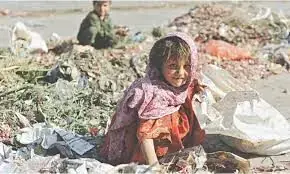
As for the elites, especially those who are holding public office or in power, wouldn’t it be a wise political move for them to lead more modest lifestyles, particularly since there is so much poverty around them?
Night car racing makes roads riskier
CAR and motorcycle racing on the city’s highways and broad avenues is catching on among thrill seeking sons of the affluent. Nightly on weekends, starting Fridays for some, the newly built Seventh Avenue, the Sixth and the Ninth turn into racing tracks for the young speedsters joined by rivals from Rawalpindi tearing through Murree Road to the Kashmir Highway. Driving for normal motorists crossing on to these roads becomes extremely hazardous around midnight hours after 10pm.
The first victims of the race are, of course, the traffic rules. As traffic signals work all night the racers must jump them if the chase is to result in victory for the fastest wheels. Overtaking on the wrong side and running shoulder to shoulder occupying the entire breadth of the road is common as well as tailing the vehicle ahead. This becomes extremely dangerous for normal traffic which plies at all hours and has to share the roads with the racing enthusiasts.
The traffic police is helpless for several reasons. It does not have the kind of vehicles that may give a chase to the lawbreakers.
Secondly their fuel allowance is limited and they cannot burn it speeding after the sports cars and higher cc motorcycles they cannot hope to catch up with. Then the police is not around on these roads generally at the late hours when the races begin.
Another cause for alarm and added danger to the lives of the young drivers and other users of the roads is the dubious engineering of the racing vehicles which are not proper sports cars but have been converted locally to reduce their body weight to make them faster on the wheel. Under high speed conditions for which these were not built originally there is always the danger of their turning over or breaking up in the middle of the chase and causing a pile up of the vehicles behind including automobiles of normal traffic. Mercifully no major accident of the kind has happened thus far but all factors that may contribute to such a happening are very much there.
According to reports the speeds the racing cars register is generally above 150 kilometres per hour. Motorcycles involved in racing can touch anywhere between 120 to 200 kilometres depending on the capacity of the expensive imported models. Among those who seek thrills in speed and test their driving skills as well as the efficiency of their vehicles is another group who wager bets and gamble on speed. Being more reckless with the throttle these youngsters pose the greatest threat to the life of other motorists on the road.
Car and motorcycle racing though dangerous is a recognised international sport but in the West where this craze developed there are special tracks for this purpose which are designed for high speeds using appropriate levels and gradients for safety. If this sport is to be encouraged in Islamabad Capital Development Authority (CDA), which is constantly engaged in pampering its rich citizens, should build a separate racing track for the sport in a corner of the city so that it does not interfere with normal traffic.
Remembering Prof Abdul Aziz Memon
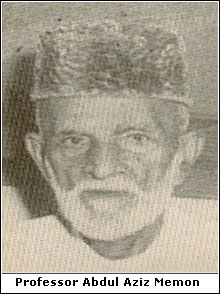 MASTERING a foreign language is not too difficult – many do it. But rarely does a non-native speaker attain such great command of a language that native speakers not only acknowledge the achievement but recognise the scholar as an authority. Professor Abdul Aziz Memon was one such scholar, whose command of the Arabic language earned him international fame. In the Arab world, he was known as Al-Memoni (the teacher) and Imam-ul-Lughaor (the Imam of the lexicon).
Born on October 23, 1888, in Gondal, district Rajkot, Kathiawar state, Professor Abdul Aziz Memon belonged to a family – indeed, a region – that did not have much tradition of education. He would have been likely to be engaged in business but for a religious congregation his father, Abdul Karim, once attended: impressed with the religious scholar making the speech, Abdul Karim prayed that if God gave him a son, he would be sent to a great scholar’s institution to attain knowledge. His prayer was answered and a son was born, whom he named Abdul Aziz.
At the age of 13, Abdul Aziz Memon was sent to Mian Nazeer Hussain Dehlvi, a scholar of Hadith, in order to learn Arabic, Hadith and the Quran. But Mian Nazeer Ahmed died the very day Abdul Aziz reached his home in Delhi; the young boy attended the funeral and then went to other renowned scholars of Arabic in Delhi. In 1910 he went to Amroha and in 1911 to Rampur to further his learning in ancient philosophy and logic. From the Punjab University, he passed the oriental languages degrees of Munshi Fazil and Moulvi Fazil.
The professor joined Peshawar’s Edward College as a lecturer in Arabic and Persian in 1919. During his stay in the city, he wrote some articles on reforming Arabic curricula which were published in Makhzan, Lahore. Moulvi Mohammed Shafi, the principal of the Oriental College, Lahore, and an oriental language researcher and a scholar in his own right, appointed Abdul Aziz Memon as the college’s Arabic teacher in 1921. Later, he was made the head of the Arabic and Persian departments at the Oriental College but joined the Aligarh Muslim University in 1925. With his scholarship and research, he rose to become the head of the Arabic department at Aligarh University and became the first non-European to hold the post.
In 1954, Allama Sahib migrated to Pakistan and was offered the post of the director of the nascent Islamic Research Institute, Karachi, which he accepted. Later, in 1956, when the Arabic department was established at Karachi University, Vice Chancellor Professor A.B. Haleem asked him to head it. Allama Sahib acceded to the request and served for about two and a half years.
Professor Hameed Ahmed Khan, Vice Chancellor of the Punjab University, asked him to join the university’s Arabic department in 1958, where he worked for about two years. Many universities in the Arab world made him offers but by that time, Allama Sahib had become quite old and had settled in Karachi. He was made Professor Emeritus by Karachi University and Sindh University.
Allama Sahib undertook an extensive study of Arabic literature and knew by heart thousands of couplets of classical Arabic poetry. He researched rare Arabic manuscripts and wrote some 30 books in Arabic on classical Arabic literature and related topics, in addition to editing and annotating some rare classical Arabic books. Some of his edited work on Arabic’s classical literature is considered remarkable and left Arab scholars in awe. Many of Allama Sahib’s books, published mainly in Lebanon, Syria and Egypt, are prescribed textbooks at the universities of Arab countries.
Though his mother tongue was Memoni, Allama Sahib was considered an authority on the Arabic language and was consulted by Arab scholars on issues concerning the lexicon and usage of the Arabic language. Along with other scholars of the language, he was on the committee formed to compile a comprehensive Arabic dictionary named ‘Lisaan ul Arab’. The Urdu Dictionary Board organised his extensive lectures and published them in its quarterly Urdu Nama.
Allama Abdul Aziz Memon died in Karachi on October 27, 1978.
It’s a pity that the world-renowned scholar is not recognised in his own country and especially by his own, largely well-to-do, community. At the very least, they could have set up a library in his honour and paid him homage by awarding scholarships in his name.
drraufparekh@yahoo.com
An Indian expert on Pakistan
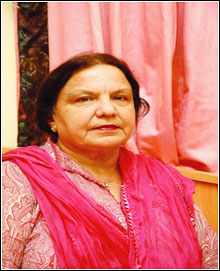 TO paraphrase a Confucian saying, Dr Uma Singh landed in Karachi during interesting times. For the Indian scholar, whose area of expertise is Pakistani Studies and who was recently in town to attend a conference on Mohammad Ali Jinnah’s vision of Pakistan, arrived in the city at just about the same time bombs ripped through the teeming crowd that was gathered to greet former prime minister Benazir Bhutto.
“I don’t think it was an isolated incident. I find that political violence and militancy has become a global phenomenon,” says the academician, seemingly unfazed by the gory goings-on in Karachi as she rattles off examples as diverse as the September 11 attacks, the London tube bombings and the recent blast in Ajmer.
Dr Singh, who was on her fourth visit to Pakistan this year, is a professor of Pakistan Studies at Delhi’s Jawaharlal Nehru University’s Centre for South Asian Studies and has been teaching for the last 20 years. She has also written numerous papers and books on the Indo-Pakistan relationship as well as on Pakistan’s internal issues such as ethnic problems in Sindh as well as the “insurgency” in Balochistan.
Considering the often uneasy relationship Pakistan and India have shared, how high is the interest in Pakistan Studies across the border?
“In India there is a lot of interest and enthusiasm among the students and intellectuals to study and to know about Pakistan. Whenever there is a seminar on Pakistan, and particularly when a Pakistani scholar comes, a lot of students participate,” she says, adding that there came a time at her institute when there were so many students interested in doing their theses on Pakistan that the faculty had to dissuade them and persuaded them to choose other areas of study.
“Pakistan is our neighbour and we have historical commonalities, so people are interested in learning about it. But (the way) Pakistan is understood in India or India is understood in Pakistan is slightly … fallacious. Because until Indians come to Pakistan or Pakistanis come to India, they have a different perception which is based on some kind of misrepresentation,” she notes, though she credits satellite television for helping speed up the thaw in relations between the two countries.
“The peace process has brought people together and has removed certain mindsets and suspicions. But to say that all the suspicions have been removed would be an exaggeration,” she cautions.
Citing an example of the changed mindsets at the official level, she said that when the Lal Masjid issue erupted, the Indian government maintained a diplomatic silence, saying that it was Pakistan’s internal matter, whereas a few years ago the reaction would have been decidedly different.
Considering Dr Singh’s interest in South Asia, she was asked if the regional variant of democracy was based on the cult of personality, specifically with reference to power being shared by ‘democratic dynasties.’
“I don’t think it is an issue (specific) to South Asia only. It is becoming more prominent in South Asia, but similarly you find that … for example Hilary Clinton is a presidential aspirant in the United States. She came into the limelight as the first lady. In the South Asian context dynastic lineage plays an important role.
“As far as India is concerned, despite the fact that we have had dynastic rule, if you take the case of Mahatma Gandhi, he became quite a cult figure … a national icon, but his children or grandchildren never cashed in or capitalised on it. So there is a dichotomy, particularly in India,” says Dr Singh.
| © DAWN Group of Newspapers, 2007 |