0
0

A man of many virtues
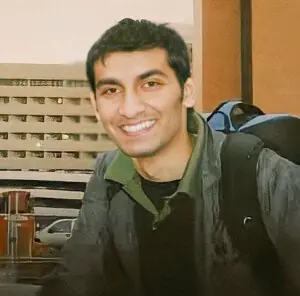
IN the death of Zafar Kazmi, the country has lost a sensitive painter, a versatile sculptor, a museum expert and, above all, a man of many virtues. He not only had a passion for learning but also liked to share his knowledge — which was formidable, by all accounts — with others. He familiarised the world with the culture and civilisation of Sindh.
Born into an influential Syed family of Amri, Dadu, in 1933, Kazmi had his early education at his native town, which is one of the historical sites of Moenjodaro civilization. He then moved to NJV High School in Karachi.
Kazmi had a precocious talent for drawing, which first earned him accolades during his school days. He soon branched out into other disciplines of the fine arts. After completing his studies, he was appointed drawing teacher in the school in which he had earlier studied.
In the early 1960s, the Sindh government started efforts to establish a museum in Hyderabad. The Sindh University, which was in the process of building its infrastructure, offered a hall to temporarily accommodate antiquities.
Kazmi, who was enthusiastic about the project, became involved in the establishment of the museum. He met people who could offer antiquities or put him in touch with those who were interested in the subject. He also made efforts for the procurement of funds. And when the basic structure of the Sindh Museum came up, artifacts collected by him and other enthusiasts were there. Ever resourceful, Kazmi not only continued to add archaeological relics to the museum’s collection but also arranged the artifacts in such a way that they showed the rise of Sindh civilisation and its unbroken evolution. And his quest for new artifacts continued and took him to distant places from where he brought, sometimes, fossilised trees, and at others, objects of great historical import.
The planners of the Sindh museum wanted to showcase the everyday life of Sindh civilisation and decided to employ replicas of houses, hutments, wells, wheels, etc as they had been used in the past. Kazmi employed oil, pastel, water, clay and gypsum with equal facility to make the models that still adorn the museum. It was through his efforts that the Sindh museum became – and still is – one of the best organised museums in the country.
In the 1990s, he received a scholarship to get special museum training. He, along with his assistants, profited immensely from the opportunity. He later helped the government establish museums at Badin and Sehwan.
In addition to being a sportsman, Kazmi had a special liking for poetry. He himself composed vayees -- a traditional genre of Sindhi poetry – and verses. While he suffered many health problems in the last days of his life, his interest in the fields of the fine arts and museums remained undiminished.
| © DAWN Group of Newspapers, 2007 |