Some autonomy proposals
“... the concept of federation has been accepted in practice as well as in theory inasmuch as it is conceded that the provinces give power to the Federation, yield some of the powers, concede some of the powers to the Federation and all residuary powers rest in the provinces.”
— Law Minister Abdul Hafiz Pirzada, while introducing the Constitution (1973) Bill in the National Assembly.
The provincial autonomy debate is again on. And perhaps with the usual lack of circumspection. Unless the issues that have been kept pending for decades are openheartedly addressed and ways found to expeditiously resolve them, the latest round of discussion could increase the differences between the federation and three of its units instead of composing them.
The first factor contributing to the present autonomy debate is Balochistan’s reaction to the killing of Mohammad Akbar Bugti. By appearing to be surprised, Islamabad only provided a measure of its lack of truck with reality. Official spokespersons made quite incomplete references to the need for granting more autonomy to Balochistan. But there has been no indication of any concrete ideas the government might have persuaded itself to examine. It is possible that the establishment is interested only in defusing the situation it has created by its own recklessness and the urgency of dealing with the broader issues of autonomy has not yet dawned on it. If this view is correct the situation in Balochistan can only deteriorate.
The second impetus for revival of the autonomy debate is the introduction of a nine-member bill in the National Assembly. Spearheaded by the People’s Party (Parliamentarian) MNAs belonging to Sindh the movers include PMAP Chief Mehmood Khan Achakzai and BNP’s Abdur Rauf Mengal (who has since resigned) from Balochistan and this considerably broadens the ownership of the measure. One wonders whether it was impossible to get any MNA from Punjab to join the movers. If this did not occur to the sponsors that would not be the only indication of the bill having been hastily drafted. The bill proposes five amendments only and their examination should not take long.
The first proposal seeks replacement of Article 101 of the Constitution with a new text which says the governor of a province, instead of being appointed by the president, should be elected for a three-year tenure by the representatives of the province in its assembly and in parliament. Now, governors have frequently been the target of criticism for acting as federation’s hatchet-men, especially whenever provincial ministries have been thrown out. Their capacity to act as guardians of their provinces’ interest, especially when the centre had difficulty in appreciating it, has rarely been proved. The idea of having elected governors is not new, though it has been put into a constitution bill for the first time.
Unfortunately, the proposal has been mooted at a time when, thanks to the way the devolution scheme has been found in practice, the people have begun to dread highly oppressive despotism thrown up by concentration of power of elective offices in a family or a faction/party. It will therefore be necessary to scrutinise the implications of having a governor who will be subject to the discipline of the majority in the provincial assembly and in parliament, which in the context of Pakistan, may mean the writ of the party chief alone.
Maybe, it would be prudent to examine some other ways of choosing governors, if it is at all possible to overcome the tough resistance to change in the status quo the central authority is likely to put up. One way out could be the direct election of governors and another may be nomination of governors subject to their confirmation by a multi-party parliamentary committee after public hearing. After all, the people should know about the suitability or otherwise of the person chosen to be a province’s head.
It could also be argued that governors should be ceremonial heads of provincial administration, a role elected holders of gubernatorial office might not fancy, and therefore the subject of reform should be consolidation of chief ministers’ authority. This, too, one says with much trepidation, considering the way the chief ministers have been behaving under an authoritarian set-up.
The second proposed amendment (to Article 104) also deals with governor’s office. It stipulates that an acting governor should always be the speaker of the provincial assembly and he should not have the power to dissolve the provincial assembly. The first part of the proposal seeks to formalise the principle popularly approved quite some time ago but which continues to be breached off and on. The latter part of the proposal will shock the democratic opinion that has good reason to deny the power to dissolve assemblies not only to governors but also to the president of the state and in whose view the question of allowing an acting governor/president the power to dissolve legislatures does not arise.
The third proposal is aimed at amending Article 153 of the Constitution which deals with the creation and composition of the Council of Common Interests. The relevant provision at present says that in addition to the chief ministers of the provinces, the Council shall have “equal number of members from the federal government to be nominated by the prime minister from time to time”. It is proposed to replace the clause in question to “an equal number of members from the National Assembly.”
The idea quite obviously is to restrict the Council’s membership to elected representatives. The plea could be that if the advice of bureaucrats or experts is needed on any particular issue, they can easily be summoned to make a presentation without being allowed the privileges of membership of the Council. One does not know whether the movers of the bill had any objection to the prime minister’s authority to appoint members ‘from time to time’, because something can be said for all forms of membership — fixed-tenure members, ex-officio members, and appointees selected from time to time — in view of the nature of issues the Council may be dealing with at any given time.
The authors of the bill have not specified the method of selecting members of the National Assembly. Will they be nominated by the government, or will they be elected by the National Assembly. If they will be elected, what will be the mode of election: by majority or on the basis of single transferable vote?
While the composition of the Council of Common Interests has surely been an issue, a greater cause for concern for advocates of provincial rights has been the absence of safeguards against non-constitution of the Council for long years and its malfunctioning or dormancy. Both aspects of the matter were recently highlighted in the Pakistan Steel Mills sale scandal. The need for putting more teeth in the Council provisions is manifest, especially to check authoritarian exercise of executive powers in relation to subjects mentioned in Part II of the federal legislative list.
The fourth proposed amendment simply seeks deletion of Article 160. The suggestion in plain words is that Pakistan will be better off without a National Finance Commission. The logic underlying this proposal is evident even if it cannot be appreciated by some people in authority.
On the one hand, the move is a desperate answer to the muddle-headed approach the Establishment has maintained for decades whereby a province’s share of income from the divisible pool is determined on the basis of population.
Equally unwelcome to the provinces is the practice of reserving a hefty share of proceeds for the federation, and that too without allowing the units any say in the matter of federal extravagance, before the provinces can be given bits of what is left over.
The message from the advocates of provincial autonomy is: If the National Finance Commission cannot evolve, or cannot be allowed to evolve, a fair formula for the division of the state’s revenues the institution may as well be axed.
A second reason for abolishing the National Finance Commission perhaps is the implication that the provinces live on the federation’s charity, whereas it is the provinces that provide the federation with the means of its subsistence. The principle is supposed to have been settled in 1973, as seen in the quote at the beginning of this column. For these reasons the abolition of the NFC has been demanded on quite a few occasions.
The matter needs to be studied in a broader perspective. It is necessary to examine how much can the provinces concede to the federation and what precisely are they entitled to in return, what are the legitimate needs of the federation, how will the defence and debt liabilities be shared, and how does one guarantee a fair distribution of resources under authoritarian regimes? Is it possible that a rational management of the divisible pool, if the status us can somehow be maintained, can lead to the withdrawal of the threat to the NFC?
The possibilities in this direction — calculation of a unit’s share on the basis of its needs, its absorption capacity, and its capacity to contribute to development out of its own resources are known. The real issue is the need, after provinces have won all of their demands, for a mechanism to address regional imbalances and to promote the right of citizens in all parts of the state to equal enjoyment of facilities basic to a decent existence.
Finally, the fifth amendment proposed in the bill seeks the abolition of the Concurrent Legislative List and deletion of entries 44 (Duties of excise, including duties on salt, but not including duties on alcoholic liquors, opium and other narcotics) and 49 (taxes on the sales and purchases of goods imported, exported, products manufactured or consumed) from the Federal Legislative List. The proposed change will enable the provinces to raise revenue themselves instead of waiting for their share out of the collection made by the federation.
The demand for the abolition of the Concurrent List is quite old. It had traditionally been prefaced with a reminder of the promise to delete it by 1983. And the controversy over federal take-over of taxes has been going on since 1948 when the provinces were made to yield some taxation powers — for two years to begin with.
The merit in both these demands is undeniable. However it should not be difficult for the advocates of autonomy to realise that the federal list needs a close scrutiny and hurdles to the exercise of units’ due authority are not limited to legislative lists.
For older students of Pakistan’s constitutional history the bill constitutes a modest package of demands. Although its statement of objects asserts that its enactment “will achieve the desired objectives”, which are limited to the promises made in 1940 and in the Objectives Resolution and meeting the demands and wishes of the people, there are quite a few issues, such as the functions of the Senate, the status of High Courts, the ownership of natural resources et al that need to be addressed.
At the same time, the need for achieving uniform policies in all parts of the federation on matters falling in provincial jurisdiction, such as land reform, consumer protection, local bodies, criminal law, has to be met more democratically and justly than has been the case so far.
It is possible that movers of the bill have preferred a lean charter of autonomy to a complete set of demands with an eye on what is achievable in the short run. Such expectations may not be realistic.
In any case, it will be good if the whole population is enabled to examine and discuss the many memoranda prepared by representatives of provincial units, from the one presented to the MRD in 1981 to those given to a parliamentary committee some months ago.
The matter is much too important to be left to be debated in parliament alone.
What this discussion leads to is the need for an all-parties consultation on the essential principles and practical mechanisms for unit-federation relations.
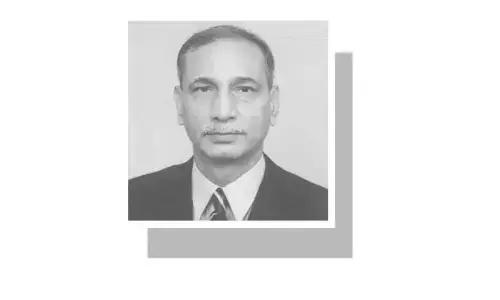
Agha Shahi, my mentor & friend
THE news of the demise of Mr Agha Shahi was conveyed to me in the US on September 6. Though I was aware of the delicate state of his health, I was as shaken as I would have been on the passing away of a close relative.
As he had remained a bachelor, I and my late wife used to worry about his welfare and personal needs with a spirit inspired by his great qualities, as well as his deep concern for Pakistan, the Islamic world and indeed for mankind.
My association with him began virtually from beginning of my career in the Foreign Service. Following my foreign training, in early 1953 I was placed under him. He had also joined the Foreign Office shortly earlier following nine years in the Sindh cadre of the ICS. With his bright intellect, capacity to work hard, and a perfectionist approach to all he undertook, he stood head and shoulders above his contemporaries.
Both political leaders and senior officials were impressed by his sense of responsibility and meticulous approach to work. Early in his career, he began developing a broad perspective, combined with an elegant writing style, which taken with his readiness to put in long hours, made him an outstanding member of any delegation or team.
Quite early in his diplomatic career, he was chosen to accompany the prime minister who led the Pakistan Delegation to the Bandung Conference in 1955. Among the new entrants who provided the foundation of the Foreign Service, after independence, he emerged as a model and a pace setter, the one who also took it upon himself to identify and train promising youngsters coming in through the annual competitive examination.
His first foreign posting was Washington, where I had also been sent on my first posting. This was to further deepen our relationship that had started in the ministry and in our subsequent careers, I almost always found myself working under him. This was a reflection of his trust in my work ethic as wall as my readiness to put in the extra effort. He had identified some other colleagues who came to be called the “Shahi mafia” but who had earned this distinction through hard work, rather than any favouritism.
Many contributions of historic significance stand out in his three decade-long career as a serving officer, during which he worked as director-general, later as the first officer elevated to the rank of additional secretary from 1963 to 1966 when he played a leading role in developing relations with China. He also carried much of the load during a particularly tense period of relations with India, including the 1965 War. Between 1966 and 1972 he headed our UN Mission in New York, and then served as Ambassador to China till 1973, when he returned to the ministry for a continuous stint of nine years till 1982.
He started as foreign secretary, and functioned as adviser with a ministerial status from 1977, though he was formally appointed foreign minister from 1980 to 1982. He resigned in February 1982 on account of major differences with President Ziaul Haq.
His capabilities and commitment were valued by all leaders at the helm including Z.A. Bhutto and Ziaul Haq, but he always preserved his dignity and self-respect. Mr Bhutto offered to elevate him to the rank of secretary-general if he would join the People’s Party. He refused. Under Ziaul Haq, he was seriously perturbed over the vulnerability of a military regime at a time when it was facing the hostility of major powers, including the Soviet Union and India. He believed that if President Ziaul Haq held elections, Pakistan’s moral and political standing would be reinforced. When the president did not respond positively, after initial agreement, Mr Shahi resigned.
One would need a full-fledged biography to recount his services to Pakistan, the Muslim ummah and indeed the world. I was privileged to work with him during my stints at the foreign office and during his retirement. A brief summary of his role and contribution is all that can be covered in this brief tribute.
Throughout his life the security and well being of Pakistan were central to his thinking and actions, Apart from consistent hard work in the ministry, he sought to galvanise the efforts of a band of committed officers to protect the interests of Pakistan notably by countering India’s diplomacy. Apart from some areas mentioned above he had a major role to play in defending Pakistan’s nuclear programme, and he served on the Nuclear Policy Board created in 1975, till his retirement.
Mr Shahi took many initiatives to serve the interest of the Islamic World, especially through the OIC, and at the United Nations. He put in a special effort for the Second Islamic Summit that was held at Lahore, in February 1974, which played a historic role in making the OIC role more effective. I was deputed by the ministry to make the arrangements, with the help of the Punjab government and witnessed how Mr Shahi exerted himself, and was by the side of Prime Minister Bhutto, as he met kings, presidents and prime ministers of 36 countries. This Summit expanded the mandate of the OIC by including economic and social development in its programme.
The ummah benefited from his special role at the UN, where he piloted many resolutions on the Palestine issue and sought to safeguard the rights of the Islamic world on the holy places located in Jerusalem. Whenever there is a final settlement of the Palestine problems, these resolutions will have to be taken into account.
When the Soviet Union intervened in Afghanistan in December 1979, Mr Shahi was instrumental in rallying the OIC as well as the UN General Assembly against the Soviet aggression. I was witness to the threats hurled at Pakistan by Soviet Foreign Minister Gromyko during his one-on-one meeting, stating that Pakistan had entered into a state of war with a superpower by supporting the Afghan freedom struggle.
Mr Shahi became an expert, during his years at the UN, on disarmament matters, and after his retirement as foreign minister served for several years on the Secretary-General’s Advisory Board on Disarmament. It may be recalled that after the NPT was passed in 1968, Mr Shahi was instrumental in organizing a conference of non-nuclear countries, to safeguard their interests.
Apart from his patriotic concerns for Pakistan, and services to the Ummah Mr Shahi remained active in the field of humanitarian Law. In 1993, he was elected to the UN Committee on the Eradication on Racial Discrimination (CERD), which worked under the Human Rights Commission. CERD valued his services so much that he remained its member till his death, having been elected to a fourth four-year term in 2005, by the highest majority. The convention adopted by the UN against genocide in 2005 stands as a memorial to him.
Seven years after retiring as Foreign Minister Mr Shahi founded the Islamabad Council of World Affairs (ICWA), and which he remained its president till his death. He was joined by many outstanding persons, including retired civil and military officers, academics, journalists and others. In the very first year ICWA organized a seminar in Islamabad on security in South Asia followed by a pioneering exchange of views on “privatisation”, that was attended by ministers and experts from many countries.
Mr Shahi was particular about safeguarding the independence of ICWA by running it largely with its own resources and contributions, that included a small endowment from Agha Hassan Abedi. As most of the think tanks in Islamabad are officially funded, ICWA remains the one truly independent body, whose seminars and meetings were valued by both Pakistani and foreign scholars. From 1994, two of his close associates were elected vice-president, namely Mr Abdul Sattar and myself.
As Mr Sattar served as foreign minister more than once, it became my privilege to be his main deputy. Mr Shahi utilised the forum of the ICWA to convey its views to the highest level of the Government, without publicity. In the 1990, when one elected prime minister showed an inclination to yield to US pressure for rolling back our nuclear programme, he mounted a campaign of contacting responsible persons, like the president, chief of army staff and others and succeeded in preventing that from happening. He also wrote, together with other former foreign ministers to President Musharraf on the eve of 10th Islamic Summit in Malaysia, setting forth ideas and suggestions to strengthen OIC.
Mr. Shahi’s health was frail, owing to a number of ailments as well as excess of work. However, he insisted upon reading newspaper and other materials for several hours every day, to keep abreast of major news and opinion.
If he had taken Medical advice, he should not have gone to Geneva to attend a meeting of CERD in late July 2006. However, he wanted to follow up on actions he had initiated against printings of cartoons of the Holy Prophet (PBUH) and was anxious to promote some kind of consensus against attacks on Islam in the western Press.
He caught pneumonia in Geneva and was hospitalised and later brought back to Pakistan, where he expired on September 6.
The writer is a former ambassador.
Truth in the free market
HISTORY loves the irony of an anniversary. In 1989, commemorations of 1789 were overshadowed by upheavals. Now, 50 years after the Hungarian uprising sent shockwaves through the communist world, what Hungary’s prime minister called the country’s worst violence in those five decades has shattered the complacency about post-communism’s stability and success.
Remember the rhetoric of anti-communism in 1989. “No more lies.” Well, today it is back with a vengeance. In 1956, when Khrushchev’s “secret speech” revealing the truth about Stalin’s rule was leaked, it set off a crisis across the communist bloc, peaking in the Hungarian revolt. This Sunday, the fuse was lit by the leak of the Hungarian prime minister’s crude admission to a secret Socialist party meeting in May: “We lied throughout the past one and a half or two years. We lied in the morning, we lied in the evening and also at night.”
The scenes outside Budapest radio 50 years ago and outside state television now could be confused. Then, students and nationalists ripped up the communist flag. Now they tear down the EU flag. Each time the regime’s defenders denounced hoodlums and fascists, but each time it was the revelation of government deceit which set off the explosion.
In April, Ferenc Gyurcsany’s “post-communist” socialists had apparently defied voters’ cynicism to win re-election. He promised that he could square the circle of prosperity for his voters and meet EU and IMF demands for fiscal probity. Behind closed doors Gyurcsany admitted that planning for the U-turn went on well before: “We did whatever was possible to do in secret ... making sure that ... what we were preparing for would not surface in the last weeks of the election campaign.”
When the goulash hit the fan, Gyurcsany’s spin doctors tried some quick footwork. They claimed that admitting lying to the electorate is truth-telling: “Trust me. I’m a liar.” The opposition is also discredited. Demonstrators jeered opposition deputies when they arrived at Budapest’s parliament. Gyurcsany’s own words are true in this regard: “Lying is a crime of the entire Hungarian political elite.” To be fair, it is true of the whole post-communist elite from Bulgaria to Estonia.
In reality, electorates have been consistently lied to since 1989: that is post-communism’s dirty secret. Promised west European levels of prosperity and welfare if only they support reformers, time and again ordinary people east of the old iron curtain have been told the day after the polls that austerity measures are now essential. Locked into a macro-economic framework dictated by Washington and Brussels — meeting IMF requirements and convergence criteria for the euro — New European politicians offer their electorates no real choices.
The transition from communism to capitalism has not altered the political rhetoric that much, least of all in Hungary. As Gyurcsany was coming into the world 45 years ago, communist leader Janos Kadar was about to launch the first cycle of reforms to accelerate Hungary’s development. They have gone on ever since. The Polish dissident, Adam Michnik used to joke that “all communists are reformers” — but so are all post-communists. It is just that the bright dawn of prosperity for all always shimmers just over the horizon.
Gyurcsany is the classic post-communist success story. As a model young post-communist he knew that government contacts are vital to business success in the “free market”. When a state socialist economy is privatised it is essential to have inside knowledge about what is worth buying at the fire-sale of communist assets. Nothing illegal in that. There were no rules.
Just as before 1989 there was “only one path to communism” now — despite rhetoric about “hard choices” — no alternative is permitted. Neither the Washington consensus nor the EU allows deviation from the party line. Hungary’s budget deficit of 10 per cent of GDP is the result of depressive macro-economic policies, which have increased the country’s huge foreign debt and trade deficit by pursuing a strong currency to meet euro entry requirements, squeezing Hungary’s few export industries in the process. Gyurcsany’s proposed welfare cuts will eat into Hungary’s #400 average monthly pay.
After 1989, top dissidents and the communists who jumped ship to join them did well out of adopting “the market economy” and occupying its commanding heights. But mass unemployment and cuts in health and social services have plunged people into poverty. Real wages have fallen and birth rates have collapsed across eastern Europe. The children of the 1980s — the last generation born under communism — are voting with their feet as they flee west, just as their parents dreamed of doing.
The Hungarian uprising in 1956 was symptomatic of the general malaise stretching across the “socialist sixth of the world”. Events in Budapest today ought to mark the crisis of the dogmatic “free market model”. For all of the rhetoric about democracy and free enterprise going hand in hand, in reality voters find all options foreclosed.—Dawn/Guardian Service
The writer is a history lecturer at Oriel College, Oxford.