0
0

Claims and reality
WITH the annual budget only about two weeks away, the usual reports about the shape and size of the forthcoming budget, its theme and direction, its targets and emphasis have started appearing in the media. Most of these reports, like the one that appeared in this newspaper on Wednesday, paint a positive picture of the possible budgetary measures to be announced on June 5. The government certainly needs a budget that would help keep the growth rates sustained in the vicinity of seven to eight per cent of the GDP without further fueling inflation. At the same time, it would also need to fine tune the monetary and fiscal policies in such a way that the growing gap between the rich and the poor is not only halted but also narrowed considerably. According to the prime minister, poverty has come down from 32 per cent to 25 per cent in the last five years. But questions have been raised about the veracity of the claim regarding the actual incidence of poverty in the base year 2001 which was the last year of the three-year drought cycle the country experienced.
These questions are rooted in the belief that the government had significantly underestimated the incidence of poverty in the base year and that it was actually 35 per cent and not 32 per cent. If this is true, then even if poverty has come down by seven per cent, it is still hovering somewhere around 30 per cent which is a matter of serious concern. And since the rich have been getting richer during this period, the decline in poverty could be statistically true but not in reality, considering the continuous refusal by the policymakers to do much about the inherent distributive injustice that exists in the country. The rich have continued to pay much less than what is due from them by way of income tax. Indeed, if a deeper analysis of the income taxpayers is attempted, one will be amazed to find that the richest in this country do not earn more than Rs25,000 a month per head. Half a dozen stock brokers in the country have made billions in the short span of three years and about two dozen persons have manipulated the real estate market to accumulate billions.
These people use their burgeoning fortunes to buy luxury cars and build palatial houses. They do not seem even to believe in the so-called trickle down theory. What they believe in and practise is ostentatious consumerism. Clearly the CBR is in collusion with these people and the NAB too is looking the other way while these billionaires make most of the so-called market economy while the poor are being denied even two square meals a day. The argument that strict enforcement of the tax laws would create panic among the entrepreneurs and discourage them from investing in the economy is not correct, because even today they are not making any meaningful investment. They have so far only utilised the idle manufacturing capacities. It is, therefore, time to act and act firmly to make these people pay their dues so that the nation can spend enough to provide better employment and earnings for those millions of our people who have long been the victims of poverty and deprivation.
NPT under attack
IT IS not surprising that the United States is now picking holes in the Nuclear Non-Proliferation Treaty that has been in force for over 35 years. After having violated the NPT by entering into an agreement with India for the transfer of nuclear technology, the Bush administration is now trying to vindicate its action by threatening to rectify the weaknesses in the NPT. But the American under secretary of state, Mr Nicholas Burns, convinces no one when he says that the NPT has left the “largest law-abiding country in the world (India)” outside while “a major violator (Iran)” inside. Evidently, this observation is highly subjective being based on Mr Burns’ own perception of recent developments in the nuclear field. Since the US is at loggerheads with Iran at the moment, that country is considered a violator even though the IAEA has not pronounced it to be. Being outside the NPT, India is not really entitled to develop nuclear weapons irrespective of what the treaty requires it to do.
The NPT has had some basic flaws in it ever since it was enacted and came into force in 1970. But they are not what Mr Burns believes them to be. The first weakness of the NPT is that it has divided the world into the nuclear and non-nuclear powers on the basis of the division as it existed at the time the treaty was signed. The treaty contains no mechanism to effect a change in the status quo. The anomaly is that the three countries (India, Pakistan and Israel) that are now known to be nuclear powers were non-signatories and could thus develop their nuclear weapons without being accused of violating the NPT. On the contrary, the signatories who have placed their nuclear programme under the watchful eyes of IAEA monitors are being charged with treaty violations for political reasons. Another major problem with the NPT is its non-implementation by the nuclear powers who were expected to reduce their nuclear stockpiles with the aim of eliminating nuclear weapons. This provision of the treaty has been willfully ignored, even in the five-yearly review conferences the last of which was held in May 2005. If the NPT is to carry some weight, it is essential that all signatories strictly adhere to its provisions.
Where are the ‘missing’?
IT is disturbing that nearly five months after the journalist, Hayatullah Khan, disappeared from Mirali in Waziristan, there is no word about his whereabouts. Mr Khan is believed to have been picked up by intelligence agencies for photographing remnants of a US missile said to have been used in an attack on an Al-Qaeda leader last year. Although the government continues to deny holding Mr Khan, it is usual for agencies to first deny any knowledge of a person’s disappearance and then release him — sometimes months later — on court orders. This is what happened with the Afzal brothers last year when they were picked up for their alleged link to militant organizations but whose eight-month detention was continuously denied. It would be most unfortunate if the same were to happen in Mr Khan’s case, which has been taken up by international journalists’ groups who are asking the government to explain the circumstances behind the journalist’s disappearance.
Using the war on terror as a pretext, the government has used all kinds of illegal tactics to detain people, as a result of which 800 persons have been arrested from all over the country since 2001. In its 2005 report on human rights, the HRCP noted that in several instances the courts were unable to offer any relief to the victims’ families as the agencies ordered to produce missing persons simply denied detaining them. This smacks of both the government’s and intelligence agencies’ disdain for a proper legal procedure which requires a fair trial for all detainees. Mr Khan has been missing for five months but the MIT graduate Dr Aafia Siddiqui has been missing for three years. The government must inform where they are and spare their families the agony of uncertainty and apprehensions.
What is the way out? : Crisis in the Muslim World-II
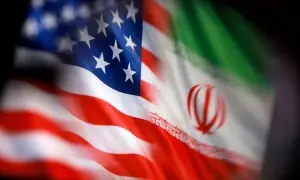
WITH regard to the Iran crisis, the issue here is that the US and several other countries are convinced that Iran is trying to achieve nuclear weapons capability. Iran claims that this is not so and that it is only seeking enrichment under the provisions of the Nuclear Non-Proliferation Treaty (NPT) to which it is a signatory.
Clearly, this is a technical issue that could have been settled by the International Atomic Energy Agency experts, operating without hindrance in Iran.
After long negotiations, the IAEA director-general, Mohamed ElBaradei, reported to the UN Security Council on April 28 that “gaps remain in the Agency’s knowledge with respect to the scope and content of Iran’s centrifuge programme.” Therefore, “the Agency is unable to make any progress in its efforts to provide assurance about the absence of undeclared nuclear material and activities in Iran. After more than three years of Agency efforts to seek clarity about all aspects of Iran’s nuclear programme, the existing gaps in knowledge continue to be a matter of concern.”
ElBaradei added that any progress in that regard “requires full transparency and active cooperation by Iran if the Agency is to understand fully the 20 years of undeclared nuclear activities by Iran.” He regretted that “these transparency measures are not yet forthcoming.”
The IAEA is an international body and its findings are not controlled by the US. Several Islamic and other countries are represented in the top body of the IAEA and it reflects the thinking of the international community. It is also notable that, apart from the IAEA, Iran has so far turned down all proposals for a compromise made by the EU as well as Russia.
In this context, mention should also be made of a unanimous statement issued by the UN Security Council on March 30. It noted with “serious concern the many IAEA reports and resolutions related to Iran’s nuclear programme”. It expressed further concern that the IAEA had reported that it was “unable to conclude that there are no undeclared nuclear materials or activities in Iran.” The Security Council called upon Iran to reestablish “full and sustained suspension of all enrichment-related and reprocessing activities.” Iran rejected this Security Council decision.
For the last four decades, the world community has been unanimous in opposing nuclear proliferation. Nuclear weapons can do horrific damage not only in the region in which they are used but also far beyond it. They represent a doomsday scenario and everyone has a stake in opposing a nuclear war. No doubt, a discriminatory situation has emerged in which a handful of countries hold nuclear weapons while the overwhelming majority does not possess them. But the five great powers have shown by their actual conduct that they have a sense of responsibility in the matter and have never allowed their differences to reach a point of no return.
Israel is believed to be in possession of nuclear weapons since the 1960s, but has never threatened to use them. The nuclear weapons developed by India and Pakistan have served as a deterrent against war and it can be said that both of these countries have also shown a sense of responsibility.
On the other hand, Iran has said repeatedly that Israel should be wiped out from the face of the earth. The Iranian leadership keeps using war-like rhetoric. Israel clearly sees a nuclear Iran as a mortal threat to its own existence and would probably make a preemptive strike to destroy Iran’s nuclear facilities before the latter acquires nuclear weapons. The US looks upon Iran as a rogue state, which cannot be allowed to acquire nuclear weapons. President Bush is clearly determined to act against Iran if diplomacy fails. Probably any American president would resort to military action to prevent Iran from becoming a nuclear power.
These seem to be the ground realities. Becoming a nuclear power has become a matter of national prestige for Iran, but one would hope that its leaders would keep in view the supreme national interests of their country, the foremost of which is Iran’s physical survival. No doubt, Iran has military capability of its own and can inflict considerable damage on US interests in the region, but in the process, Iran itself could be seriously harmed.
A choice might have to be made by Tehran: nuclear capability or the prospect of serious harm to the whole country. The rational decision, surely, would be to avoid the latter option. The extremists in Muslim societies, including Pakistan, who are egging on the Iranians to defy the US and the IAEA on the nuclear issue, need to ponder if they are acting in the best interests of their brother Muslims in Iran.
The need, therefore, is to find a negotiated settlement of the Iranian crisis before it is too late. This would require a sense of responsibility on all sides and a willingness to make compromises. Hopefully, incentives will be given to persuade Iran not to go beyond acquiring nuclear energy for peaceful purposes under IAEA supervision.
Let us now turn to the internal crisis that is tearing apart many Muslim societies at present. No doubt, the struggle between the traditionalists and modernists has been a part of human experience all over the world. What gives this struggle in Muslim societies a unique character is the recent tendency of the traditionalists to move towards extremism, militancy and even terrorism.
This is what has spawned Al Qaeda and Al Zarqawi, the Taliban, the Lashkar-i-Jhangvi, Lashkar-i-Taiba and so many other militant organisations. They resort to violence against all perceived enemies, internal or external. Murders, bombings and sabotage are a part of their operations. In ideological terms, they promote a fanatical, narrow-minded version of Islam. They oppose dissent and free debate and promote authoritarianism in all forms. Their model remains the ousted Taliban which had earned notoriety all over the world due to its observant policies that even prescribed the size of the beard that all Muslim men must keep!
It is generally accepted that the majority of Muslims are tolerant. The question arises as to how then the extremists have been able to attract support. It seems that the external crisis has fuelled the internal crisis. The extremists demonise the perceived enemy: the US, the West, India and others. They seek to convince the believers that they have to hit back through any means that are possible. A jihad has to be fought to redress the grievances of the Muslims.
Though suicide is prohibited in Islam, it is amazing that the extremists have been able to find a religious sanction for suicide bombers who have emerged as their main weapon. They argue that the suicide bomber is really like a soldier fighting the enemy and laying down his life. He would become a martyr and go straight to paradise where wonderful gifts would be showered on him or her. This martyr complex has been a part of Islamic history, but never before has it been used as a tactic of warfare.
In this emotion-charged atmosphere, any advice for restraint is dismissed as cowardice, and those pleading objectivity are dubbed as American or Zionist agents. The fanatics do not like opposition and their response can come in the form of the bullet or some other form of intimidation. This is symptomatic of the internal crisis that has the potential of crippling Muslim societies and taking them back to mediaeval times.
The tribal areas of Pakistan, like Waziristan, seem to be increasingly affected by the jihad phenomenon. The Taliban have had tribal and blood links in the tribes who live on both sides of the border. This is very likely the reason why the Taliban are making something of a comeback in the Pakhtoon tribal belt, after their rout in 2001. They have profited from the wave of anti-Americanism sweeping Muslim societies which is bringing new recruits to the ranks of militant groups.
Those advocating the jihadist course need to ponder if their line of action can succeed. Can the US, India or any other state be brought down through suicide bombings and sabotage? On the contrary, every terrorist act mars the image of Islam and increases the anger and determination of the affected countries to crack down harder on Islamic militants. Those extremist Muslim circles advocating a clash with the West or Israel or any other state need to understand that the Muslim world, at present, has neither the military capability nor the organisation to take on these powers.
In order to confront the West, or any other adversary, the Muslim world must first set its own house in order, better its economic performance, acquire the latest technology and forge unity in its ranks. This is not the case at the present time and the Muslim world will be at a serious disadvantage in any clash with the US or other adversaries. Those who, through fiery rhetoric, are urging the faithful to adopt confrontationist policies are doing no service to Islam.
There are just grievances of the Muslim world that need to be addressed. This can best be done through skilled diplomacy and negotiations. With China and Russia around, there is much room for manoeuvre for the Muslim countries. In the meanwhile, the goodwill of the vast majority of countries should be obtained by repairing the damage done to the name of Islam by rabid mullahs and terrorists like Osama bin Laden and Al-Zarqawi. The influence of the religious extremists has to be countered through the spread of modern education, by improving living standards and by establishing more linkages with the rest of the world through cultural exchanges and easier travel.
In Pakistan, the mainstream parties ought to understand the grave threat posed to civil society by religious extremists. They must not make any political move that strengthens the hands of the extremists. Any alliance with the extremists e.g. to secure the ouster of the present regime would only work to the advantage of the extremists. In time, it is almost certain that they would turn on their allies from the mainstream parties for whom they would never have any sympathy.—Concluded
The writer is a former ambassador.