Bali II
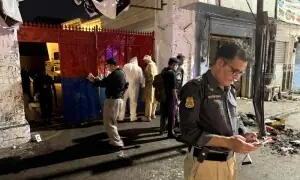
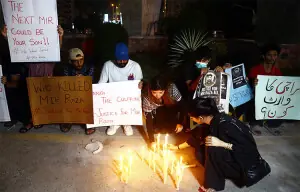
ALMOST three years later, terrorists have struck at Bali again, causing nearly 150 casualties, 26 of them fatal. That the number of the dead is far fewer than the 202 killed on Oct 12, 2002, does not lessen the intensity of the crime or the agony of those maimed for life, or the sorrow of the victims’ families. As in 2002, so on Saturday last, all victims were innocent civilians, it being of no consequence whether they were Indonesians or foreigners; they were human beings. It was a holiday crowd on an island known for its scenic beauty and the hospitality of its people. The tourists were enjoying meals when the bombs exploded simultaneously in three restaurants at two popular beaches, turning the tourist resort into an inferno.
No one has so far claimed responsibility for the blasts, but authorities suspect the Jamaah Islamiah to have commissioned one of its suicide bombers to carry out the heinous act. The blasts in 2002, too, were carried out by the Jamaah Islamiah, which is linked to the Al Qaeda, and the targets were mostly nightclubs frequented by foreign, especially Australian, tourists. That the religious-minded among the Indonesians may raise eyebrows over the kind of nightlife for which Bali — which has a non-Muslim majority — is famous may be understandable. But is slaughter the Islamic way of reforming society? In the first place there is no guarantee that tourists will not again come to the scenic paradise that Bali is. Among those killed in the 2002 massacre were lots of foreigners, but in less than a year, the tourists were back in droves. Likewise, Saturday’s three blasts may create a scare and keep tourists away for a while, but human nature being what it is, people somehow forget the bad happenings and resume normal life. The tourists will be back in Bali sooner or later, making the world’s people — Muslim and non-Muslim alike — wonder whether the murder of those innocent people served any purpose. Does it not occur to those who subscribe to the Jamaah’s credo that this kind of barbarism is counter-productive and that the murder of innocent people only tarnishes the image of Islam and Muslims?
There is no doubt that a wave of anger is sweeping the Muslim world. Thousands of Muslims have been killed by occupying powers for fighting for freedom. In occupied Kashmir, the number of Muslim dead is nearly 80,000. As for Palestine, one must count not the number of the dead but the number of massacres — Dier Yassin, Sabra-Chatilla, Jenin and many more, besides the complete dispossession of a people from their land. In Afghanistan, “pacification” is nowhere in sight, while in Iraq the number of civilian dead has crossed 100,000. And yet, despite this shedding of blood, the people of Iraq have neither peace nor freedom. For the Muslims to be angry is, thus, quite understandable. But is killing innocent people the way for making a protest? In fact, those shedding innocent blood at Bali and elsewhere should realize that these simply are not the ways to advance the Muslim cause anywhere in the world. If they would do some sober thinking, the brains behind Al Qaeda and Jamaah Islamiah would realize that 9/11 and other such acts have only made things for Muslims far worse and made a solution of problems like Kashmir and Palestine even more difficult.
Trade accord with Malaysia
THE signing of a free trade agreement between Pakistan and Malaysia during Prime Minister Shaukat Aziz’s visit to Kuala Lumpur is a good step and should provide a much-needed boost to the country’s export-oriented industries. In fact, during the visit, Malaysia also made an announcement that it would back Pakistan’s desire to become a member for Asean, a regional grouping whose stature and importance has only risen with the passage of time. The trade pact itself, called the ‘Early Harvest Agreement’, will come into force from January 1, 2006, and will seek to reduce tariffs on several dozen items of trade between the two countries. Malaysian investors are currently engaged in the real estate development and housing sectors in the country. Completed and ongoing projects involving them include a large golf club in Lahore and building housing colonies with a well-known local land developer. Hopefully, the new agreement will allow Malaysian firms to engage in mutually beneficial trade with Pakistan in other fields as well. Besides, with Pakistan wanting to enhance the manufacturing and services component of its national economy, the lowering of tariff barriers will facilitate the two-way traffic of goods.
According to official figures, the total volume of bilateral trade between Pakistan and Malaysia is approximately $750 million with exports by the latter to Pakistan accounting for over 90 per cent of the total trade. So, not only is the quantum of bilateral trade quite low, Pakistani exports constitute a very small percentage of two-way exchanges. It is precisely because of this lop-sided trade equation between the two countries that a free trade pact holds much promise for Pakistani firms. With Pakistan aiming at increasing its share of export of value-added products, the present agreement provides a good opportunity to work towards the achievement of this objective. An integral part of the developing relations with Malaysia will also be the latter’s willingness to import thousands of skilled workers from Pakistan for work in Malaysian firms and other projects. Hopefully, this will be done keeping in consideration the demand for such skilled labour by Pakistani firms and industries.
Enforcing the helmet law
IT IS rather tragic that those laws enacted to protect a person’s safety and well-being are usually the first to be flouted or disregarded. For how else does one explain the virtual abandoning of the motorcycle helmet law which was enforced in Karachi from September 1? Given the sharp increase in road accidents, an existing law was reinforced to ensure that cyclists were protected. Like many new laws that come into force, the traffic police are specially vigilant and strict in ensuring that the law is adhered to at first but then lose interest. The decline in motorcycle helmet sales in the past week is just an indication of the waning interest. Retailers who recorded a 20 to 30 per cent decline in sales cited traffic police’s lassitude towards erring drivers as the reason behind the loss in sales. Other factors include a shift in priorities as the police are now busy making arrangements for traffic management during the coming Ramzan. This is, however, no reason for laxity where human safety is involved.
This law was resisted by a section of motorcyclists who cited helmets as an unnecessary paraphernalia but the city government stood firm and went ahead with its decision to enforce the law. The traffic police have since fined 50,000 offenders and recovered 2.5 million rupees in fine. A lot more can, and should, be done to enforce this law and protect cyclists’ lives. The traffic police should be taken to task for their lack of interest in fining offenders. It is not enough to say that since the law was enforced the percentage of those wearing helmets has risen minimally. One way to measure success is to ensure that the law is strictly followed as well as enforced.
The ‘inoperative’ interview
WAS it just jet lag? Or could it have been simply tiredness after a long and gruelling schedule? Over-confidence, perhaps? Or the misplaced expectation that the US press would extend the same warm, friendly and unrestrained goodwill to him that President Bush and his administration had been showing?
Whatever may have been the reason, the effect of President General Pervez Musharraf’s response during his interview to The Washington Post could not have been more damaging to his image as an enlightened, moderate, modern-minded Muslim leader. It is an image carefully crafted by him and his spin-doctors; it is the uniformed mannequin President Bush and his team wish to project of the man they have adopted as their man in South Asia.
This abrasive encounter must have given President Musharraf painful lessons in how not to handle the media in America. The first is that the American press forgets nothing, and it forgives no one.
It never forgave the black leader Jesse Jackson for his off-the-cuff reference to the Jewish-dominated city of New York as ‘Hymie-town’, thereby forfeiting what little chance he had of being the first credible candidate from his race for the US presidency.
It never forgot the one-finger obscenity held up by Nelson Rockefeller, then a heartbeat away from the presidency as vice-president to Gerald Ford, and whose successor he could have become.
It took on President Nixon over Watergate and caused him to be extracted, like some rotten tooth, from the Oval Office. In fact, it is the very same paper — The Washington Post — that proved to be Nixon’s nemesis and is now Musharraf’s nightmare.
One cannot blame President Musharraf for wanting to speak his mind even if he had had to borrow someone else’s thoughts. He tried to blunt his initial response to the prickly question by attributing it to hearsay, and when he found himself hoisted on another person’s poniard, he attempted to extricate himself with a forceful denial, which The Washington Post then refuted by putting a transcript of his interview on its website for the world to listen to.
Surely he must have anticipated that, out of all the US papers of such standing, The Washington Post which has Nixon’s mouth mounted as a trophy would certainly have taped his interview. Lesser dailies even in countries like Pakistan take such primitive precautions. Had President Musharraf on his staff a man like Ron Zeigler (Nixon’s press secretary), he could have left it to him to explain the indefensible. Confronted with endless and repetitive questions about the Watergate affair and trapped into providing contradictory clarifications, Zeigler made the now famous assertion: “This statement is an operative statement. The others are inoperative.” (Ziaul Haq had his own solution. CMLA stood as much for Chief Martial Law Administrator as ‘Cancel My Last Announcement’.)
There must be moments now that President Musharraf wishes he had ignored the question put to him by the Post, and if he could not, he could have followed the advice of a well-weathered US politician who cautioned that a reply should be given only if it ‘improves on silence.’
The second lesson Musharraf has had to learn the hard way is that the press remembers you not for what you did, but what you said. And the teacher in this case was the New York Times columnist Nicholas Kristof whose piece was published on September 20 which described him as ‘nuts’ and what not.
Our ambassador to the United States, General Jehangir Karamat, descended into the ring and struck a blow in defence of the president, calling Kristof’s piece “a vitriolic and personal attack.” He suggested that he should focus instead on Musharraf’s achievements. Although hard-hitting and timely, it is unlikely to send Kristof reeling back into his corner.
President Musharraf today, like President Yahya Khan in his own time, enjoys the unprecedented support of the US presidency. Notwithstanding that, Bush’s White House will not act — not more than Nixon’s could for Yahya — as a referee between the American press and its target. It can offer a good reception; it cannot protect its guest from a bad or hostile press. Every US administration knows better than outsiders do (and often to its cost) that it does not control the press. It knows all too well that the press in fact controls public opinion, which is why it makes such a formidable adversary.
In a way it is sad that Musharraf’s interview with the Post should have appeared like some unexpected pimple on an otherwise unblemished official visit. In his capacity as the president of Pakistan he was received by the president of the United States, and in his capacity as his country’s Chief of Army Staff he was feted at Centcom headquarters at Tampa (Florida) by US General Abizaid. He was received throughout with all the head-swivelling adulation the US reserves for its reading allies.
While in the US, Musharraf said the right things his hosts wished to hear. He met the right people and shook the hands of those his hosts would have wanted him to. He relieved shadows of Agra by having a lengthy tete-a-tete with Indian Prime Minister Manmohan Singh that lasted four and a half hours, albeit without any conclusive results. One can imagine the chagrin of the press corps of reporters who had waited impatiently in the New York hotel until midnight before being told that there was nothing to report.
And now, President Musharraf has come home laden with foreign goodies and ideas, returning to a home beset by domestic problems. The political scene is as ragged as when he left it. The law and order situation is getting worse. Rape appears more often in the news than reform. The rich are getting richer and the poor are becoming a statistic. The haves have it in plenty, and the have-nots learn to exist somehow. Indian films are forbidden but food imported from India is not. Some say that we have bartered away our sovereignty to the US. Kristof of the NYT suggests that we enter into another barter — a Free Trade Agreement for Osama bin Laden.
One has to ask oneself: Can a nation that denies itself democracy demand self-determination for the Palestinians? Can a nation that cannot stand up to a superpower stand up for the Kashmiris? Can a nation that does not conduct a discourse within its own body politic expect to have its voice heeded abroad?
‘Foreign policy depends ultimately on internal conditions and developments’, a politician once advised his countrymen. “Internal unity and progress for us therefore become essential if India is to play an effective part in world affairs.” Pandit Nehru might have been offering advice to us here in the 21st century Pakistan.
Time to talk to Turkey
TURKEY has already waited more than 40 years to join the European mainstream, but there are still a few more tense days left before there can be certainty that its ambition will eventually be realised.
The hope is that last-minute hitches will be resolved by EU foreign ministers, allowing the accession talks to begin. Since the rules require such big decisions to be agreed by all 25 member states, Austria alone has been able to block this one, demanding that instead of negotiating full membership like every other country seeking to join the club, Turkey should be offered only a “special partnership”.
Ankara rejects such an approach as discriminatory. So, to their credit, does everyone else, including the governments of France, the Netherlands and Germany, despite the strong anti-Turkish feeling that played a big role in the paralysing rejection of the EU constitution this summer.
Austrian opposition to Turkish membership is a toxic blend of historical prejudice and contemporary fear, of Ottoman janissaries at the gates of Vienna, of Habsburg nostalgia, and Muslim gastarbeiter flooding in from deepest Anatolia. Wolfgang Schisel, the conservative chancellor, does not say openly that the EU is a Christian club, but has signalled that he will only back the talks if there is a parallel launch of accession negotiations with neighbouring — and Catholic — Croatia. That process has rightly been on hold because of Zagreb’s failure to cooperate with the UN war crimes tribunal. If as expected, prosecutors report cooperation has improved, then it can resume.
Turkey, once plagued by military coups, torture and hyper-inflation, has met the EU’s criteria for membership — democracy, the rule of law, human rights, protection of minorities, a market economy and the capacity to manage competition.
Even if implementation of new laws has been patchy in Kurdish areas the very prospect of EU membership has been a powerful spur to unprecedented reform. More will take place and the country will become richer in the 10 or more years it will take to complete the negotiations.
Outstanding issues over Cyprus should not block them. It is to be hoped too that calls on Turkey to recognize the Armenian genocide of 1915 will at least promote a more mature attitude to the country’s past. But Turkey’s secular Muslim democracy has demonstrated that it is ready to join a tolerant, multicultural Europe. Let the final deal be done and the talks commence.
— The Guardian, London
| © DAWN Group of Newspapers, 2005 |