0
0

KARACHI, June 9: Pakistan’s bond prices rose on Monday, reacting positively to the government’s pledge to maintain a lower interest-rate environment to boost economic growth, in its budget for the coming financial year.
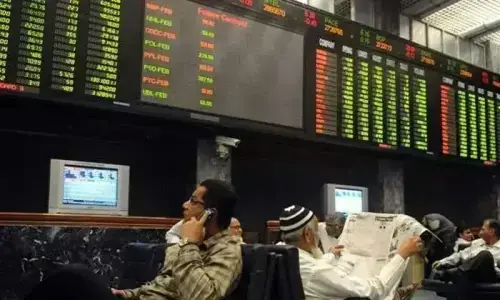
On the equities front, share prices made modest advances as traders were a shade less enthusiastic, given the lack of major incentives for the corporate sector in the budget for the new fiscal year starting July 1.
The budget, announced on Saturday, failed to address stock exchanges’ calls for corporate tax cuts for listed companies. Nevertheless, “the government’s desire to keep a low interest rate environment gave markets some confidence,” said Arshad Arif, research head at brokerage firm KASB Securities.
The investor-friendly budget valued at Rs805 billion—the first by an elected government after three years of military rule—contained reductions on taxes and duties on 259 items to encourage private investment, incentives to boost the construction industry, and a 33pc increase in government-led spending for development projects. It also contained some populist measures, such as a 15pc boost in salaries for government employees and a similar rise in pensions.
Finance Minister Shaukat Aziz said on Sunday at a post-budget news conference that the government would maintain a lower interest-rate environment in the coming financial year to aid economic recovery. The government expects the economy to grow by 5.3pc in the next fiscal year, up from an estimated 5.1pc in the current fiscal year.
The economy is witnessing a mini-boom, fuelled by hundreds of millions of dollars flowing into the country after Pakistan backed the US-campaign against international terrorism.
The low-interest-rate stance triggered fresh buying in the bond market, where the 10-year government bond yield fell to 5.15pc by midday, from 5.45pc at Friday’s close. Banks started buying the paper after their hopes of higher government borrowings were dashed by the budget announcement over the weekend. The price on the benchmark Oct. 2010 issue, which carries a coupon rate of 11pc, rose to 143.04, from 140.30 Friday.
The government plans to borrow Rs28 billion from the banking sector through the issue of treasury bills and Rs15 billion through the issue of long-term government bonds, according to budget documents. This shows that the supply of government paper will remain tight, attracting fresh buying in government bonds and securities, one dealer said. Lately, rates on the secondary market have started stabilizing on robust private-sector loan demand and hopes of increased government borrowing in the coming financial year to repay debt.
The yield on the 10-year bond in particular rose 50 basis points to 5.45pc during the week before Saturday’s budget announcement.—Dow Jones Newswires