0
0
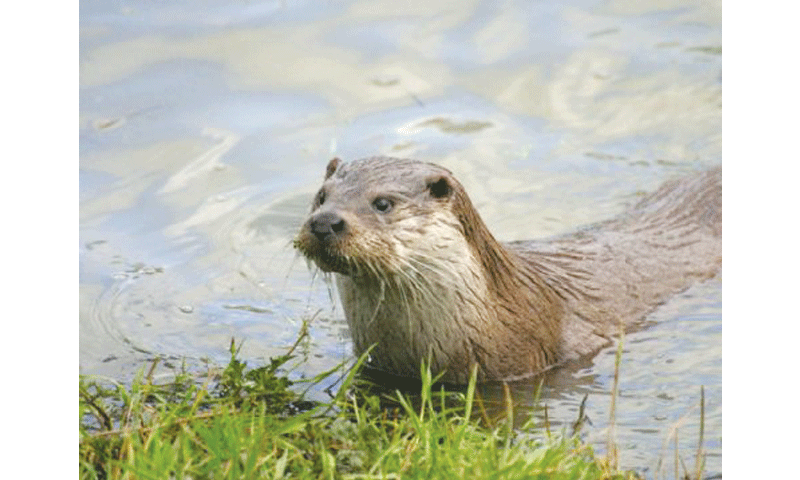

FEW people are aware that there are still a few otters right here in Pakistan although, unless they receive the full protection they so desperately need, they won’t be around much longer.
One species, the ‘smooth-coated otter’ or lutrogale perspicillata to give it its scientific name, used to be very common along river and canal systems in Sindh and Punjab, and was also perfectly at home in swaps, lakes and water reservoirs while the second indigenous species, the ‘common otter’ or lutra Lutra kutab, was found in many areas of the mountainous northern regions of the country.
The smooth-coated otter is slightly bigger than its mountain cousin, being a biscuit or darkish olive colour rather than the glossy brown of the cooler climate species and it was especially numerous in the lower parts of the River Indus before being adversely affected by the increasing presence of humans and the advent of chemical based agriculture.
The main reason for the decline of both species of otter though, is that these fish loving mammals are loathed by fishermen who view them as serious competition and, whenever they get the chance, kill them outright. The secondary fact was, but this is not quite so relevant anymore as people have finally got some sense, that their pelts were in high demand in the fur market — a global and local market which has, thankfully, shrunk rapidly in recent years.
As well as hunting down and eating any kind of fish they can find, otters also relish crustaceans, frogs, small birds, eggs, rodents and other small mammals and, like all members of this global family, are expert swimmers who, when the opportunity presents itself, just love to fool around both in and out of the water.
The smooth-coated otters can give birth to their young, known as ‘kittens’ all around the year and a litter of up to five are born at a time in the safety of a den dug deep into a river bank or, in the absence of a suitable bank, in a secluded place very deep in swampy undergrowth which is relatively safe from predators of both the two and the four-legged kind.
Mountain dwelling common otters on the other hand, only have one litter of kittens each year, usually no more than four, born in either the spring or summer months. They used to be spotted quite often in places like Hunza, Swat, Gilgit and Baltistan but, as well as being killed by fishermen, owners of fish farms are responsible for wantonly slaughtering them too.
The way things are going, if the situation is left unchecked and uncontrolled, these beautiful water mammals will, very soon, be completely extinct in Pakistan which would be a great loss to environmental biodiversity all round.