BHUBANESWAR: Security forces killed 14 Maoists in a firefight in eastern India on Saturday, police said, marking the latest bloodshed in a long conflict in which the rebels have been battling to overthrow the government.
It was the single biggest rebel death toll in Orissa state from one incident and came amid an intense anti-Maoist campaign in the area conducted over the past month, police said.
“Fourteen rebels, including one woman cadre, were killed. We are awaiting further information,” Orissa state police director general Prakash Mishra told AFP.
There were no immediate reports of casualties among security forces, Mishra added.
The Maoists have grown from a rag-tag band of ideologues into a potent insurgent force, creating a so-called “Red Corridor” that stretches throughout central and eastern India.
Saturday's battle occurred in the Padia forest area of mineral-rich but impoverished Orissa state some 650 kilometers (400 miles) southwest of state capital Bhubaneswar.
The security forces, acting on a tip-off, were conducting a sweep of the area for rebels when they came across the Maoist camp, police said, adding authorities now were looking for more insurgents in the area.
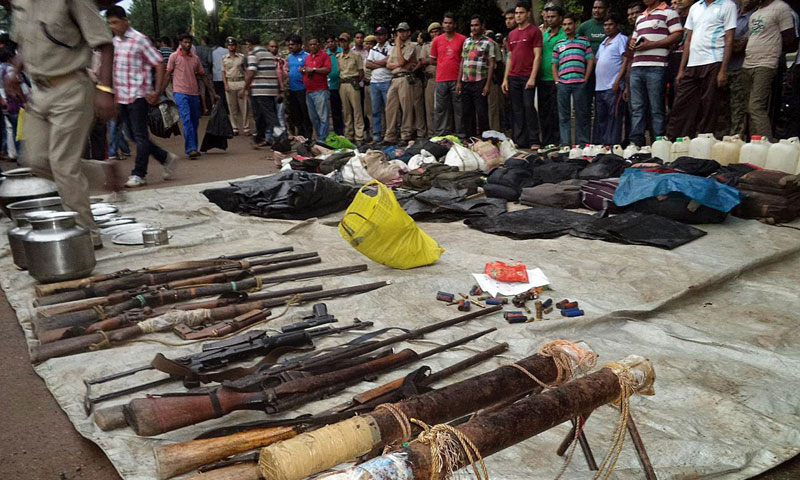
The area where the battle took place was close to rebel-hit Chhattisgarh state. Police said a cache of explosives, arms and ammunition and Maoist literature was seized from the camp site.
Local media reported the rebel group camping in the forest was suspected of involvement in a May 25 ambush by Maoists of a convoy of Congress leaders in neighbouring Chhattisgarh state.
That attack in a remote tribal belt killed some 24 people, including 12 local Congress leaders and supporters.
Prime Minister Manmohan Singh has described the Maoists as the country's most serious internal security threat and there are frequent outbreaks of violence in areas in which the rebels are present.
Maoist rebels have been fighting in the forests and rural areas for what they say are the rights of tribal people, who have some of India's highest rates of illiteracy and poverty, and landless farmers for decades.
They demand land and jobs for the poor, and want to establish a communist society by toppling what they call India's “semi-colonial, semi-feudal” form of rule. The revolt is believed to have cost tens of thousands of lives.
The Maoists are believed to be present in at least 20 states but are most active in Chhattisgarh, Orissa, Bihar, Jharkhand and Maharashtra, occupying thousands of square kilometers (miles) of land.
Critics believe attempts to end the revolt through security offensives are doomed to fail, saying the real solution is better governance and development.