KABUL: The Taliban office in Doha was a plot to break up Afghanistan orchestrated by either Pakistan or the United States, a top aide to the Afghan president has said.
Hamid Karzai's chief of staff said Kabul was concerned about growing closeness between Pakistan and the United States, and that there was still a huge rift with Washington despite top-level efforts to patch up the disastrous fall-out over the office.
The remarks from someone so close to Karzai cast a spotlight on the depth of distrust between Kabul and Washington and between Kabul and Islamabad.
They are also likely to play havoc with already troublesome efforts to find a peace deal to end 12 years of Taliban fighting.
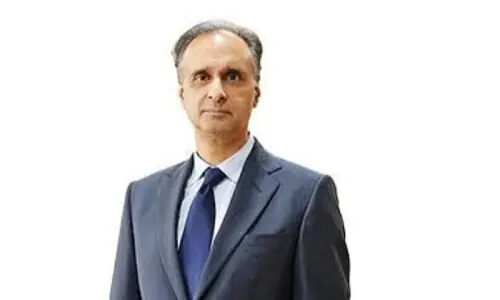
“The opening of the Qatar office, the way it happened was a plot and Afghanistan foiled that plot and this plot was aimed at splitting or breaking up Afghanistan,” Karim Khorram told local 1TV in an interview, the recording of which was obtained by AFP.
When the Taliban opened their office on June 18, it was hailed as a first step towards a potential peace deal, but a furious Karzai slammed it as an unofficial embassy for a government-in-exile.
He reacted by breaking off security talks with Washington and threatening to boycott any peace process altogether.
“We have concerns and those concerns have increased since January, and that is over US closeness with Pakistan, specially over issues linked to Afghanistan,” Khorram said.
“I can't say 100 per cent for sure, but you, yourself, can understand that one of these two countries is behind this (Doha office) plot,” Khorram said.
Pakistani-US relations, often tense, have largely recovered from a series of disasters in 2011 and the West has long viewed Pakistan as vital to shoring up any peace deal in neighbouring Afghanistan.
Khorram is one of Karzai's closest advisors and considered a key member of a more conservative faction around the Afghan president, deeply distrustful of both Pakistan and the United States.
He is a former information and culture minister who courted controversy for criticising some private television channels for broadcasting un-Islamic content and for making other statements considered anti-democratic.
Referring to media reports of an Afghan peace plan that would effectively cede control of parts of the south and east to the Taliban, Khorram said any such move would unleash rebellion elsewhere in the country.
“If the Afghan government had not reacted as it did, Afghanistan could have gradually become like a place you would have had the Islamic Republic in Kabul and the Islamic Emirate in another place.
“And in other parts of Afghanistan others would have risen against this. If this would not have divided Afghanistan, it would have turned it into a country with a weak central (government) and each part controlled by different powers,”he said.
Karzai himself has frequently spoken out against US policy, contributing to a troubled relationship with the Obama administration.
Echoing similar remarks from Karzai in the past, Khorram accused the United States of trying to prolong the war in Afghanistan and said there was “definitely” a serious rift between Kabul and Washington.
He blamed the rift on US strategy in the war, lack of transparency in US policy towards Pakistan and on US reconstruction and economic support to Afghanistan.
“In all these we have disputes, we have expressed our disagreements. In media we have mentioned a little of it but behind media we have expressed all of it,” he said.
International pressure is mounting to get talks going in an effort to end the Islamist Taliban's insurgency before 100,000 US-led troops leave Afghanistan next year.
The Taliban said earlier this month that it had temporarily closed their office in Qatar, blaming “broken promises” by the Afghan government and United States.