0
0

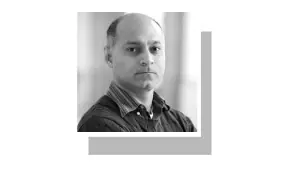
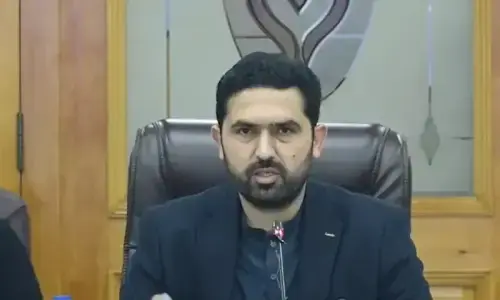
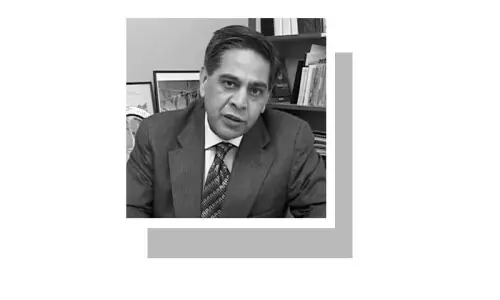
Mian Iftikhar Hussain was born in Khyber Pakhtunkhwa’s Pabbi region in 1958. The senior ANP leader obtained his early education from the Islamia Arabia Public School — which ran under the guidance of Bacha Khan, the anti-colonial activist whom Awami National Party traces back its ideology to.
Hussain then went on to Government College, Peshawar and later to Peshawar University. During his time at the latter, he was elected provincial president of the Pakthun Students Federation after one unsuccessful attempt of running for the position. He then spent time in and out of jail for protesting against the military regime of Ziaul Haq.
In 1986, Hussain was elected the Central President of the Pakhtun Students Federation and made a natural transition to ANP in 1988. In his home constituency in Nowshera, his performance has been erratic. He lost the election for a provincial assembly seat in 1993 and 2002, but won in 1990, 1997 and 2008. His win in 2008 (from PK-12; Nowshera-I) came despite the fact that he was considered the weakest candidate for the seat at the time.
In the party, meanwhile, he held several senior posts, including that of general secretary. After his win in the 2008 election, Hussain was appointed KP’s information minister. In this position, Hussain remained outspoken and hit the spotlight for his blunt statements against militancy and the Taliban, making him a target of extremists — particularly, the Tehrik-i-Taliban Pakistan.
In 2010, Hussain’s only son was killed in a targeted attack, carried out by the Taliban. Just a day later, the grieving minister himself survived a TTP suicide attack close to his home, which killed eight people.
Despite this, the ANP leader did not tone down his campaign against terrorism. While he supported the idea of negotiations and talks with the Taliban, he also unequivocally condemned extremism and has often spoken out strongly against it. As a provincial minister, he also became known for making personal appearances at sites of terrorist attacks immediately after they occurred.
Lately, however, following the assassination of his colleague Bashir Bilour, Hussain has been forced to maintain a low profile and keep public appearances at a bare minimum — a condition greatly hampered his efforts at an election campaign in the run up to the 2013 polls.
— Research and text by Heba Islam