ISLAMABAD, May 27: A Turkish scholar here on Monday said military was a powerful institution in his country and trusted by the people in the past. But now parliament is more trusted and, therefore, the military cannot interfere in the transition from laicism to the Anglo-Saxon democracy.
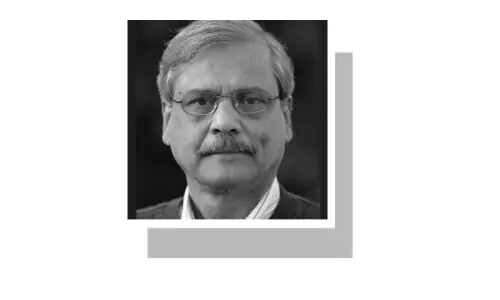
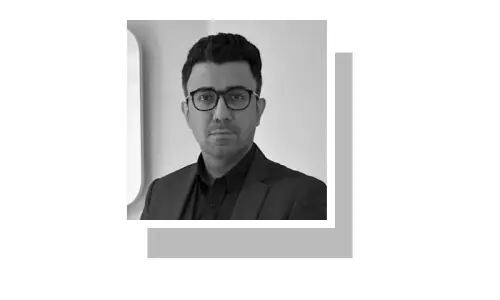
Dr Ali Murat Yel, head of the department of sociology at the Fatih University, along with Dr Nuri Tinaz, an associate professor at the Marmara University, Istanbul, was speaking at the Centre for Research and Security Studies (CRSS) on “State, religion and democracy.” Their talk was part of a series of dialogues organised by the CRSS on the separation of religion from politics. Under the programme, important public figures, academicians and analysts will be invited to Pakistan from three secular Muslim states - Turkey, Indonesia and Malaysia.
The Turkish scholars strongly defended their country’s transformation into a modern democratic state against a general worldwide perception as if the country was being pushed toward theocracy by the ruling Justice and Development Party.
They acknowledged that of late Islamic symbols had become more visible in both private and public spheres in Turkey. However, the country continued following its secular constitution and the rulers had not disturbed its original texture.
Dr Ali Murat said Turkey was neither evolving into a theocratic state nor transforming into the Anglo-Saxon secular democracy. “It is a society where Islam is part of life but not part of the state business. It is borne by several surveys according to which less than seven per cent of its population supports the Sharia-based political system. There is a consensus in Turkey that you cannot have a constitution based on Sharia. This is a matter between God and the individual,” Dr Murat substantiated his argument.
Until 2007, head cover was not allowed in Turkey and for the last five years after declaring it an individual choice, women are allowed to exercise this right. But even then, only two per cent of women wear head covers. Similarly, alcohol is prohibited in public places but it does not mean that Turkey is becoming a theocratic state. There is more freedom of expression, Dr Murat continued.
Dr Nuri Tinaz, who spoke on the transformation of Turkish society into secularisation, said the programme of secularisation was implemented through a well-planned policy which included symbolic secularisation, institutional secularisation and functional secularisation. The transformation was started after the disintegration of the Ottoman Empire and the establishment of Turkish Empire but the real structural changes were found in the last 30 years.
The concepts of modernisation of politics, media, entertainment, fashion etc., started in the 1980s. At that time, the display of Islamic symbols was prohibited. It was hardliner secularism; religion was subsided from public lives.
Now there is a rise in individual’s religion and spiritualism. Now Islam is visible in public sphere. There are secular as well as conservative models of economy, culture, media, housing (hotels) etc.
Dr Nuri Tinaz said Turkey followed the western style of democracy but failed. However, when it followed its own traditions it resurged as a vibrant democracy which was inclusive and secular.
“What we see in present day Turkey under the Justice and Development Party may be the rise of individual spiritualism but there is no compromise on the fundamentals of the constitutional framework that Ataturk put in place. People at large have internalised secularism,” he explained.
During the question-answer session, Dr Murat said the new and older generations in Turkey were now accommodating each other through formal religious education. “The imam/khatibs of mosques are regularised. Education is expanded to every corner of the state in order to achieve the policy of democratisation and secularisation,” he added.
But this transition does not mean that Turkey is deviating from Mustafa Kemal Attatuk’s principles. The opposition’s objections against this transition are also not supported by the people. The republican elites created the Ataturk cult and at times they even abused Kemalist principles to legitimise their wrongdoings.
The two scholars brushed aside the possibility that creeping craving for Islam and Sharia may be influencing the AKP agenda. Dr Murat in his concluding remarks, added: “We must keep in mind that it’s the voter's fatigue with other parties and the worry for bread and butter that brought AKP to power and has kept it in power.”