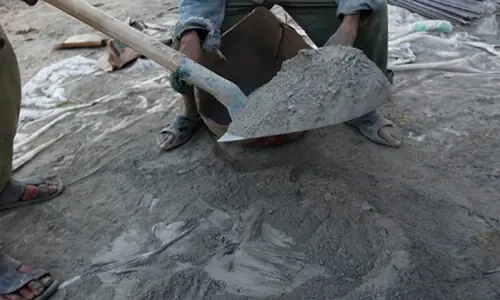
GUJAR KHAN: Agricultural technology has modernised our farming. Its a rare scene to find old methods of ploughing, sowing and threshing.
However, villagers of Karratha village, located on the bank of Jhelum river, with little access through road, still practice the centuries’ old technique of threshing wheat.
A yoked pair of oxen and cows are made to pull a thick, thorny branch of tree, beefed up with vertically packed wheat straws. This is called Phallah.
A huge quantity of wheat crop is heaped up the leveled and semi-paved field called Khlaarah and the cattle are made to circle on the gradually spread wheat crop.
This exercise is carried out from dawn to dusk till all the wheat straws are changed into chaff and the grain is knocked out.
The next day the grain is separated from chaff by winnowing.
This old technique of threshing is perhaps only used in Karratha village and has been a common practice in rural areas of Pakistan for the past forty years.
Being a toilsome job, many families of farmers used to help one another in the village to bring yield to their homes and so dependence on fellow villagers was indispensable and the commune links at village level were strong.
With the advent of machines, the job of farming has become easier but the mutual fraternity links among farmers are getting weaker with little dependence on others.
The villagers of Karratha are using this old technique not because they want to regress to the 19th century, but because there is no road link available for them and not even a tractor can reach there.
Chaudhry Mohammad Ulfat, a prominent social worker of Choha Khalsa village, told this reporter that living in the undeveloped past was a compulsion for the poor folk of Karratha as there was no road link available.
According to Mr Ulfat, the villagers were forced to drink river water as a result of which they contracted diseases like hepatitis and tuberculosis.
The children from 22 houses of Karratha have to leave their homes at 5am to catch a boat, a long journey on the Jhelum river, followed by lengthy traveling on foot to Bannahl village where primary and secondary school is available but most students and parents cannot afford this risky journey.
Patients cannot reach hospitals in case of emergency and apathy of provincial and district bureaucracy have closed all doors of facilities on this village.