



 4
4
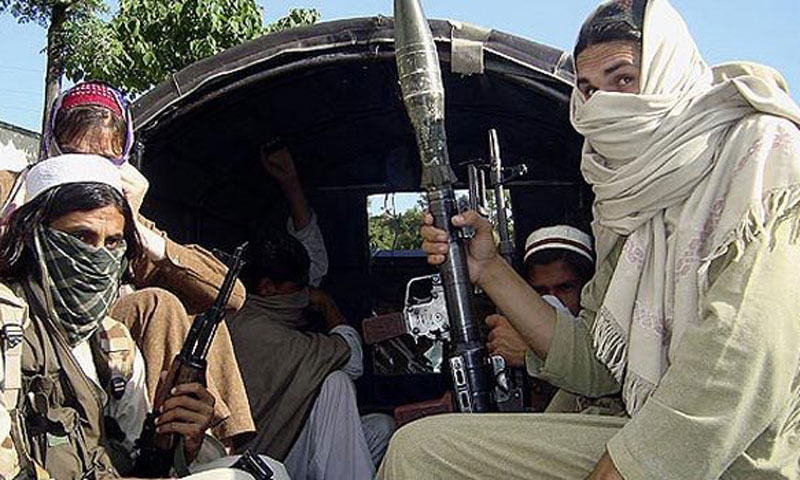

A SORT of unprecedented political pragmatism has followed the 2013 election. As in other areas, improvement in the country’s security situation is also being projected by many who are optimistic about the incoming government’s ability to fight the menace of terrorism.
They allude to the Sharif brothers’ significant success in countering the threat of sectarian-related terrorism in Punjab during the late 1990s.
However, the present phase of terrorism and violence has no comparison with that of the 1990s. Most incidents of violence and terrorism in the 1990s were sectarian-related. There were few actors of violence.
The number of such incidents and resulting casualties was also remarkably low when compared to the present state of violence. Currently, the average number of fatalities per terrorist attack in Pakistan is about eight whereas the number of militant, insurgent and sectarian groups carrying out terrorist attacks has crossed 200.
The security policy of the PML-N-led government in Punjab during the last five years was a tricky one. The Punjab government was seen by many as shying away from criticising the militants.
Looking to the future, let us analyse the current and emerging security challenges for Pakistan and the vision, likely security policy and capacity of the incoming PML-N government.
Let’s assess the level of the challenge first. Pakistan faces multiple and disparate conflicts that tend to increase the risk of violence and insecurity each day. There is Taliban-led militancy particularly in Fata and KP, a nationalist insurgency in Balochistan, ethno-political violence in Karachi, and sectarian violence in some parts of the country.
All these forms of conflict have many variations and sub-tendencies which further intensify the risk and impact of the violence. These pose different threats and require different remedies. In general, certain frameworks are available to reduce the risk of violence and insecurity that range from the ideological to the strategic and economic. Pakistan is already using some of them. When Pakistan chose to be a part of the US-led war against terrorism, it had a strategic purpose. This strategic framework to achieve internal security remained functional until 2008 when the PPP-led government came to power.
While the PPP government failed to fully transform this strategic framework into a nationalistic or ideological framework, the government’s secular credentials added an ideological colour to the former. This resulted in increased ambiguity and confusion in the public on issues of extremism and terrorism that is clearly reflected in the opinion polls conducted during the last five years.
As suggested by its chief’s recent statements, the PML-N plans a different approach. Economic recovery apparently seems to be its master strategy to achieve security and counter terrorism.
The economic framework characterises terrorists as rational actors who use violence to maximise the benefit — economic, political or ideological. In response the state evolves strategies to minimise the advantages the terrorists have in mind. Political engagement and slow encroachment through administrative reforms and development are key tools in this framework. Every government with an economic agenda follows almost a similar approach and so will the PML-N government.
In Pakistan’s case, the state has already applied a level of deterrence, which did not achieve strategic success because its application was selective. For the new government, the expenditure on deterrence measures will be another critical issue and it is most likely that it will initiate talks with the militants. Mian Nawaz Sharif has already indicated that, and a Tehreek-i-Taliban Pakistan (TTP) spokesperson has also come up with a positive response. Nonetheless, the government will focus more on minimising costs both in economic and political terms.
In the given scenario, will it be possible for the new government to properly link the security policy with its master strategy of economic recovery? The existing frameworks were evolved around certain strategic needs. Can the government shift its focus or challenge these conventional frameworks? The economic framework provides a solution to immediate security needs, but its socio-cultural impact remains low and requires more liberal government credentials.
The new government will have to craft its strategy quite carefully. Keeping in mind the PML-N’s national and provincial track record, its recent election manifesto and the statements made by its leaders, it is most likely that the new government will evolve a defensive approach.
Obviously, Balochistan will be the top priority. The new government will have space to establish its goodwill. A broad-based provincial government, including the Baloch nationalist parties, with a development agenda can provide some relief to the province. Karachi will remain a critical issue even for the incoming government.
For the federal government, a good working relationship with the Sindh government and the political parties in the province, especially the Muttahida Qaumi Movement, will be essential to smoothly pursue economic recovery. The deterrence part of the agenda could be linked with the elimination of terrorists and criminal networks in the city but would be a difficult task to implement for the provincial and federal governments.
The mother of all ills will remain the militants present in the tribal areas and their affiliated groups across the country. Initially, a modest approach based on a political solution could be applied with reforms and a development strategy. The threat from TTP and Al Qaeda affiliates in the mainland could be countered through engaging their partners such as the banned Sipah-i-Sahaba etc.
The new government’s defensive approach can help to reduce the number of terrorist and other violent incidents. But it is difficult to predict whether this strategy will provide long-term and permanent solutions. There are two reasons behind this unpredictability. First, a master strategy needs a master narrative to counter extremist ideologies, which is still lacking. Secondly, the economic framework becomes inapplicable and ineffective in an environment where strategic interests dominate other interests.
The writer is editor of the quarterly research journal Conflict and Peace Studies.
mamirrana@yahoo.com



























