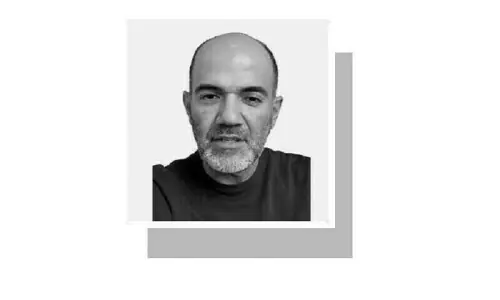
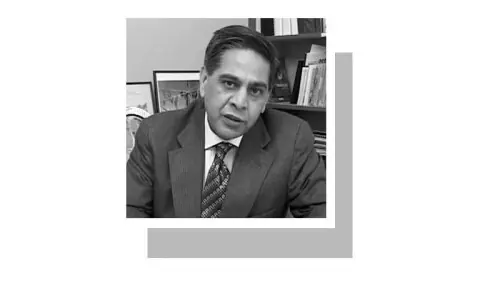
His Namaz-i-Janaza was offered in a park at Lahore's Model Town. Thousands of people belonging to various walks of life attended the funeral. Dr Israr has left behind a wife, four sons and five daughters.
Founder of several organisations like Anjuman-i-Khuddamul Quran, Tanzeem-i-Islami and Tehrik-i-Khilafat, he had followers in Pakistan, India and Gulf countries, especially in Saudi Arabia.
Born on April 26, 1932, in Hisar, East Punjab (India), Dr Israr graduated from the King Edward Medical College, Lahore, in 1954 and received his Masters in Islamic studies from the University of Karachi in 1965.
He practised medicine only until the late 60s, subsequently dedicating himself to promoting Islamic ideology.
Dr Israr had worked briefly for Muslim Students Federation during the independence movement and, following the creation of Pakistan, for the Islami Jamiat-i-Talaba.
He later joined the Jamaat-i-Islami but developed differences with the party's chief and founder, Maulana Abul Ala Maududi, when the latter opted for electoral politics in 1957.
Dr Israr Ahmed established Markazi Anjuman-i-Khuddamul Quran in 1972, Tanzeem-i-Islami in 1975 and Tehrik-i-Khilafat in 1991. He relinquished the leadership of Tanzeem in 2002 on account of poor health.
He had to his credit 60 books on different aspects of Islam and religion, nine of which were translated into English.
He was also honoured with a Sitara-i-Imtiaz in 1981 for contribution to the field of religious instruction.
He spent almost four decades in trying to reawaken interest in Quran-based Islamic philosophy.
A critic of modern democracy and the electoral system, Dr Israr believed that the head of an Islamic state can reject majority decisions of an elected assembly.
A familiar refrain in his writings is that the spiritual and intellectual centre of the Muslim world has shifted from the Arab world to the subcontinent and that conditions are much more congenial for the establishment of Khilafat in Pakistan than in other Muslim countries.
He was popular for his lectures and debates on television over burning religious issues. He turned into a household name during the early '80s thanks to a PTV programme, Al Huda.
Dr Israr kicked up a storm in 1982 when he asserted that women should be barred from all professions except medicine and teaching.
Another interesting episode came months later when he made good use of a conversation with then president Ziaul Haq to malign cricket, urging him to ban the game altogether.