2
2

PAKISTAN has been trying to focus its aim on the war against terrorism and extremism through its repeated efforts in launching military offensives and aiding and supporting all others involved in the same process.
The one thing that Pakistan had been lacking in was its diplomatic efforts, thus remaining at a continued disadvantage. With the ‘Rabbani-Kayani charm offensive’ launched in Brussels, however, things that had not been in favour of Pakistan are now beginning to change to become relatively favourable, albeit at a very slow pace.
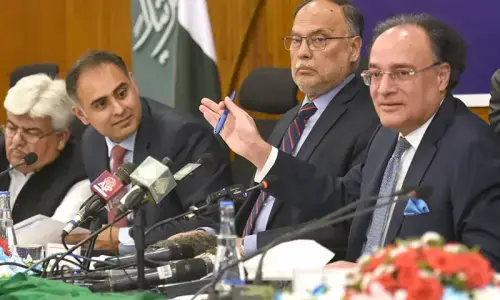
Both Gen Ashfaq Kayani and Foreign Minister Hina Rabbani were found embarking upon the journey to bring Pakistan’s anti - terrorism efforts to be viewed positively. Considering the feedback both have received from the European Union and others present there, it appears that Pakistan may finally be accepted as a game - changer and not a spoiler.
The major move that is being considered as a positive indicator is the release of the Taliban prisoners by Pakistan at the behest of the Afghan High Peace Council for furthering the reconciliation initiatives taken by the Afghan authorities.
Furthermore, Pakistan has also agreed to aid the Afghans by participating and organising a joint ulema conference proposed by them, the aim of which would be to denounce violence and suicide attacks in the name of religion so that it may alter the ideological underpinnings of the Taliban - influenced population.
Pakistan’s eagerness to help and buttress the peace process is being termed ‘a sea of change’ in the Afghan narrative that hitherto been largely distrustful of Pakistan.
Pakistan, with its display of joint civil - military diplomacy has moved up a notch internationally as the EU foreign policy chief was found describing Pakistan as a ‘significant country in the region’ that is playing its role for the peace and stability of the region.
Moreover, Nato’s Rasmussen recognised that ‘Pakistan has paid a high price’ in fighting terrorism, adding: “The alliance stands together with you to combat this scourge”.
Nato has also promised to turn its relationship with Pakistan into a strategic partnership and promised that the alliance will not leave a ‘security vacuum’ in the country after the withdrawal of its troops.
Surely all huge things can be achieved by taking one small step, and in this case it is that of a mutual convergence of the state and its institutions.
DR NIDA SHAMI Windsor, Canada