3
3


According to a leading American sociologist, the field of organ transplantation is “the most sociologically intricate and powerfully symbolic” in modern medicine. This field is also unique in that, in order for it to function it requires acceptance, goodwill and cooperation of the public. Without healthy individuals who volunteer to donate an organ and the willingness of others to permit the use of their organs—or those of a relative—after death, there could be no organ transplantation.
Experience of several decades confirms that kidney donations by both the living and the deceased are necessary to address the needs of an increasing numbers of patients with end stage renal disease. Yet, to date, Pakistan continues to rely exclusively on kidneys obtained from living donors.
The law in Pakistan, following the Transplantation of Organs and Tissues Ordinance in 2007, recommends that deceased organ donation programme be developed in order to increase the number of transplantable kidneys for the hundreds of patients who, due to a lack of suitable living donors for various reasons, remain on dialysis. But this aspect of the law too, like so many others, has remained on paper with little to show in the way of implementation.
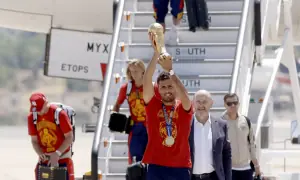
Spain is among the countries that have been most successful in increasing the number of deceased donors. They have done so by structuring relevant and ongoing educational programmes for their public who have come to see the donation of organs following death as a collective, social responsibility. But societies differ in their historical trajectories, value systems, and what they see as important in life.
It would seem axiomatic therefore that, if Pakistan wishes to develop sustainable deceased donor programmes, we must begin with efforts to comprehend prevailing cultural norms and beliefs systems and how these may influence public knowledge, attitudes and understanding of donating organs following death. Blindly aping practices of other societies to initiate deceased donation in Pakistan is not likely to get us very far.
For many Pakistanis, it is belief and the centrality of the family that provide the order of existence in life. This is no different in the matter of decisions about kidney donations following death. It is necessary to point out, however, that such beliefs are imbibed from childhood onwards from family members and social interaction, a form of living, culturally-shaped religion rather than one that rests on pronouncements made by distant ulema elsewhere.
No deceased donor programme in Pakistan can get off the ground or be sustainable unless certain social factors are taken into account in its initiation. Many Pakistanis will agree to donate their kidneys following death, but only if the permission of their families has been obtained. Therefore, recent well-meaning attempts to introduce deceased donor cards to the public that require only the signature of the potential donor, as practised by many countries, are doomed to fail, and may lead to alienation and loss of trust of families.
Similarly, the dominant American rallying cry of the altruistic “gift of life” is less likely to counter the reluctance to deceased donation than stressing religious and cultural beliefs that saving a life through deceased donation is a matter that pleases God and rewards the donor in the hereafter. Much spadework is needed if we wish to see viable deceased donor programmes in Pakistan.