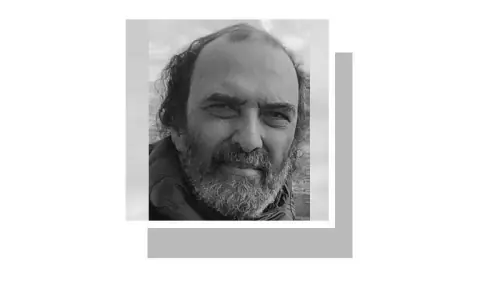
KARACHI, Nov 10 Dr Mohammad Sabir, a Turkologist who pioneered Turkish studies in Pakistan, died here on Sunday after a long illness. He was 74.
His works included the subcontinent's first Urdu-Turkish dictionary, which he compiled in collaboration with scholars in Pakistan and Turkey, in 1968.
A former Chairman of the Department of Islamic History and Dean of the Faculty of Arts at Karachi University, Dr Sabir had been confined to his home because of a stroke.
A PhD from the University of Istanbul with his thesis on Ali Sher Novai's masnavi — Hayratul Abrar — Dr Sabir wrote a number of monumental books, including Emperor Babur's Turkish divan, life and poetry of Turkish poet Mohammad Akif in Urdu, Turkmaan-i-Usmani, a history of the Ottoman Empire in Urdu, and the Urdu translation of Mustafa Kemal Pasha, the official biography of the founder of modern Turkey.
His book on the history of Central Asia remained unfinished because the Russian government refused to give him a visa.
The late president of Turkmenistan, Sapermurat Niazov, had invited him over to his country to continue work on the book, but ill-health prevented him from undertaking the journey.
When Ismet Inonu became Turkey's prime minister, Dr Sabir, who knew him quite well, sought and got his help for starting a Department of Turkology.
Though lack of government help frustrated him, he was nevertheless able to start the Department of Turkish language at Karachi University.
Besides his profound knowledge of modern Turkish with its Roman script, Dr Sabir profited from ancient books and manuscripts because he was well-versed in Turkish written in Arabic script and in the Buddhist era.
Among the people he worked with were some of the world's leading scholars and Turkologists, including Dr Zaki Velidi Togan, a Tatar who worked initially with Lenin but who escaped to Turkey after he declared Tataristan's independence. (Dr Togan was the greatest historian of the history of Turkic peoples and was head of the Turkish Historical Society and Islamic Research Institute at Istanbul University.)
Others Dr Sabir worked with included Hungarian scholar of Uzbek Turkish Prof Benzing, German Turkologist Dr Ritter, and Dr Hamidullah, who was a visiting professor at the University of Istanbul and Ataturk University and others.
Among personalities he met were the icon of Turkey's freedom struggle, Khalda Adib Khanum, former Turkish Prime Minister Najmuddin Erbakan, and Capt Zafar Hasan Aybek, a disciple of Maulana Obaidullah Sindhi, who had rebelled against the British army and joined the Turks with his contingent. Dr Sabir was Pakistan's official translator when President Kenan Evren of Turkey visited Pakistan.
Dr Sabir had had a stroke about a year ago.
He continued to be his usual self until minutes before his death. He was buried at the New Karachi graveyard.