0
0

 |
| The poet`s wife Begum Naheed Munir Niazi said his poetry does not have just a solitary dimension, but contains layers of possibilities. |
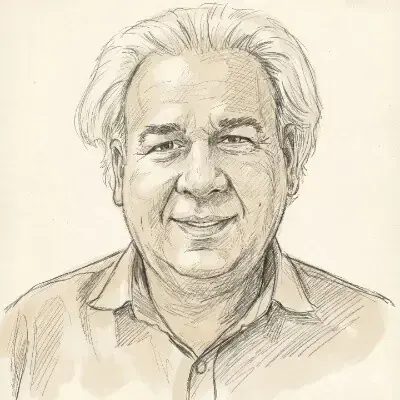
KARACHI Munir Niazi was a dream-weaver. His poetry is suffused with aesthetically rich images and surreal feelings that often haunt creative individuals. It was in December 2006 that he breathed his last.
On April 18, 2009, the Union Cooperative Club Karachi celebrated Munir Niazi`s birthday and the launch of his complete Urdu and Punjabi works (Aik Aur Darya Ka Samna and Okhian Rahvan) on the club`s premises. Renowned scholar Dr Aslam Farrukhi presided over the event.
The poet`s wife Begum Naheed Munir Niazi had especially come from Lahore to participate in the programme, and it`s because of her that the date of the event was fixed for a week later, because on April 9 (Munir Niazi`s date of birth) the Pakistan Academy of Letters had arranged a function in Lahore and Begum Naheed Munir Niazi was part of it.
Dr Fatima Hasan conducted the programme in a decent manner and read out the preface to Aik Aur Darya Ka Samna, which she herself has written. She said Munir Niazi`s poetry does not have just a solitary dimension, but contains layers of possibilities. The reader gets enchanted by the tussle between connotation and the ambience that the poet creates through his nazms and ghazals.
Irfan Ahmed, the club`s vice-president, thanked the audience and scholars for attending the ceremony to pay tribute to the legendary poet.
Dr Nomanul Haq, who teaches at LUMS, gave a scholarly, extempore and cerebrally stimulating talk on Munir Niazi. He began by articulating that not only Munir Niazi was/is an epoch-making poet, but is also a yardstick against which the era that he lived in can be analysed. His poetry carries all the sensibilities of his time.
Dr Noman highlighted the remarkable way with which Munir has `treated` the essential ingredients of ghazal, bearing in mind the genre`s tradition. He spoke on the point where the distance between the lover and the beloved in Munir`s poetry becomes blurred. While discussing the subject he quoted from the likes of Ghalib and Hallaj and juxtaposed Munir`s couplets with their.
Ye kaisa nasha hai, main kis ajab khumar mein hoo(n) Tu aa ke ja bhi chuka hai, main intezar mein hoo(n)
Dr Noman said that Munir`s verses cannot be pigeonholed into one subject the poet touched upon many a topic that falls into the realms of philosophy, mysticism and nature.
Then Dr Noman spoke on the poet`s handling of the subject of betrayal, and concluded by discussing how Munir has symbolised `cities` in his verse.
Addressing the audience Begum Naheed Munir Niazi thanked the organisers for putting up a good programme. She informed the gathering that her late husband had once said to her, `God has chosen me to compose poetry.` Begum Niazi came up with the suggestion that an institute should be set up to analyse and conduct research on the poet`s life and works. Dr Aslam Farrukhi tried to clear certain misconceptions regarding Munir Niazi`s personality and argued that he was a simple, innocent and interesting human being. He said Munir had an aura of mystique about him which reflected in his ghazals and nazms.
Dr Farrukhi said his couplets seem linear and uncomplicated on the surface but actually have the depth and convolution that are the hallmark of great poetry. After the speeches, video clips of Munir Niazi reciting his own poetry were shown.