Cotton production short by 6.83pc


 6
6
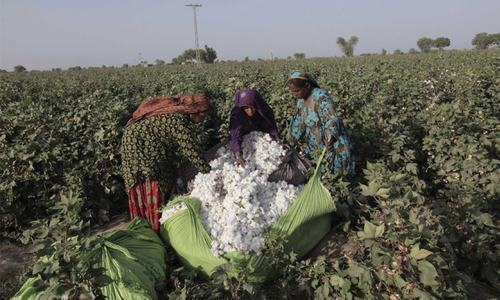
KARACHI: Badly hit by falling area under cultivation, use of poor quality seed and pesticides, cotton production up to Feb 15 stood short by 6.83 per cent at 10.7 million bales over the corresponding period last year.
This is the seventh consecutive year the country is faced with a short crop of around 4.8m bales from a record production of around 15m bales achieved in 2011-12.
In order to meet the shortfall, textile spinners are likely to import up to 3.5m to 4m bales, burdening foreign exchange reserves by around $1 to $1.2 billion.
According to cotton stakeholders, there is an urgent need to rectify the situation and check falling cotton production.
“The government has to take necessary measures on war footing basis for enhancing cotton production in the country,” said Chairman Pakistan Cotton Ginners Association (PCGA) and a grower from South Punjab Mian Mahmood Ahmed on Monday.
While appreciating the PTI government for taking keen interest in reviving the cotton crop, he said, “Next season’s sowing would start by March in lower Sindh. The government should immediately come up with a revival plan for enhancing cotton production.” “Most of the seed being used for cotton cultivation is not certified and of poor quality, so are the pesticides” he added while urging for improvement.
Cotton production figures released by the PCGA for the fortnight Feb 1-15, 2019 show an overall decline of 6.83 per cent in cotton production. During the abovementioned period, 10.7m bales were produced as against 11.4m bales in the same period last year – a short fall of 784,745 bales.
Punjab recorded a decline of 9.41pc decline at 6.552m bales as against 7.233m bales produced in the corresponding period last year – a shortfall of 680,812 bales.
Sindh, which suffered badly due to shortage of irrigation water at sowing stage, recouped as growers went for second sowing. As a result, a 2.44pc fall was observed in cotton production. Only 4.148m bales were produced in the abovementioned period compared to 4.252m bales in the same period last year.
In Balochistan – which is the only province that produces organic cotton – cotton production was up by 0.99pc and stood at 117,852 bales.
On the consumption side, spinning mills purchased 9.276m bales as against 10.439m bales in the corresponding period last year. Exporters lifted less cotton this season at 102,330 bales as against 216,615 bales in the same period last year.
Published in Dawn, February 19th, 2019