12
12


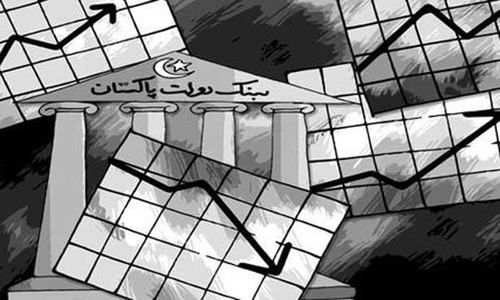
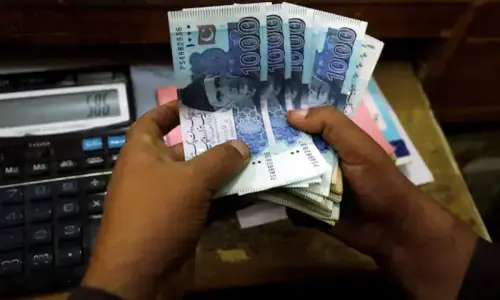
ISLAMABAD: Pakistan’s average inflation came in at 2.86 per cent in the just-ended fiscal year, its lowest level in over 13 years, the Pakistan Bureau of Statistics said on Friday.
Falling oil and commodity prices, a stable rupee and monitoring of prices at both federal and provincial levels were major reasons behind low inflation.
Average inflation stood at 4.53pc in 2014-15, 8.62pc in 2013-14 and 7.36pc in 2012-13.
Inflation measured through the consumer price index (CPI) — the indicator that tracks prices of 481 commodities every month in the country’s urban centres — inched up to 3.19pc in June from 3.17pc in May.
A finance ministry report said prudent fiscal and monetary policies and a few other factors helped in moderating the headline inflation and other inflationary indicators, ie core inflation, food inflation, sensitive price indicator (SPI) and wholesale price index (WPI).
It said the government had also passed on the benefits of lower oil prices to domestic consumers, which helped stabilise prices of commodities included in the CPI basket.
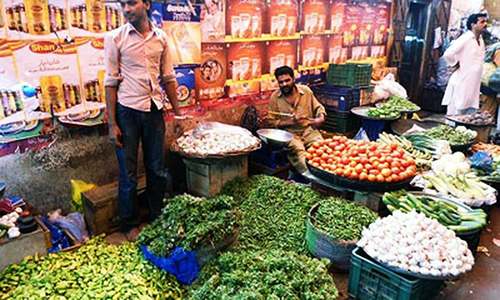
Food inflation, which has 37pc weight in CPI basket, was 2.3pc in June as compared to 3.2pc in the same month of the last year.
This decline in food inflation was the outcome of a 1.82pc fall in prices of perishable food items.
On a month-on-month basis, food inflation rose 1.4pc in June, mainly because of a 7.87pc increase in prices of perishable products and 0.19pc in non-perishable products.
The food items whose prices increased included tomatoes (61pc), potatoes (45.5pc), eggs (8.5pc), fresh vegetables (5.9pc), gram whole (5.7pc), fresh fruits (2.5pc), besan (2.4pc), pulse gram (2.2pc), and rice (1.4pc).
Core inflation, measured by excluding volatile food and energy prices, was recorded at 4.6pc in June 2016, slightly up 0.1pc from the previous month. Falling inflation has also encouraged the State Bank of Pakistan (SBP) to lower its key interest rate at a 42-year low of 5.75pc.
Core inflation has remained subdued since November last year because of a tighter monetary policy and reduction in food and fuel prices.
The finance ministry report said a 6.26pc decline in government sector borrowing during July-March 2015-16 has resulted in low core inflation. The retirement of Rs534.6 billion by the government to the SBP during the period under review also helped in lowering core inflation.
The non-food inflation was 3.8pc during the period under review as compared to 3.9pc in the previous month.
Among the non-food group, education index increased by 0.18pc and health by 0.13pc in June as compared to the previous month. The highest increase of 4.24pc was witnessed in the index of alcoholic beverages and tobacco.
Average inflation measured through the SPI rose 1.31pc in July-June 2015-16, while WPI was negative 1.05pc.
Lower WPI reflects less demand for domestic commodities, mainly because of low purchasing power. The entrance of the manufacturing sector into a negative growth indicates deflation in the economy.
Published in Dawn, July 2nd, 2016